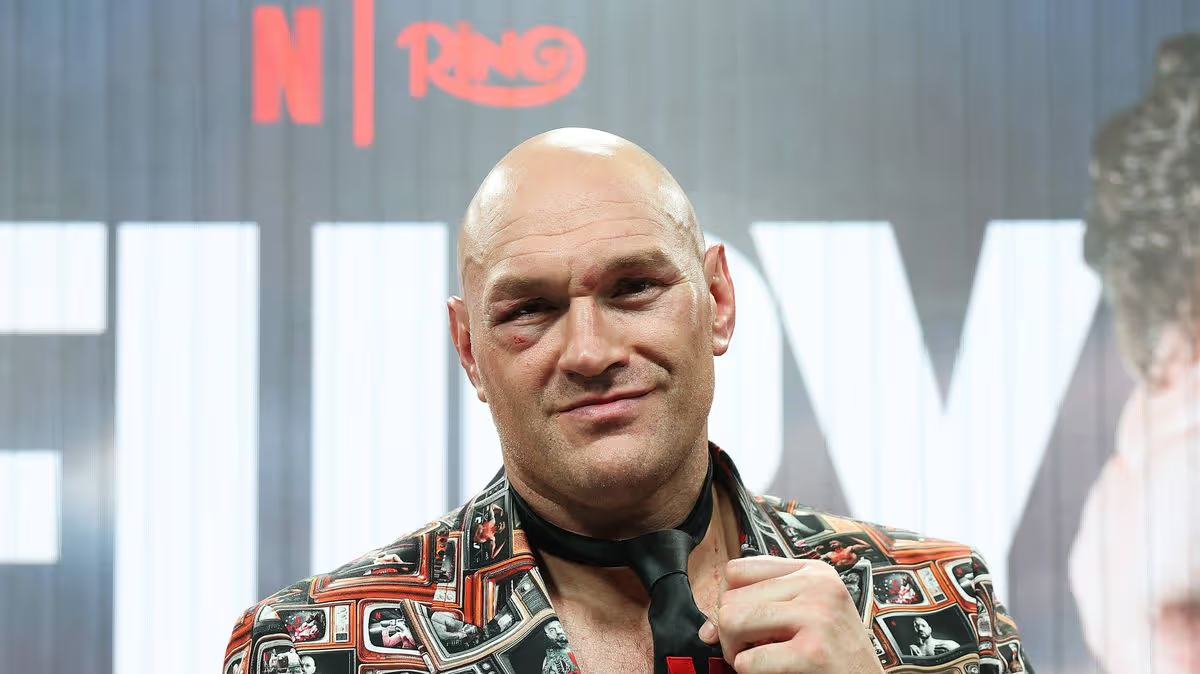



Tyson Fury, the towering and charismatic heavyweight boxing champion, is a figure defined by contrasts. In the ring, he is a flamboyant and tactical warrior; at home, he is a devoted father of seven navigating the complex terrain of modern parenthood. This duality was recently underscored by the marriage of his eldest daughter, 16-year-old Venezuela, to 19-year-old boxer Noah Price. The event was a spectacle of “gypsy way” grandeur, featuring a £40,000 wedding dress, a performance by singer Peter Andre, and a honeymoon in Marbella worth £30,000, fully funded by Fury. Yet, the most striking element was the couple’s wedding gift: a staggering £5 million from Tyson and his wife, Paris, intended to “kick-start their life.” This act of immense generosity, however, exists within a framework of a deeply principled and strict family philosophy regarding wealth and inheritance.
Despite this lavish gift and his estimated fortune of nearly £150 million, Fury has publicly and repeatedly articulated a firm rule for all his children: they cannot rely on simply inheriting his wealth. He believes that an easy life funded entirely by parental money would render his children “weak, spoiled, and not value anything.” In his view, such a path leads to a profound personal emptiness—a middle-aged individual looking in the mirror with disappointment, having never accomplished anything independently. Fury’s philosophy is rooted in the tangible value of self-earned achievement. He illustrates this with a poignant comparison: buying a son a Lamborghini might lead to danger and a lack of appreciation, whereas that same son working hard to purchase a modest 2004 Corsa would instill pride, care, and a sense of personal accomplishment that Fury himself would deeply respect.
Fury’s approach is not about withholding support, but about redirecting it towards fostering independence and resilience. He has clarified that he will actively “help them with business deals and investments,” providing guidance and opportunities rather than passive handouts. The £5 million gift to Venezuela and Noah, therefore, can be seen as an extension of this philosophy—a substantial investment in their future, a foundation upon which they are expected to build their own lives through “hard work, dedication, and sacrifice.” It is a capital injection, not an allowance. This strategy aims to equip his children with the tools for success while demanding they develop the character and drive to use them effectively, ensuring they become “their own people.”
The gift, while celebrated by the newlyweds, reportedly elicited “mixed feelings” among some family members due to its sheer magnitude for such a young couple. This reaction highlights the delicate balance Fury is trying to maintain. On one hand, he honors the traditions of his community, where going “big” for celebrations is a cherished norm. On the other, he is consciously challenging a potentially detrimental aspect of ultra-wealthy upbringing: the erosion of ambition and self-worth. His sentimentally chosen additional gift—a traditional gypsy wagon placed in their front yard—symbolizes this bridge between cultural heritage and his forward-looking parental values.
Fury’s stance reflects a growing consciousness among self-made individuals about the psychological impacts of inherited wealth. It’s a proactive parenting choice aimed at preventing the listlessness and lack of purpose that can afflict the children of the immensely rich. He is intentionally using his fortune not as a终点, but as a starting line for his children’s own races. The message is clear: his wealth will provide a launchpad—security, education, and initial investments—but the trajectory, altitude, and ultimate destination of their lives must be earned through their own effort.
In essence, Tyson Fury is crafting a modern legacy that prioritizes character over capital. While the £5 million wedding gift captures headlines, the true headline is his long-term vision for his family. He is determined that his seven children will know the weight of a hard-earned pound, the pride of a personal achievement, and the value of a self-built life. In the world of heavyweight boxing and heavyweight finances, Fury is fighting perhaps his most important battle: to ensure his children are champions in their own lives, not merely beneficiaries of his.