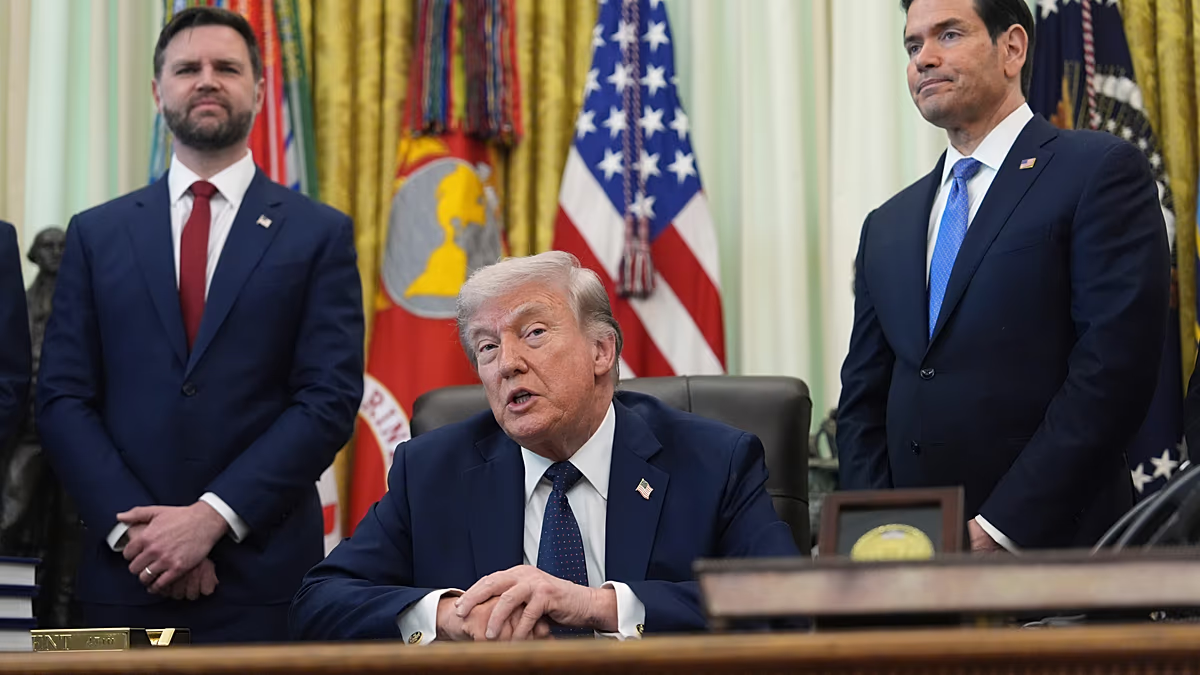



In a significant shift toward potential peace, US President Donald Trump indicated that the United States and Iran are nearing an agreement to end the ongoing conflict in the Middle East. During a phone interview with CBS, Trump conveyed a sense of cautious optimism, stating that the two nations are “getting a lot closer” to a deal. However, he paired this hopeful message with a stark warning, declaring that if an agreement fails to materialize, Iran would face a retaliatory strike of unprecedented severity—”a situation where no country will ever be hit as hard as they’re about to be hit.” This juxtaposition of diplomacy and threat underscores the high-stakes, volatile nature of the negotiations, where progress is measured alongside the ever-present risk of catastrophic escalation.
This sentiment of advancing talks was corroborated by anonymous regional officials and a diplomat, who confirmed that a memorandum of understanding aimed at ending the war is within reach. International diplomatic activity has intensified, with Pakistan’s army chief engaging in further discussions in Tehran, and US Secretary of State Marco Rubio noting in India that “there’s been some progress made” and hinting that “there may be news later today.” According to these sources, a final decision on a Pakistan-drafted proposal could emerge within 48 hours as both sides conduct their reviews. Despite this momentum, a fundamental tension persists: both Iran and the US continue to uphold their core, non-negotiable demands while simultaneously warning of severe consequences if hostilities resume, with the US reportedly considering a new round of attacks.
Iranian officials have provided a clearer view of their interpretation and expectations for the draft agreement. Foreign Ministry spokesperson Esmail Baghaei, quoted on state TV, described it as a “framework agreement” designed to establish the main principles for ending the war. He emphasized that this framework must include “the main issues required for ending the imposed war and other issues of essential importance to us,” such as the status of the Strait of Hormuz. Following this, over a period of 30 to 60 days, details would be negotiated to reach a final accord. Baghaei noted a positive trend, stating that positions have moved closer recently and “over the past week, the trend has been toward narrowing differences.” Crucially, he clarified that nuclear issues are not part of these current talks; Iran’s immediate priority is ending the war, particularly in Lebanon, before addressing its nuclear program. He also firmly stated that the lifting of sanctions on Tehran “has explicitly been included in the text and remains our fixed position.”
On the American side, Secretary of State Rubio echoed the sense of ongoing, urgent work, suggesting an announcement could come within days. He reiterated the United States’ immutable stance: Iran must never possess a nuclear weapon, must turn over its highly enriched uranium, and the strategic Strait of Hormuz must remain open to global shipping. Meanwhile, within Iran, parliamentary Speaker Mohammad Bagher Qalibaf—a key negotiator in historic face-to-face talks with the US—reported that Iran has rebuilt its military assets following weeks of war and a fragile ceasefire. He issued a grim counter-warning, asserting that if President Trump resumes attacks, the result for Iran would be “more crushing and more bitter” than at the outset of the conflict. This highlights the dual reality of both sides preparing for peace while simultaneously fortifying themselves for the possibility of renewed war.
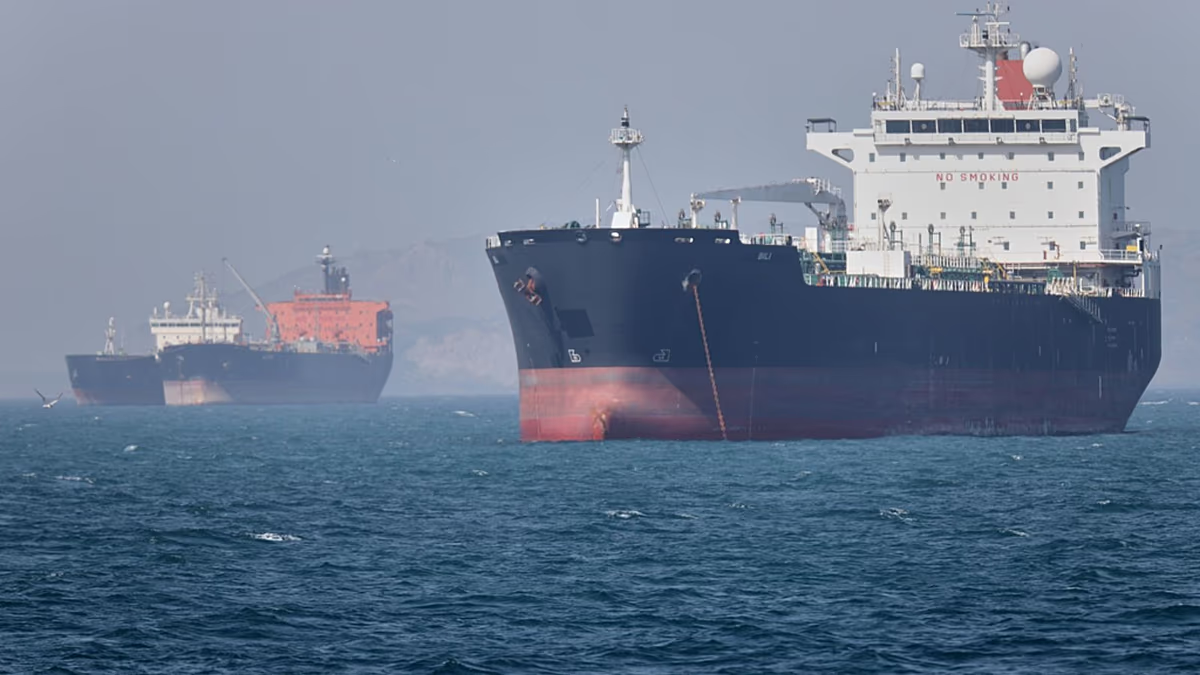
President Trump earlier contextualized his decision to hold off on military strikes by citing that “serious negotiations” were underway, a pause he attributed to requests from allies in the Middle East. This pattern of setting deadlines and then extending them has been a recurring feature of his approach. The conflict itself began abruptly on 28 February with US and Israeli strikes, which ended ongoing talks and prompted Tehran to effectively close the Strait of Hormuz—a vital corridor for global energy and fertilizer supplies—triggering economic shockwaves worldwide. The US responded with a naval blockade of Iranian ports starting in April, which its Central Command reports has intercepted over 100 commercial vessels and disabled four. The economic and strategic pressure from this blockade continues to weigh heavily on the negotiations.
The diplomatic landscape is further complicated by intricate bilateral engagements. During his visit, Pakistan’s army chief met with a range of high-ranking Iranian figures, including Foreign Minister Abbas Araghchi and President Masoud Pezeshkian. Pakistan continues to attempt to broker a second round of direct talks between the adversaries. It remains unclear whether the Pakistani envoy met with Brig. Gen. Ahmad Vahidi, the head of the Revolutionary Guard, who is seen as a pivotal figure advocating for Iran’s hardline positions in the negotiations. The involvement of Pakistan as an intermediary, alongside the silent but influential presence of military hardliners within Iran, illustrates the complex, multi-layered nature of this diplomatic endeavor, where progress is fragile and the path to a lasting peace remains fraught with profound challenges and deeply entrenched demands from both sides.