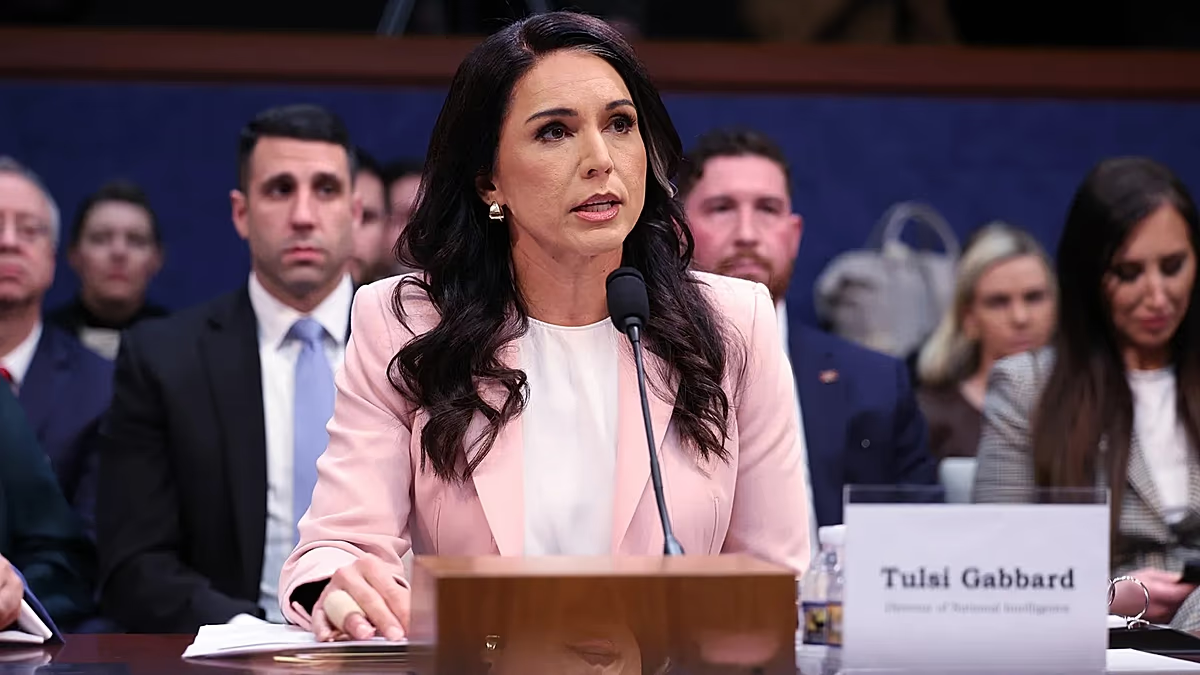


In a move that underscores the deeply personal sacrifices often made within the corridors of power, Tulsi Gabbard, the Director of National Intelligence for the United States, announced her resignation from the post on Friday. The decision, revealed through a heartfelt letter to President Donald Trump shared on the social media platform X, was driven by one of life’s most profound challenges: a family health crisis. Gabbard stated that her husband had been diagnosed with an extremely rare form of bone cancer, and she would be stepping down on June 30th to focus on his care and their family during this difficult time. This revelation transforms a political announcement into a human story, reminding us that behind every title and official duty are individuals facing universal trials of love, health, and resilience.
President Trump responded swiftly on his own social media account, acknowledging the personal nature of her departure while praising her tenure. He stated that Gabbard had done “an incredible job” in her role overseeing the nation’s vast intelligence apparatus. To ensure continuity in this critical national security position, Trump announced that Gabbard’s principal deputy, Aaron Lukas, would step into the role as Acting Director. This pragmatic transition plan aims to maintain stability within the intelligence community, even as its leader departs under circumstances that evoke empathy and understanding from across the political spectrum.
Gabbard’s path to this high-ranking cabinet position was itself a notable political journey. Originally a member of the Democratic Party, she served as a U.S. Representative from Hawaii and, in 2020, launched a campaign for the Democratic presidential nomination. Her platform was distinctly anti-interventionist, advocating for a more restrained American foreign policy. Although she withdrew from the race before the conclusion of the primaries and ultimately endorsed the party’s nominee, Joe Biden, her political identity continued to evolve. In 2022, she made a significant break by leaving the Democratic Party altogether, citing a fundamental divergence from its direction.
Her political evolution continued as the 2024 election cycle approached. Gabbard publicly endorsed Donald Trump for president, a move that signaled a profound ideological realignment. Later in the same year, she formally joined the Republican Party. This series of transitions—from Democratic congresswoman and presidential candidate to a Republican endorser and, finally, to a key intelligence official in Trump’s administration—highlighted her shifting worldview and positioned her as a unique figure who had operated at significant levels within both major U.S. political entities. Her appointment as Director of National Intelligence in Trump’s second term was a culmination of this path, placing a former rival-party insider at the helm of sensitive national security matters.
With this resignation, Tulsi Gabbard becomes the fourth cabinet-level official to depart during President Trump’s second term. While the reasons for each departure vary, Gabbard’s exit is uniquely rooted in a non-political, personal family emergency. It underscores the fact that the composition of any administration is fluid, subject to both the electoral winds and the unpredictable personal circumstances of those who serve. The stability of government relies not only on policy and ideology but also on the ability to manage such transitions gracefully, as demonstrated by the immediate appointment of an acting director to fill the void.
As reported, this remains a developing story, with further updates expected as more information becomes available. The primary narrative, however, is firmly established: a high-ranking official has chosen family over duty in a moment of crisis. This decision resonates beyond politics, touching on a core human value—the priority of caring for loved ones in times of need. While the intelligence community will adjust to its new acting leadership, the public reflection on this event likely centers on the personal cost of public service and the universal experience of confronting a serious health diagnosis within a family. Tulsi Gabbard’s resignation is, at its heart, a private story of care and commitment, framed within the public sphere of national governance.