


Paragraph 1: A Routine Stop Turns Critical
On a Friday afternoon in May 2026, what began as a standard police procedure escalated into a rare and serious incident in the community of Whitefield, Bury. At approximately 3 p.m., officers from Greater Manchester Police signalled for a vehicle to pull over on Bury New Road, a bustling thoroughfare familiar to locals for its shops and traffic. The driver’s response, however, transformed a routine traffic stop into a moment of immediate peril. Instead of complying, the car accelerated away, and in a deeply alarming manoeuvre, drove directly at the attending officers. This act presented what the law defines as an imminent and credible threat to life, forcing a split-second decision in a volatile and rapidly unfolding situation.
Paragraph 2: The Discharge and Immediate Aftermath
In direct response to the car being used as a weapon against them, a trained firearms officer discharged a single shot. The crack of gunfire on a suburban street marked a profound rupture in the ordinary rhythm of the day. Following the shot, the vehicle was brought to a stop. The immediate priority then shifted from confrontation to preservation of life. The driver, a 20-year-old man, was found to have sustained a gunshot wound to his arm. He was promptly provided with emergency first aid at the scene before being transported to a nearby hospital. Crucially, police confirmed that his injury was assessed as being neither life-threatening nor likely to result in life-changing long-term damage—a vital piece of information that brought a measure of relief to a shaken community. No police officers or members of the public sustained physical injuries during the confrontation.
Paragraph 3: Securing the Scene and Revealing the Suspicions
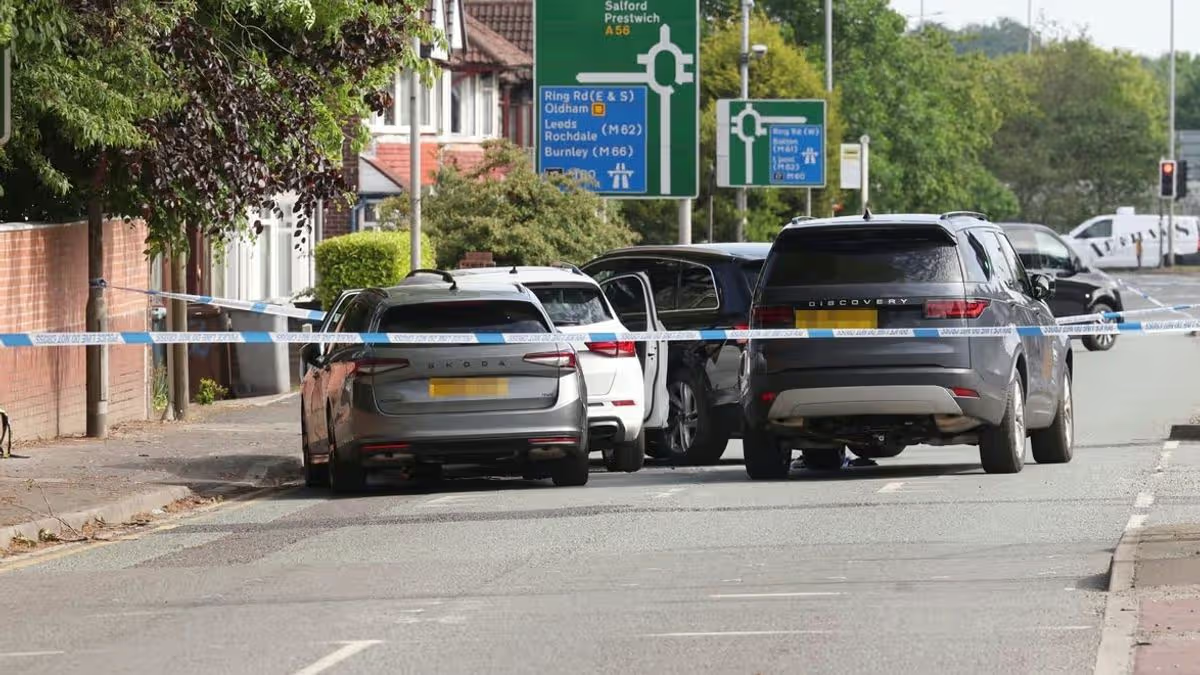
In the wake of the shooting, the area on and around Bury New Road was swiftly transformed into a major crime scene. Armed police officers swarmed the location, cordoning off a significant section with tape, while forensic specialists in white suits began the meticulous process of gathering evidence. The visual impact was stark, with marked police vehicles and uniformed personnel dominating a landscape normally reserved for everyday errands. Within hours, the investigation began to crystallise around the driver’s alleged motives. The 20-year-old, now under guard in hospital, was formally arrested on suspicion of a grave offence: being concerned in the supply of Class A drugs, such as heroin or cocaine. This development suggested the initial police stop may have been part of a targeted operation, and that the driver’s desperate attempt to flee potentially stemmed from more than just traffic violations.
Paragraph 4: The Weight of Protocol and the Path to Accountability
The discharge of a police firearm is never treated as a simple, closed event. Recognising the gravity of such an action, Greater Manchester Police immediately enacted a stringent, multi-layered accountability process. The incident was automatically referred to the Independent Office for Police Conduct (IOPC), the body responsible for overseeing serious complaints against police forces in England and Wales. This ensures an external, transparent investigation separate from the internal GMP review. The firearms officer involved will be placed on operational leave, a standard practice to allow for both welfare support and a clear investigative process. These protocols, though formal, exist to answer the essential public questions: was the use of lethal force justified, proportionate, and necessary in that terrifying moment when the car surged toward the officers?
Paragraph 5: Community Ripples and the Human Impact
Beyond the official statements and investigative procedures, the incident sent shockwaves through the neighbourhood of Whitefield. For residents, the sound of a gunshot and the sight of armed police in their midst was a disturbing and surreal experience, shattering the quiet normalcy of a spring afternoon. Local businesses within the cordon faced disruption, and the daily commute was altered as the road remained closed for hours. The human impact extends to the police officers themselves, who faced a lethal threat, and to the family of the injured young man, who must now confront his serious injury and the serious allegations he faces. The event prompts complex emotions: concern over violent crime and drug-related activity, sympathy for those affected, and a community-wide reflection on the dangers police can confront and the immense responsibility they carry.
Paragraph 6: A Moment Frozen in Time, With Questions for the Future
The incident on Bury New Road now exists as a stark entry in Greater Manchester Police’s records and in the memory of the community. As investigations by both GMP and the IOPC continue, they will piece together the precise sequence of events, examine the officer’s decision-making, and delve into the background of the suspect. The findings will ultimately determine whether the actions taken align with the strict legal and ethical frameworks governing the use of force. While the physical scene has long since been cleared and traffic has resumed its flow, the questions it raised linger. It serves as a sobering reminder of how quickly a single decision on a public road can escalate, and of the fine, difficult lines that police officers must sometimes walk in their duty to protect both the public and themselves. The ultimate summary of that Friday afternoon is not just in the brief facts of the stop, the shot, and the arrest, but in the profound human and procedural consequences that continue to unfold from those critical seconds.