


(Summary & Humanized Account)
Paragraph 1: The Initial Blast and Escalating Toll
In the fading light of a Friday evening in northern China, a subterranean catastrophe unfolded. At approximately 7:30 PM, a violent gas explosion ripped through the Liushenyu coal mine in Qinyuan county. The initial reports, cold in their bureaucratic tone, could not conceal the scale of the human tragedy brewing deep within the earth. As rescue teams scrambled through the night, the grim arithmetic of disaster began to emerge. What started as a tally of fatalities swiftly climbed, hour by agonizing hour, as the true scope became clear. By Saturday, the official count had reached a staggering 90 lives lost, with nine miners still trapped and unaccounted for in the shattered tunnels. The explosion had occurred during a shift change, a time of maximum occupancy underground, leaving 247 workers in its path.
Paragraph 2: A Nation’s Response and a Leader’s Directive
The news sent shockwaves through the nation, drawing an immediate response from the highest levels of government. President Xi Jinping, upon receiving reports of the disaster, issued urgent directives, moving beyond formal protocol to convey a mandate for human action. He called not just for procedure, but for an “all-out” effort—a phrase that captured the desperate race against time to find survivors and treat the injured. His orders also included a demand for a thorough investigation to uncover the causes of the blast. This dual focus—on compassionate rescue and rigorous accountability—highlighted the official response’s twin priorities: to address the immediate human suffering and to answer the inevitable questions of how such a tragedy could occur in the modern era.
Paragraph 3: The Machinery of Rescue and the Weight of Responsibility
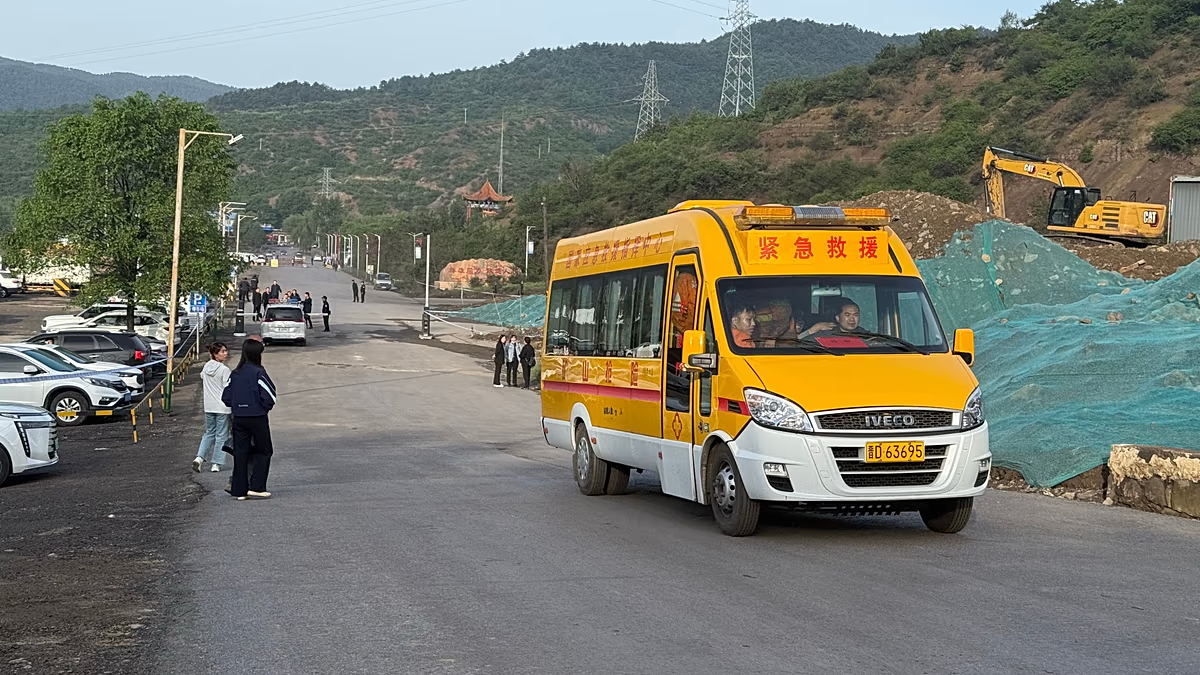
Answering the call, the machinery of state emergency response swung into action. Six specialized rescue teams, comprising 345 firefighters, medical personnel, and mine disaster experts, were rapidly deployed to the remote site. Their mission was perilous and complex: to navigate unstable, gas-filled passages, locate the missing, and retrieve the victims, all while ensuring their own safety. Concurrently, a separate but equally significant action was taken: an individual described as “responsible for” the mining company was detained and “placed under control in accordance with the law.” This swift move, announced alongside the rescue updates, signaled an early acknowledgment of potential culpability, a step that resonates deeply in a country where industrial accidents often prompt scrutiny of safety protocols and regulatory enforcement.
Paragraph 4: The Human Reality Behind the Statistics
Behind the stark numbers—90 dead, 9 trapped, 247 underground—lie individual stories of profound loss and fractured communities. Each number represents a miner who left for work that day, likely a breadwinner for an extended family, a pillar of a small rural community in Shanxi province, a region long dependent on the coal industry. The explosion not only extinguished lives but also shattered the economic security and emotional fabric of countless households. The anxiety of families gathered at the mine head, awaiting news of trapped loved ones, paints a harrowing picture of human suspense and grief that stands in stark contrast to the clinical official reports.
Paragraph 5: Context and Recurring Challenges
This disaster, while shockingly severe, echoes a painful history in China’s intensive mining sector. For decades, the nation’s rapid industrialization was powered by coal extracted at a tremendous human cost, with frequent accidents claiming thousands of lives annually. In recent years, significant efforts have been made to consolidate the industry, close smaller, unsafe pits, and implement stricter regulations, leading to a notable decline in fatalities. However, the Liushenyu explosion is a brutal reminder that the danger is ever-present. It forces a sobering re-examination of whether safety reforms and technological upgrades have penetrated deeply enough into all operations, or if pressures for production and profit still sometimes eclipse worker protection.
Paragraph 6: The Path Forward: Mourning, Inquiry, and Reform
In the wake of the explosion, the immediate future holds a somber sequence of events. The rescue mission, however slim the hope, will continue with relentless determination for the missing. Nationwide, flags will be lowered in mourning for the victims. Yet, once the last body is recovered, the most critical phase begins: the promised investigation. The world will watch to see if it transparently addresses the hard questions—about gas monitoring, ventilation systems, emergency procedures, and regulatory oversight. The true test of this tragedy’s legacy will be whether it galvanizes a renewed and unwavering commitment to making “safety first” an unbreakable reality in every mine, transforming profound grief into systemic change that protects the lives of those who power the nation from its depths.