




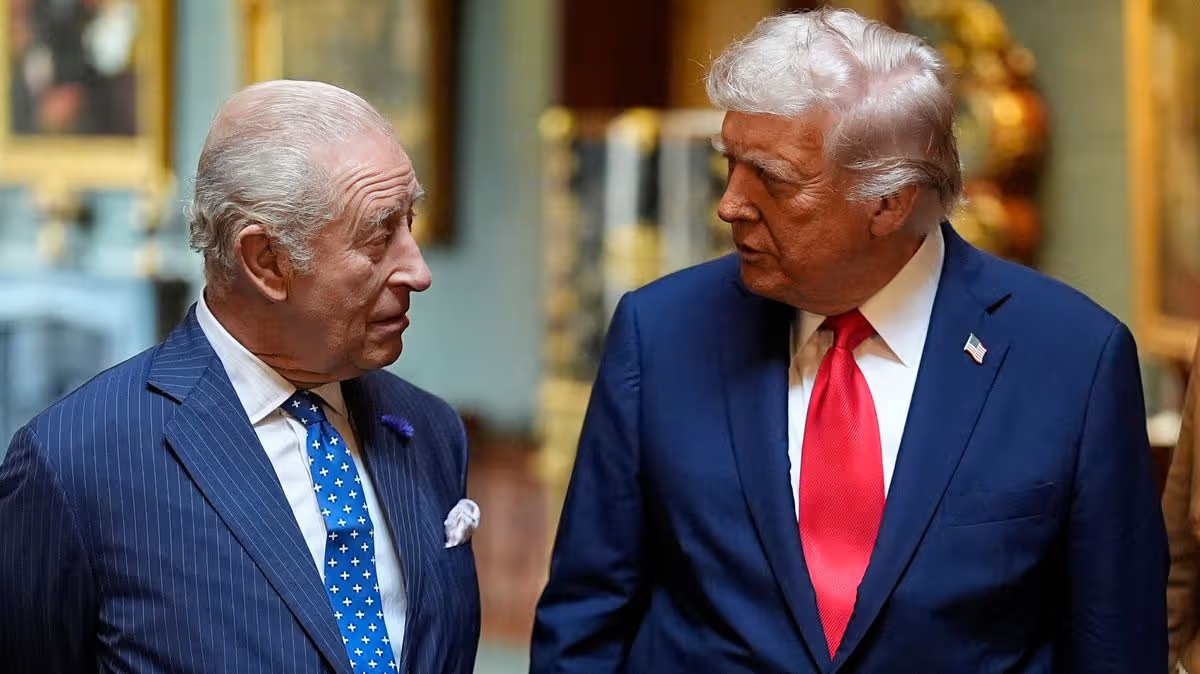
King Charles III and Queen Camilla stand on the cusp of a significant and diplomatically delicate mission as they prepare to touch down in Washington D.C. for a four-day state visit to the United States. At the heart of this meticulously planned tour lies a series of five scheduled meetings with President Donald Trump, underscoring the visit’s central aim: to reinforce the enduring “special relationship” between the two nations. However, this ceremonial occasion is unfolding against a backdrop of pronounced political turbulence. The recent conflict involving Iran has exposed significant rifts within the NATO alliance, with President Trump publicly chastising allies, including the United Kingdom, for their lack of military support. His pointed critiques have extended to Prime Minister Keir Starmer, whom he dismissed as being “no Winston Churchill,” and even to the Royal Navy’s capabilities. This tense atmosphere casts the royal visit not merely as a pageant of friendship, but as a critical exercise in quiet, personal diplomacy, where the symbolic weight of the Crown may be deployed to soothe frayed governmental ties.
The complexities of the moment are not lost on the royal household. A palace source, while expressing optimism, frankly acknowledged the “challenges” this visit presents. Yet, the overriding sentiment from the monarch’s camp is one of focused purpose. King Charles is described as “excited” to celebrate the profound cultural, historical, and familial connections that bind the British and American peoples, ties that run deeper than the political headlines of the day. The itinerary reflects this dual nature, blending solemn duty with celebratory outreach. It includes the grandeur of a White House state dinner, where the King will deliver a major address, and a poignant visit to the 9/11 Memorial in New York. Alongside these formal moments are planned engagements like a community block party in Virginia, designed to showcase a more informal and accessible side of the modern monarchy, with reports even suggesting a relaxed dress code discouraging hats at one event.
Central to the visit’s success will be the dynamic between King Charles and President Trump. The President has made it clear he intends to discuss “everything,” from the Iran conflict and NATO commitments to specific policy grievances like the UK’s digital services tax on American tech firms. This sets the stage for a visit where palace balconies and state rooms will serve as the setting for substantive, and potentially difficult, conversations. For King Charles, whose lifetime of preparation for the throne has included decades of advocating for environmental and social causes, the challenge will be to navigate these discussions with the impartiality his role now demands, while subtly advocating for international cooperation and stability. His scheduled speech to Congress, crafted with government advice, is anticipated to be a significant moment where he will likely appeal for unity and reaffirm shared democratic values.
Adding an unexpected layer of royal intrigue to the diplomatic proceedings are the recent actions of the King’s younger son, Prince Harry. The Duke of Sussex’s surprise visit to Ukraine, where he delivered a powerful speech calling on American leadership to honour its international obligations, drew a swift and pointed rebuke from President Trump. The President’s remark that “Prince Harry is not speaking for the UK” and that he himself was “speaking for the UK more than Prince Harry” highlighted the delicate and sometimes awkward intersection of modern royalty, family, and geopolitics. While Harry spoke in a personal capacity as a humanitarian and veteran, his words inevitably echoed in the halls his father was about to visit, presenting a stark contrast between the monarch’s constitutional neutrality and a royal family member’s personal advocacy.
Despite these crosscurrents, the fundamental objective of the state visit remains steadfast: to serve as a living symbol of a partnership that has weathered many storms. President Trump himself has suggested the royal presence could “absolutely” help mend relations strained by recent events. The power of such visits lies in their ceremony and their humanity—the shared meals, the direct eye contact, and the personal connections forged away from the cameras. For King Charles, this is a premier opportunity to define his reign on the world stage, demonstrating his ability to be both a unifying figurehead and a discreet diplomatic conduit. The hope within both governments will be that the respect accorded to the institution of the monarchy can create a space for more productive dialogue between their political leaders.
As the King and Queen embark on their journey, they carry with them the hopes for diplomatic repair and the celebration of a transatlantic bond that is deeply personal for the King, whose mother, Queen Elizabeth II, met with thirteen sitting U.S. presidents. The visit is a poignant reminder that while political alliances may ebb and flow, the threads of shared history, language, and principle are woven into a much stronger fabric. In a world of increasing fragmentation, the sight of a British monarch being received with honour in the American capital is a powerful, visual testament to an enduring friendship. The success of this visit will not be measured in immediate policy shifts, but in the subtle reaffirmation that this foundational relationship, championed now by a new King, remains a cornerstone of global stability.