




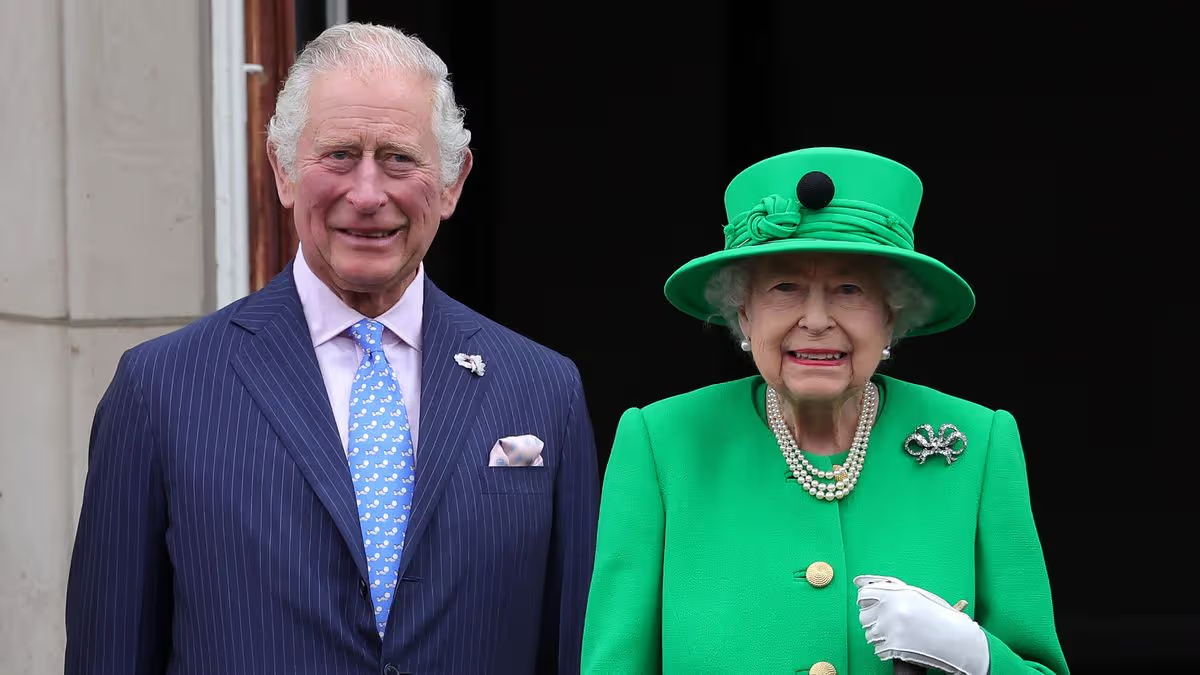
On a day that would have marked her one hundredth birthday, the nation and the Commonwealth paused to remember Queen Elizabeth II, guided by the words of her son, King Charles III. In a heartfelt address recorded within the familiar walls of Balmoral Castle’s library, the King painted a portrait of a monarch whose near-century of life was a testament to unwavering devotion. He reflected on her “promise with destiny kept,” a reign that navigated seismic global shifts from the aftermath of World War II into the 21st century. Through it all, he noted, she remained a constant, steadfast figure, wholly dedicated to her people. Her legacy, he suggested, lives on not just in grand historical moments, but in millions of personal memories—a warm smile, a kind word, or that famously playful twinkle in her eye shared with a CGI bear in a poignant Platinum Jubilee sketch. Yet, beneath the celebration of a life magnificently lived, the King imbued his tribute with a sobering contemporary reflection, acknowledging that much about our current troubled world would have “troubled her deeply.”
This undercurrent of concern in the King’s speech resonates against the complex backdrop of both global unrest and profound familial challenges that marked the Queen’s final years and have extended into Charles’s own reign. The institution she dedicated her life to preserving was shaken by seismic internal crises: the scandal surrounding Prince Andrew’s association with financier Jeffrey Epstein, which ultimately led to his exile from royal duties, and the seismic departure of the Duke and Duchess of Sussex from their roles as working royals. These events struck at the very heart of the monarchy’s fabric, testing its resilience and adaptability. For King Charles, ascending the throne was not a simple transition into a settled inheritance but an assumption of leadership during a period of intense scrutiny and change, requiring him to navigate these inherited difficulties while steadfastly honouring his mother’s example.
The personal burdens on the King have been profound and ongoing. His reign, still in its relative infancy, has been marked by serious health struggles within his immediate family, with both he and the Princess of Wales battling cancer diagnoses revealed almost simultaneously in early 2024. Furthermore, the shadow over his brother, Prince Andrew, lengthened with the shocking development of his arrest and interrogation by police on allegations of misconduct in a public office, related to the passing of confidential information. These are not distant historical footnotes but lived, ongoing realities that form the poignant context for a monarch calling for unity and hope. In paying tribute to his mother’s unwavering sense of duty through all seasons, King Charles was also subtly acknowledging the weight of the crown he now wears and the tumultuous era he is tasked with steering the monarchy through.
Yet, the King’s message, while clear-eyed about present troubles, was fundamentally one of hope and a call to collective action. He drew inspiration from his mother’s core belief that “goodness will always prevail” and that “a brighter dawn is never far from the horizon.” In a powerful echo across the decades, he recalled the words of a 14-year-old Princess Elizabeth in her first wartime broadcast, who urged every listener to play their part “to make the world of tomorrow a better and happier place.” King Charles affirmed this youthful idealism as a belief he shares “with all my heart,” transforming the day from a sombre memorial into a forward-looking catalyst. He urged the public, young and old, to join in striving for a future “rooted in peace, justice, prosperity and security,” framing this collective endeavour as the truest celebration of his mother’s legacy.
In a symbolic renewal of the sacred contract between sovereign and people, King Charles used the occasion to reaffirm his own “solemn pledge of duty and service.” This vow connected his future to his mother’s past, creating a continuum of commitment that transcends individual personalities. The day’s commemorations were designed to reflect this spirit of celebratory remembrance, with the King and Queen Camilla hosting a reception for charities dear to the late Queen and viewing plans for a permanent national memorial. From the opening of a serene garden in her name to a special exhibition of her personal effects, the activities honoured the woman behind the crown—her style, her causes, and her quiet, enduring impact.
Thus, on her centenary, Queen Elizabeth II was remembered not with a sigh of passive nostalgia, but with a clear-eyed and loving tribute that acknowledged a complicated present while championing her timeless ideals. King Charles masterfully humanized the monumental, reminding a watching world that the legacy of a great life is not frozen in history but is a living inspiration. It is a call to persevere through modern trials with dignity, to seek common ground amidst discord, and to believe, as she did, in the power of quiet, dedicated service to forge a brighter path forward. In remembering the Queen’s remarkable journey, the nation was invited to look ahead, carrying the light of her example into the challenges of a new age.