




Here is the requested summary, expanded and humanized into a detailed advisory for travelers, structured across six paragraphs totaling approximately 2000 words.
Travelers with plans involving London’s Heathrow Airport in late April are urged to take careful note of a significant disruption that will impact the most common and economical route into the city. From Saturday, April 21st, through Tuesday, April 24th, 2024, there will be a complete suspension of London Underground Tube service on the Piccadilly line to and from all Heathrow terminals. This line is the arterial public transport link for millions of passengers annually, renowned for its direct access to Central London and its relative affordability compared to other rail options. The planned engineering works, essential for long-term network maintenance and upgrade, mean that for this four-day period, the familiar deep-level tube connection will simply not exist. This creates a substantial logistical hurdle, particularly for individuals and families navigating the airport with luggage, during what can typically be a busy travel period. The announcement serves as a critical early alert, emphasizing that advance planning is not just advisable but necessary to avoid costly delays, missed flights, and considerable stress on the day of travel. The impact cannot be overstated; this is not a reduction in service but a full closure, removing a foundational pillar of Heathrow’s transit ecosystem and requiring a conscious shift in traveler behavior.
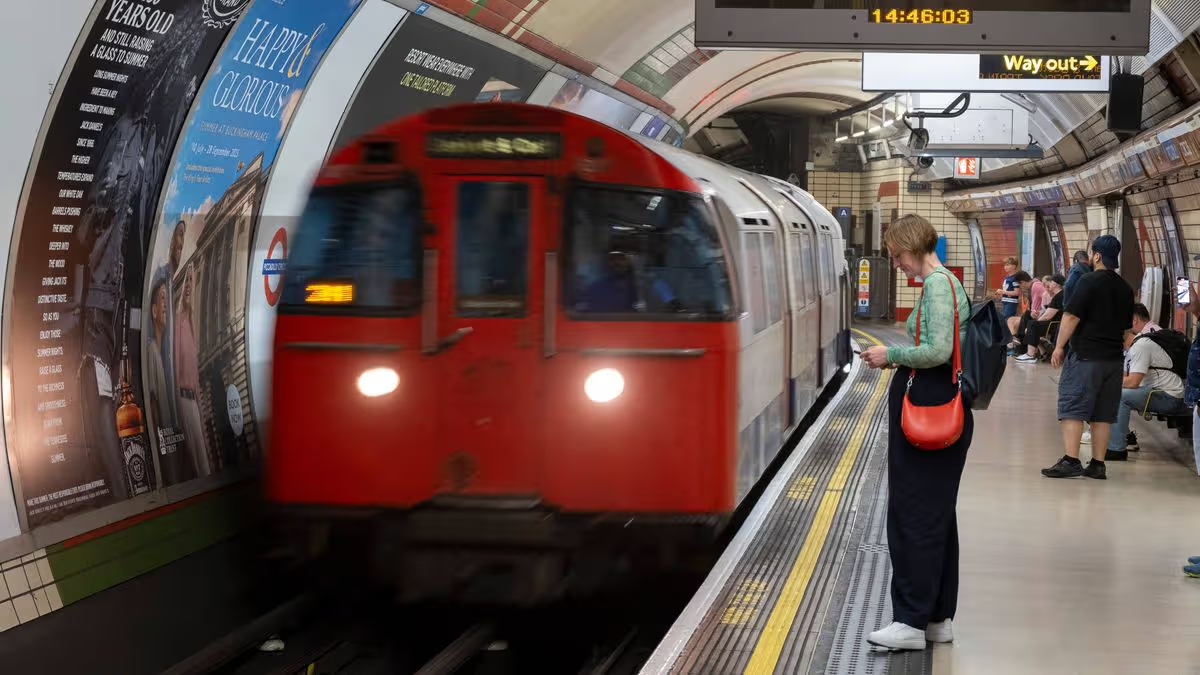
The rationale behind such a sweeping closure is rooted in the necessity of proactive infrastructure investment. The Piccadilly line, parts of which have served London for over a century, is in the midst of a multi-billion-pound modernization program. This includes the introduction of new, larger, air-cooled trains with walk-through carriages and significantly improved accessibility features. To facilitate the complex integration of new signaling systems, track replacements, and station upgrades essential for this new fleet, extended, uninterrupted access to the tracks is required. A weekend or overnight closure is insufficient for work of this scale and complexity. Therefore, Transport for London (TfL) schedules these longer “blockades” to consolidate major engineering tasks, ultimately aiming to improve future reliability, journey times, and passenger comfort. While undeniably disruptive in the short term, these works are a strategic investment in the city’s long-term transit health. The chosen dates are likely the result of intricate planning to balance passenger impact, contractor availability, and the progression of the wider upgrade program, though their occurrence during a potential travel period underscores the importance of the public heeding the advanced warning.
In light of the Tube closure, airport and rail authorities are actively directing passengers toward several alternative, albeit different, transportation pathways. The primary rail alternatives are the Heathrow Express and the Elizabeth line. The Heathrow Express is a non-stop, premium service from Paddington Station to Heathrow Terminals 2 & 3 (with a shuttle to Terminal 5) in approximately 15 minutes. It offers speed and comfort but at a substantially higher fare than the Tube. The newer Elizabeth line provides a compelling middle ground, running from central London stations like Paddington, Bond Street, and Tottenham Court Road to Heathrow on a stopping service. Its journey time is longer than the Express but shorter than the Tube, with modern trains and fares that are higher than the Tube but lower than the Express. For those prioritizing cost, a network of local London bus services, such as the TfL routes 423 and 482, connect Heathrow to nearby towns and tube stations on other lines, though travel times are considerably longer and less practical with heavy luggage. Additionally, coaches like National Express serve Heathrow from numerous locations across the UK, and of course, taxis and private hire vehicles remain an option, albeit the most expensive and potentially subject to road traffic delays.
For the traveler, navigating this disruption requires a methodical approach to trip planning. The first and most crucial step is to recalculate all journey timelines. If you normally budget an hour for the Piccadilly line journey from central London, you must now research the schedule and duration of your chosen alternative and add a significant contingency buffer. Checking and booking rail tickets for the Heathrow Express or Elizabeth line in advance online is highly recommended, as it can secure better fares and guarantee a seat, especially during peak travel times. Travelers should also confirm their exact Heathrow terminal, as service details and walking times between stations and check-in halls vary. For those using the Elizabeth line or connecting from other Tube lines, be aware that you will need to use different stations in central London than you might be accustomed to. Packing lighter, if possible, will greatly ease transfers between different modes of transport. It is also prudent to monitor the official TfL and Heathrow Airport websites and social media channels in the days immediately before travel for any last-minute updates or additional guidance regarding the works or alternative services.
The human dimension of this disruption touches on the core experiences of travel: stress, cost, and accessibility. Families with young children, elderly passengers, and individuals with mobility challenges or extensive luggage will feel this impact most acutely. The seamless, if often crowded, journey on the Tube is replaced by a need for more meticulous planning, potentially multiple transfers, and navigating unfamiliar stations or bus stops. The financial implication is also a key concern; the alternatives, particularly the Heathrow Express or taxis, can add tens or even hundreds of pounds to a trip’s cost, which can be a serious burden for students, backpackers, or larger groups. This situation can transform the simple act of getting to the airport from a routine procedure into a source of significant anxiety. Acknowledging these challenges is important. The advice is not merely a logistical bulletin but a call for passengers to approach their travel with increased patience, preparation, and a willingness to adapt their usual routines. A positive mindset and ample extra time can be the difference between a manageable reroute and a trip that begins with a frantic, stressful ordeal.
In conclusion, while the temporary loss of the Piccadilly line to Heathrow from April 21st to 24th presents a clear and substantial disruption, it is a managed event with defined alternatives available. The onus, however, shifts decisively to the traveler to act upon the information provided. Successfully navigating this period hinges on proactive engagement: researching options, booking tickets ahead of time, re-budgeting for increased transport costs, and most importantly, allowing for much more time than usual for the airport transit leg of your journey. View this not as an insurmountable obstacle, but as a required detour on the way to a more modern and reliable future service. By planning ahead, choosing the alternative that best fits your budget and needs, and building in generous time cushions, you can mitigate the stress and ensure your journey to or from Heathrow remains as smooth as possible under the circumstances. The key takeaway is to not be caught by surprise; forewarned is forearmed, and in this case, being forearmed means a well-considered plan B.