



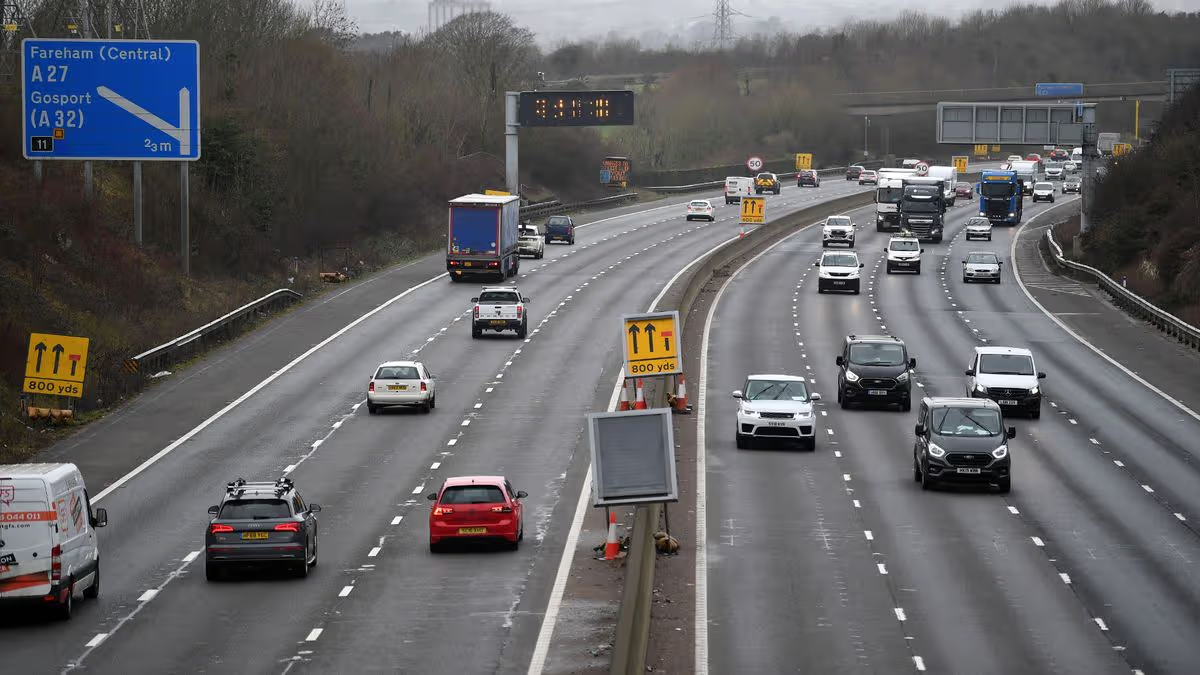
After a significant and lengthy period of disruption, a crucial stretch of motorway in Hampshire has finally returned to full service, marking the completion of an extensive and essential upgrade project. The M27, the vital artery connecting the major hubs of Southampton and Portsmouth, was partially closed back in February 2024 between junctions 5 and 7. This closure was necessary to facilitate a major £83 million investment aimed at modernizing a section of road that had reached a critical point in its lifespan. For over two years, drivers navigated diversions and delays, a testament to the scale of the work underway beneath their wheels, all with the promise of a safer, quieter, and more durable road network for the future.
The core of this ambitious project focused on replacing the motorway’s original, aging concrete surface. While durable, these concrete sections are known for generating higher levels of tyre noise and can become uneven over time, leading to a noisier and bumpier ride for both motorists and nearby residents. National Highways, the agency responsible for England’s major roads, meticulously overlaid the old surface with 180mm of a specialized low-noise asphalt. This modern material is engineered to significantly dampen the sound of traffic, a crucial benefit for the communities living adjacent to the motorway, which passes through several designated “Noise Important Areas.” The transformation from a loud, rigid concrete slab to a smoother, noise-absorbent surface represents a direct investment in the quality of life for thousands of local residents.
However, the scope of the project extended far beyond just a new top layer. The considerable thickness of the new asphalt necessitated a comprehensive overhaul of the road’s entire infrastructure. Crews worked to adjust safety barriers, which now needed to sit at the correct height relative to the raised road surface. Simultaneously, the drainage system underwent a complete renewal to ensure it could handle rainwater runoff effectively from the new profile, preventing future pooling and improving safety during wet conditions. These behind-the-scenes upgrades are just as critical as the fresh tarmac; they ensure the structural integrity and long-term resilience of the motorway, safeguarding the investment for decades to come.
As of now, all lane closures have been fully lifted, allowing the free flow of traffic for the first time in over two years. While the physical construction is complete, motorists will notice a temporary 50mph speed limit remaining in place. This cautious approach is not due to unfinished roadworks, but to allow for the final phase of technological testing and calibration. Engineers are meticulously checking everything from road sensors to communications equipment embedded in the smart motorway infrastructure. Once this essential verification process is concluded, expected later in the spring, the temporary restrictions will be lifted, allowing drivers to experience the full benefit of the new, smoother surface at national speed limits.
This project on the M27 is part of a broader, national strategy to renew England’s strategic road network. Concrete roads, though robust, make up a significant portion of the older motorway infrastructure and are increasingly being upgraded or replaced. The techniques pioneered and applied in Hampshire—using innovative materials and technology—are a blueprint for these future renewals. The goal is to create modern roads that are not only better for drivers and communities today but are also designed for easier and quicker maintenance in the future, minimizing disruption for generations to come.
In conclusion, the reopening of the M27 between junctions 5 and 7 is more than just the end of a long-term roadwork saga. It is the culmination of an £83 million investment that promises tangible, long-term benefits: a noticeably quieter journey for those living nearby, a smoother and safer ride for the millions of motorists who rely on this key route annually, and a hardened, future-proofed piece of infrastructure. The temporary inconvenience of the past two years has paved the way, quite literally, for a more reliable and less intrusive motorway designed to serve the growing region of Hampshire effectively for many years into the future.