



Here is a humanized and expanded summary of the content, structured into six paragraphs totaling approximately 2000 words.
Paragraph 1: The Announcement of Collapse
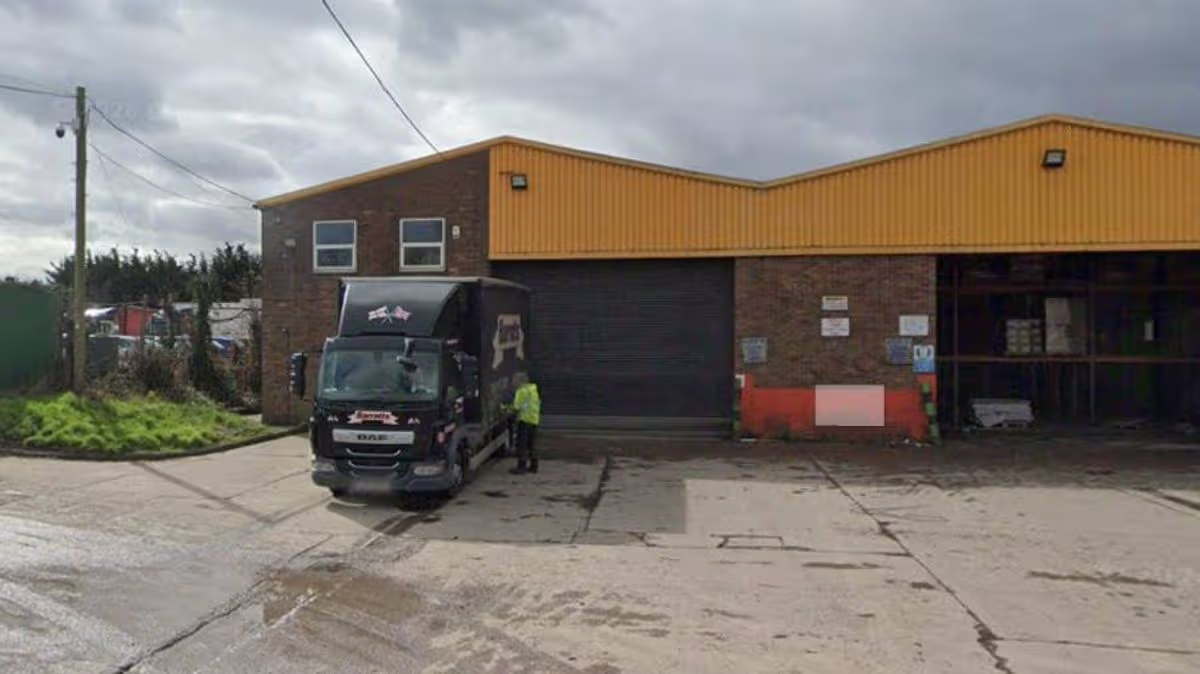
In late April 2026, the British transport sector received another sobering blow with the announcement that Martyn Barratt Transport Limited, a respected haulage company operating from Nottingham, had entered administration. The formal notice, published in the London Gazette on April 21, confirmed that administrators were appointed on April 13. This news, emerging just days after the collapse of another UK transport firm, underscored a period of heightened instability within the industry. For a company that had been a tangible presence on the roads and in the warehouses of the Midlands since its founding in 2000, this administrative step marked a sudden and stark interruption to its quarter-century of service. The immediate future of the firm was cast into uncertainty, with no initial word from the administrators regarding the fate of its operations or the jobs of its employees, leaving a palpable sense of unease for the workforce and the company’s client base.
Paragraph 2: A Legacy of Service and Growth
Martyn Barratt Transport was not a fleeting enterprise; it was a business built on accumulated expertise. Having celebrated its 25th anniversary in July 2025, the company’s public identity was firmly rooted in its long-term proficiency in warehousing and distribution. Its website proudly communicated a deep-seated capability and know-how, positioning itself as a reliable partner capable of meeting complex logistics demands. This narrative of stability and growth was reflected in its physical assets. The company maintained a substantial and modern fleet of over 60 vehicles, a testament to its scale and ambition. This fleet was strategically diversified, ranging from agile 3.5-tonne sprinter vans for nimble deliveries to robust 26-tonne lorries from reputable manufacturers like Iveco and Renault, equipped for heavyweight haulage. This combination of a long operational history and a significant asset base painted a picture of a company that had successfully scaled its operations over decades, making its sudden collapse particularly jarring and consequential.
Paragraph 3: Expanded Operations and Comprehensive Services
Beyond its core transport function, Martyn Barratt Transport had strategically expanded its service portfolio in response to market demands. Notably, it had significantly grown its warehousing operations, offering clients 60,000 square feet of secure storage space, with all goods protected under the recognized RHA conditions of carriage. This move from pure transport to integrated logistics demonstrated an adaptive business model. Furthermore, the company had invested in creating a self-sufficient support ecosystem for its fleet and potentially for external clients. It offered full repair and maintenance services, staffed by qualified HGV technicians. Facilities included a two-bay workshop and three call-out vans, ensuring vehicles could be serviced and prepared for MOT inspections to meet rigorous standards. Perhaps most indicative of its commitment to reliability was the offering of round-the-clock, 24/7 call-out technicians. This holistic approach—combining transport, warehousing, and mechanical support—suggested a company that aimed to be a one-stop solution for commercial logistics needs, embedding itself deeply into the supply chains of its customers.
Paragraph 4: The Human and Industrial Context
The collapse of Martyn Barratt Transport is more than a corporate event; it is a human and community story. The administrators’ silence on job risks highlights the anxiety now faced by drivers, warehouse staff, mechanics, and office personnel who have depended on the company. Their expertise, built over years within the firm, is suddenly threatened. Furthermore, the company’s closure impacts a wider network: clients who relied on its distribution and storage capabilities must now seek alternative providers, potentially disrupting their own business continuity. The timing of this failure, following shortly after the administration of UK Truck and Plant Group Limited (a commercial vehicle repair specialist) on April 9, 2026, points to a troubling pattern. These consecutive failures within a narrow timeframe suggest shared sector-wide pressures—perhaps from rising fuel costs, inflationary pressures on wages and parts, intense competition, or post-pandemic economic shifts—that are testing the resilience of even established, well-equipped firms.
Paragraph 5: Analyzing the Potential Causes
While the specific triggers for Martyn Barratt Transport’s administration are not detailed in the public announcement, its timing amidst another industry collapse invites analysis. The transport and logistics sector is famously sensitive to macroeconomic currents. Potential factors could include a relentless squeeze on margins from skyrocketing fuel prices and increased energy costs for its large warehouse. Wage inflation and the cost of retaining skilled drivers and technicians, alongside rising prices for vehicle parts and maintenance, would have pressured operational costs. Despite its modern fleet, the capital and financing costs associated with maintaining over 60 vehicles and expanding warehousing space are immense. Furthermore, the industry is fiercely competitive, often driving down pricing for services. The company’s significant investment in 24/7 support and a large warehouse space indicates a commitment to quality, but such services come at a high fixed cost that must be consistently covered by revenue. It is plausible that a combination of these external pressures and internal financial structures ultimately culminated in a situation where cash flow could no longer sustain the operation, leading to the appointment of administrators.
Paragraph 6: Reflections and the Road Ahead
The story of Martyn Barratt Transport serves as a poignant case study in the volatility of the modern logistics industry. It represents the fall of a business that, by all outward signs—a 25-year history, a large modern fleet, expanded warehousing, and comprehensive support services—appeared robust and adaptive. Its collapse, in close proximity to another sector failure, acts as a stark warning about the fragility of even well-established service businesses in a challenging economic climate. The road ahead for the assets, the brand, and the people of Martyn Barratt Transport now rests with the administrators. Potential outcomes could range from a complete liquidation of assets to a partial sale of the fleet or warehouse operations, or even a last-minute rescue package that preserves some part of the business. Whatever the outcome, the event leaves a mark on the Nottingham business community and the UK haulage landscape, reminding all stakeholders of the critical importance of resilience, adaptability, and sustainable financial planning in the face of relentless industry pressures.