




In a deeply distressing and profoundly unsettling case that strikes at the very heart of community safety and interfaith respect, a Birmingham court has witnessed a guilty plea to a horrific crime. John Ashby, a 32-year-old man, stood before a judge at Birmingham Crown Court and admitted to the religiously aggravated rape and assault of a Sikh woman in Walsall. The nature of the charges—specifically marked as “religiously aggravated”—indicates that the assault was not merely an act of random violence but was inextricably linked to the victim’s Sikh faith. This detail transforms a terrible personal violation into a pointed attack on an individual’s identity and belief system, sending shockwaves through communities and raising urgent questions about hate-motivated violence and the protection of vulnerable groups. The guilty plea, while sparing the victim the trauma of a trial, underscores the severity of the evidence and the gravity of the offence now officially recorded in the British legal system.
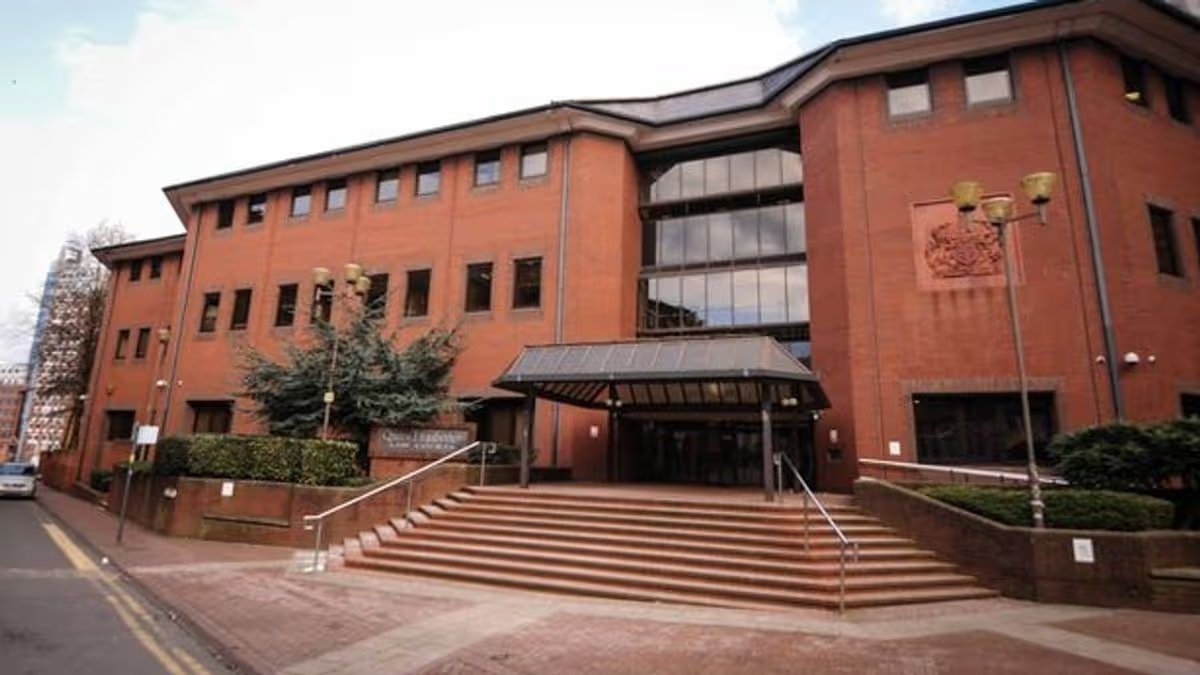
The procedural context of this revelation is significant, emerging as a developing story in the afternoon of April 21, 2026. News outlets, including The Mirror, moved quickly to report the basic facts from the courtroom, labelling it as breaking news with updates provided within minutes—from 15:02 to 15:04. This real-time reporting reflects the immediate public interest and the societal weight such a case carries. The inclusion of a reference image from BPM Media of Birmingham Crown Court roots the story in a tangible, solemn location where justice is being sought. For the public, this initial information is a stark notification, a first glimpse into a narrative that intertwines criminal law, hate crime legislation, and profound human suffering. The guidance to follow various news platforms underscores the story’s evolving nature, where further context, community reaction, and legal proceedings are yet to unfold.
To humanize this stark legal bulletin is to forcibly shift focus from the cold facts of a court report to the devastating human reality they represent. Behind the legal terminology of “religiously aggravated assault” lies a person—a sister, a daughter, perhaps a mother or a friend—whose life has been violently shattered in a manner that targeted her core identity. The Sikh community, known for its principles of equality, service, and distinct articles of faith, now grapples with the pain of one of its own being victimized for those very identifiers. This act does not exist in a vacuum; it implants fear, anger, and trauma that ripple far beyond the individual survivor, affecting families, congregations, and the sense of security within a broader multicultural society. The psychological and spiritual injury inflicted by a faith-based attack compounds the physical violation, creating a long and arduous path toward healing that a court verdict, while crucial, can only begin to address.
The legal term “religiously aggravated” carries specific, heavy implications under UK law. It means the prosecution successfully demonstrated that the offence was motivated wholly or partly by hostility towards the victim’s presumed religious affiliation, or that it involved the demonstration of such hostility during the commission of the crime. This designation is critical, as it acknowledges the particular malice of the crime and allows for a more severe sentence upon sentencing. For the judiciary, it is a mechanism to condemn not just the act of violence, but the poisonous bigotry that fueled it. For society, it is an official recognition that attacks on people for their faith are an attack on the fabric of a pluralistic nation. The guilty plea to this specific charge is a significant step, confirming that this was a hate crime, a category of offence that communities and authorities are striving to confront with greater awareness and determination.
As this story continues to develop, the coming days will likely see a range of necessary responses. The victim’s welfare and access to specialist support remain the paramount concern. Sentencing for John Ashby will be a future focal point, with the judge tasked with weighing the horrific nature of the sexual violence alongside the hate crime element to deliver a punishment that reflects society’s condemnation. Community leaders, interfaith groups, and organisations dedicated to supporting survivors of sexual violence and hate crime will undoubtedly voice their solidarity, calling for vigilance, education, and unity. The case serves as a grim reminder of the work still required to eradicate prejudice and protect every individual’s right to live and practice their faith without fear. It will inevitably fuel discussions on the efficacy of hate crime laws, the importance of reporting such incidents, and the resources needed for survivor recovery and community cohesion.
In conclusion, the guilty plea entered by John Ashby at Birmingham Crown Court marks a critical juncture in a tragic case, but it is not the end of the story. It is the beginning of a judicial reckoning and a societal reflection. While the legal process moves toward sentencing, the human process—one of supporting a survivor, comforting a community, and confronting the bigotry that enables such crimes—continues with profound urgency. This breaking news bulletin, therefore, is more than an update; it is a summons to collective empathy, to justice, and to a renewed commitment against hatred in all its forms. The hope is that from this darkness, a stronger, more vigilant, and more compassionate community resolve can emerge, ensuring that such a violation is not just punished, but that its roots are tirelessly combated.