


Here is a humanized and expanded summary of the content, structured into six paragraphs as requested.
The United Kingdom is in the grip of a profound and tragic crisis, as a wave of drownings has swept across the nation during a period of unseasonably warm weather. In recent weeks, the lives of at least fifteen people have been lost in reservoirs, lakes, rivers, and coastal spots, casting a pall over communities from Scotland to Cornwall. This shocking cluster of fatalities has triggered a major search operation in South Yorkshire today, a stark symbol of the ongoing emergency. The victims, many in the very prime of their youth, were drawn to the water seeking relief and recreation, only to be met with an unseen and deadly peril. Their collective stories form not just a statistical alert, but a devastating narrative of loss that has left families shattered and the public reeling.
A closer look at the heartbreaking list of names reveals a pattern that is both alarming and deeply saddening. The majority of those who perished were teenagers and young adults, their futures abruptly cut short. In Nottinghamshire, a 19-year-old man lost his life at Balderton Lake. In Scotland, 16-year-old Charlie Noble died at Bracklinn Falls. The names continue: 17-year-old David Tita Jr. in Cheshire’s Pick Mere Lake; 15-year-old Chiedza Nyanjowa on Merseyside; 12-year-old Junior Slater in Lancashire’s River Ribble. In Yorkshire alone, 17-year-old Muhammed Secka died at Rother Valley Country Park and 13-year-old Reco Puttock at Leadbeater Dam. Each name represents a universe of potential—a student, a friend, a sibling, a child—whose absence will be felt forever. These are not anonymous statistics; they are individual tragedies that have converged into a national wake-up call.
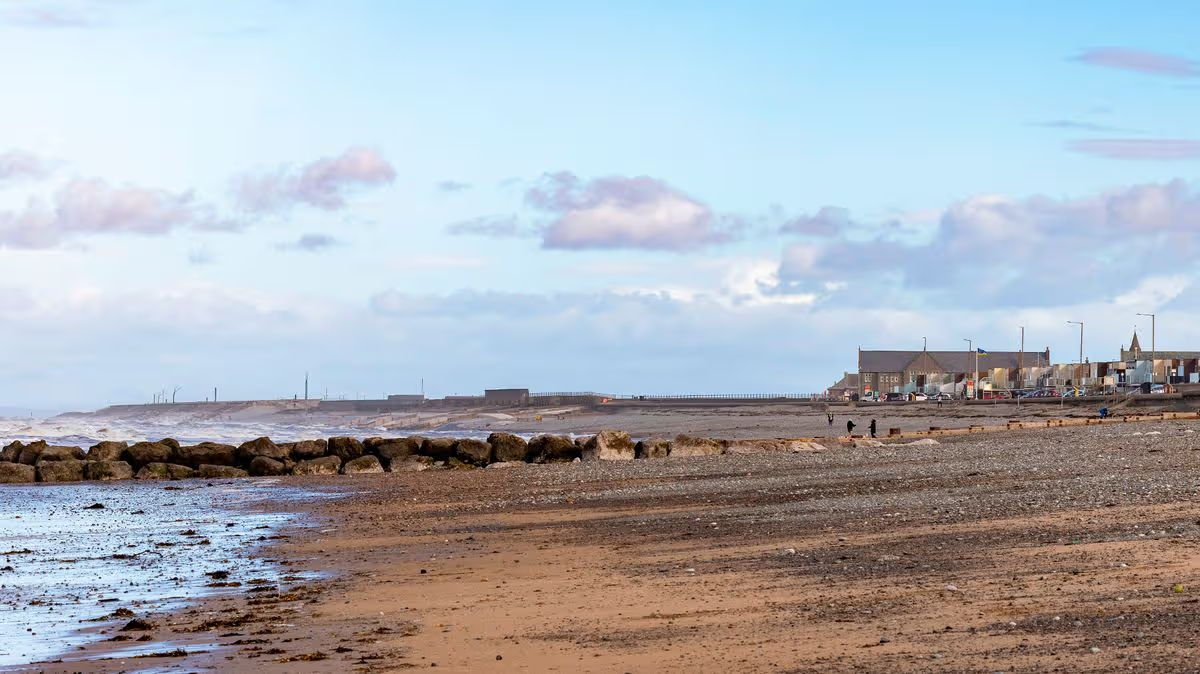
While young people form a significant portion of the victims, this danger does not discriminate by age. The cold water has claimed lives across generations, underscoring that the risks are universal. In Cornwall, a man in his 60s died at Padstow. In Pembrokeshire, a 72-year-old woman lost her life at West Angle Bay Beach. An unnamed man in his 40s reportedly died in the River Yare in Norfolk. These losses remind us that the allure of cooling off on a hot day is ageless, but so too are the hidden hazards of open water. Whether a seasoned local or a visitor, the combination of cold shock, sudden currents, unstable depths, and unseen obstacles can overwhelm even experienced swimmers, turning a moment of leisure into a fatal incident.
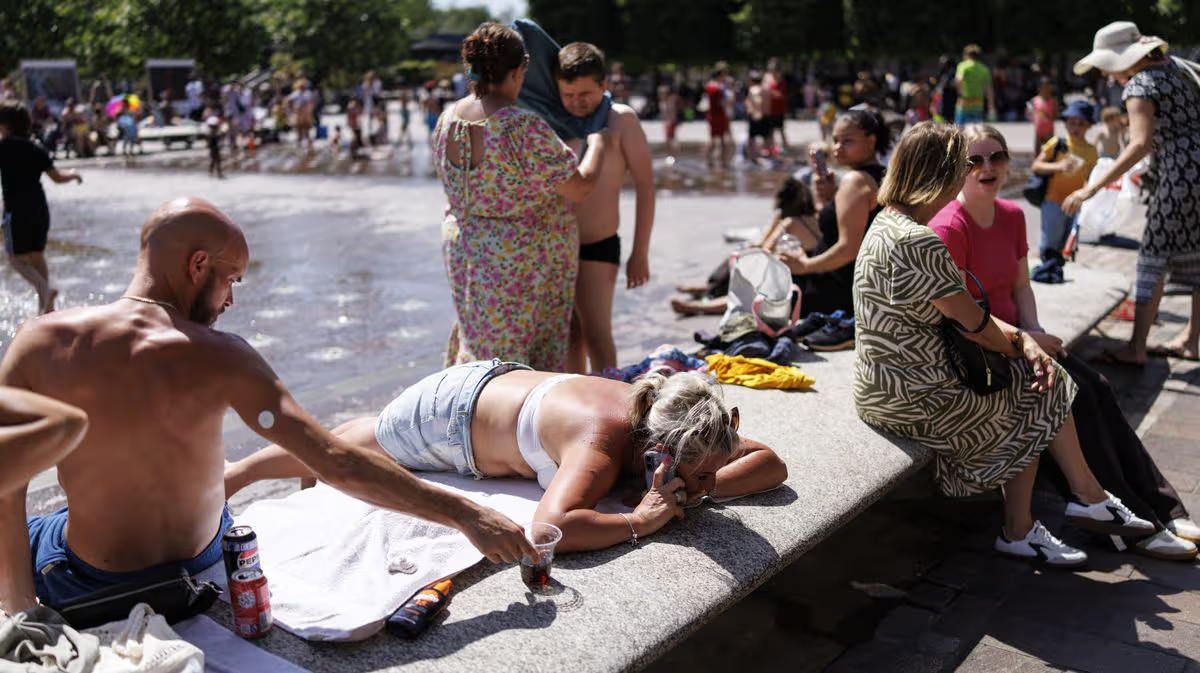
The immediate catalyst for this tragic series of events has been the record-breaking May heatwave that enveloped the UK. As temperatures soared, the nation’s picturesque beauty spots—its serene lakes, meandering rivers, and rugged coastal inlets—became irresistible magnets. The instinct to seek respite from the swelter is natural and powerful, particularly for those without easy access to supervised swimming pools or beaches. However, this instinct collides with the deceptive nature of open water. What appears calm and inviting on the surface often masks dangerously cold temperatures, even on a hot day, which can trigger involuntary gasping and muscle cramps. Strong undercurrents, sudden drop-offs, and submerged debris like rocks or weeds can ensnare even strong swimmers in seconds. The heat, therefore, has created a perfect and deadly storm: soaring temptation meeting unyielding danger.
In response, authorities and safety organisations have issued urgent, stark warnings, pleading with the public to understand the grave risks of unsupervised swimming. The message is clear and unequivocal: open water is not a swimming pool. The campaigns emphasise that cold water shock is a primary killer, that lifeguards are absent, and that help can be minutes away when seconds count. They advocate for visiting lifeguarded beaches or proper swimming facilities instead. These warnings are now tragically underscored by the names of the lost. The major search operation underway in South Yorkshire serves as a real-time, sombre testament to these very dangers—a frantic effort born from a preventable tragedy. It is a visceral reminder that behind every safety bulletin is the very real potential for heartbreak.
This collective loss must serve as a pivotal moment for public awareness and education. Mourning these fifteen lives requires more than sorrow; it demands a concerted effort to prevent future tragedies. Communities are left to grapple with a painful question: how can the simple, joyful act of cooling off on a hot day carry such catastrophic consequences? The answer lies in continued vigilance, in parents having difficult conversations with their children, in schools reinforcing water safety, and in all of us respecting the raw power of nature. As summer approaches, the memory of those lost—from 12-year-old Junior to the unnamed 72-year-old woman—must be honoured not just with grief, but with a renewed commitment to safety. Their stories are a devastating plea for caution, reminding us that the beauty of the UK’s waterways must always be approached with the utmost respect and awareness.