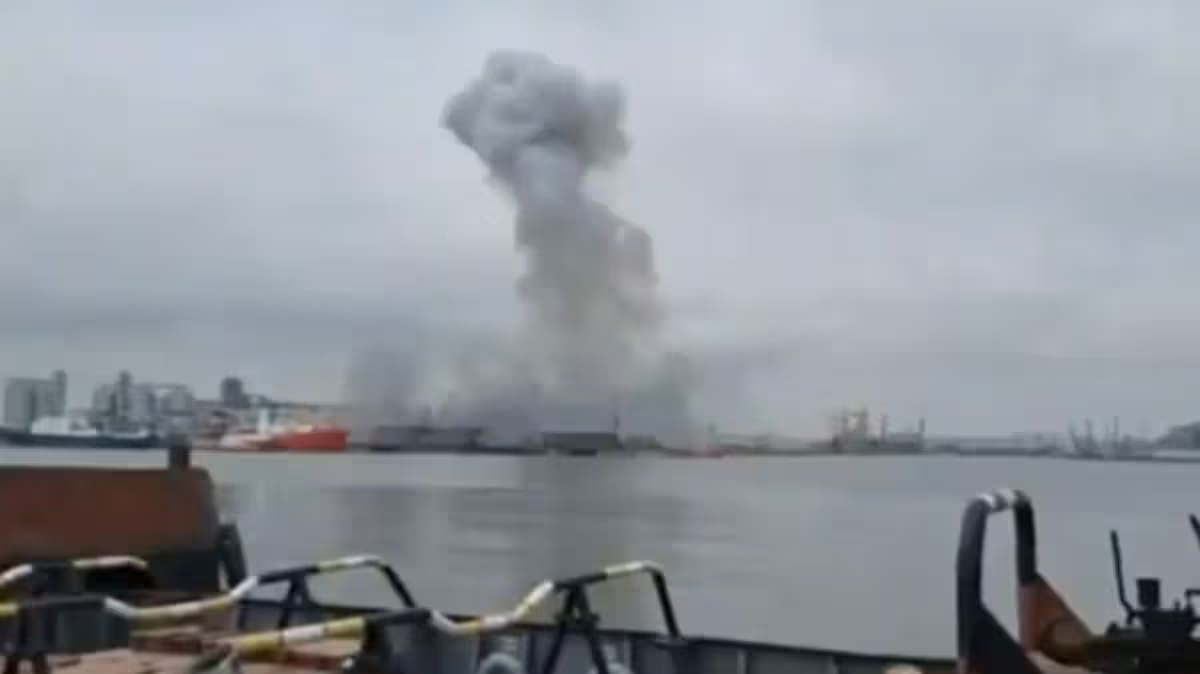




In April 2026, the intricate web of global aviation found itself strained by geopolitical tensions far from European runways. A stark warning from the International Energy Agency (IEA) sent ripples of concern across the continent, indicating that Europe’s stockpiles of jet fuel might only last for about six weeks. This potential shortage, projected to reach a critical point by early June, was directly linked to conflicts in the Middle East that have effectively blockaded the Strait of Hormuz—a vital maritime chokepoint for global energy supplies. With the summer travel season on the horizon, the specter of widespread flight cancellations and operational chaos began to loom, prompting airlines to scrutinize their logistics with renewed urgency.
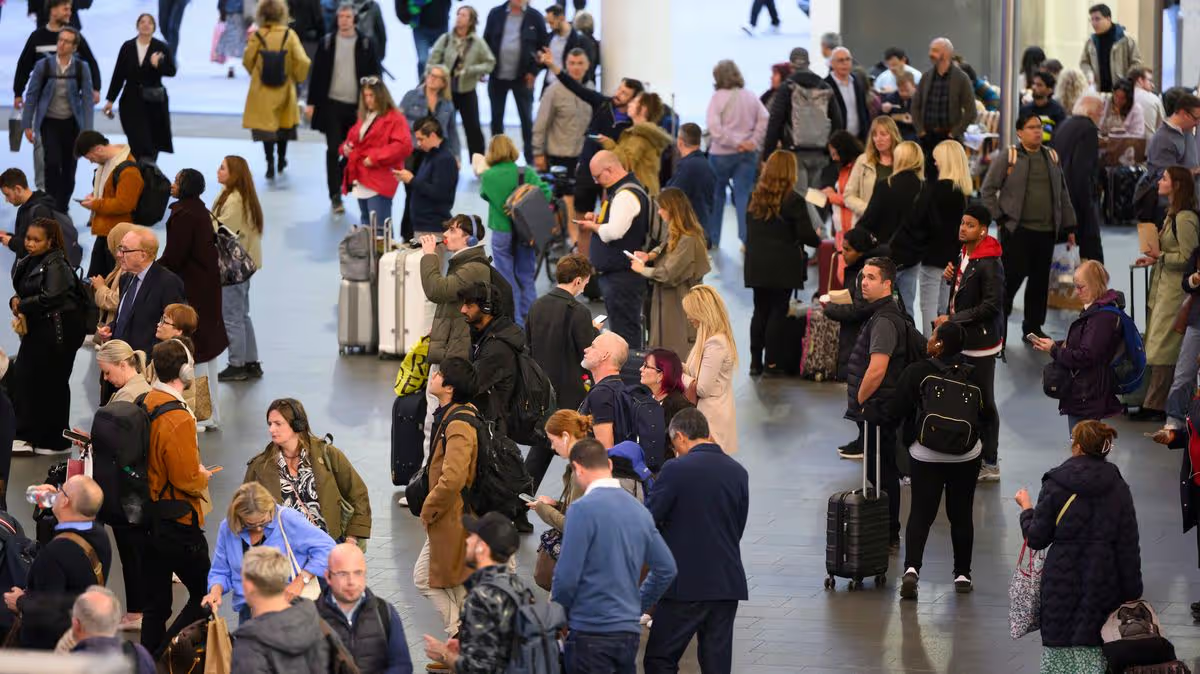
Amid this tense backdrop, KLM Royal Dutch Airlines, a major carrier connecting 19 UK airports to its Amsterdam Schiphol hub, announced targeted adjustments to its flight schedule. The airline was careful to clarify that its decisions were not driven by an immediate physical shortage of kerosene, but by the severe economic pressures caused by its skyrocketing price. The company stated it would cancel approximately 80 return flights within Europe for the coming month, representing less than 1% of its European operations during that period. These were specifically routes that had become financially unsustainable due to the fuel cost surge. For affected passengers, primarily on high-frequency routes to cities like London and Düsseldorf, KLM pledged swift rebooking onto the next available flight, aiming to minimize disruption during the busy May holiday period.
The financial mechanics behind such decisions were illuminated by market analysts like Derren Nathan of Hargreaves Lansdown. He noted the extreme volatility in oil markets, with Brent Crude prices swinging dramatically—soaring over $95 per barrel just days after a precipitous drop to $85. This instability was a direct reflection of the precarious situation in the Gulf, where every diplomatic or military development caused markets to convulse. For airlines, this translated into unbearable cost pressures on thinner, less profitable routes, forcing preemptive cuts to preserve operational viability. The IEA’s warning underscored that these were not isolated corporate decisions but symptoms of a broader systemic risk to European aviation infrastructure.
Simultaneously, KLM made more definitive cancellations extending beyond Europe, directly addressing the regional instability at the heart of the crisis. The airline suspended all flights to and from Dubai, Riyadh, and Dammam until at least June 14. This move, explicitly tied to the “uncertainties” stemming from the Middle East situation, was framed as an effort to provide clarity and certainty to travelers, even if that meant cancelling services well in advance. The airline emphasized that passenger and crew safety remained its paramount concern, acknowledging the significant impact on travel plans and committing to direct communication with affected customers, offering rebooking options or refunds.
Through its communicated actions, KLM presented a case study in navigating a dual-layered crisis: one of pure economics and one of safety and certainty. The European flight reductions were a tactical response to a price shock, a recalculation of profitability in real time. The Middle Eastern cancellations, however, were a strategic response to profound operational and security uncertainty. Both actions, while disruptive, were framed as prudent and proactive measures—a responsible attempt to control what could be controlled amidst wider turbulence, rather than reacting to chaos later.
Ultimately, the situation painted a picture of an industry in a precarious holding pattern. While KLM and other carriers assured the public there was no immediate physical shortage at European airports, the countdown implied by the IEA’s six-week estimate hung over the entire summer travel ecosystem. Airlines, therefore, were walking a tightrope: managing exorbitant costs, preemptively adjusting networks for both profitability and safety, and preparing contingency plans—all while hoping for a diplomatic resolution in the Gulf that would reopen energy corridors. For travelers, the message was one of cautious preparedness; the planned holiday was likely safe, but the landscape of air travel was proving to be more fragile, interconnected, and susceptible to distant storms than many had realized.