


Paragraph 1: The Scene of Violence
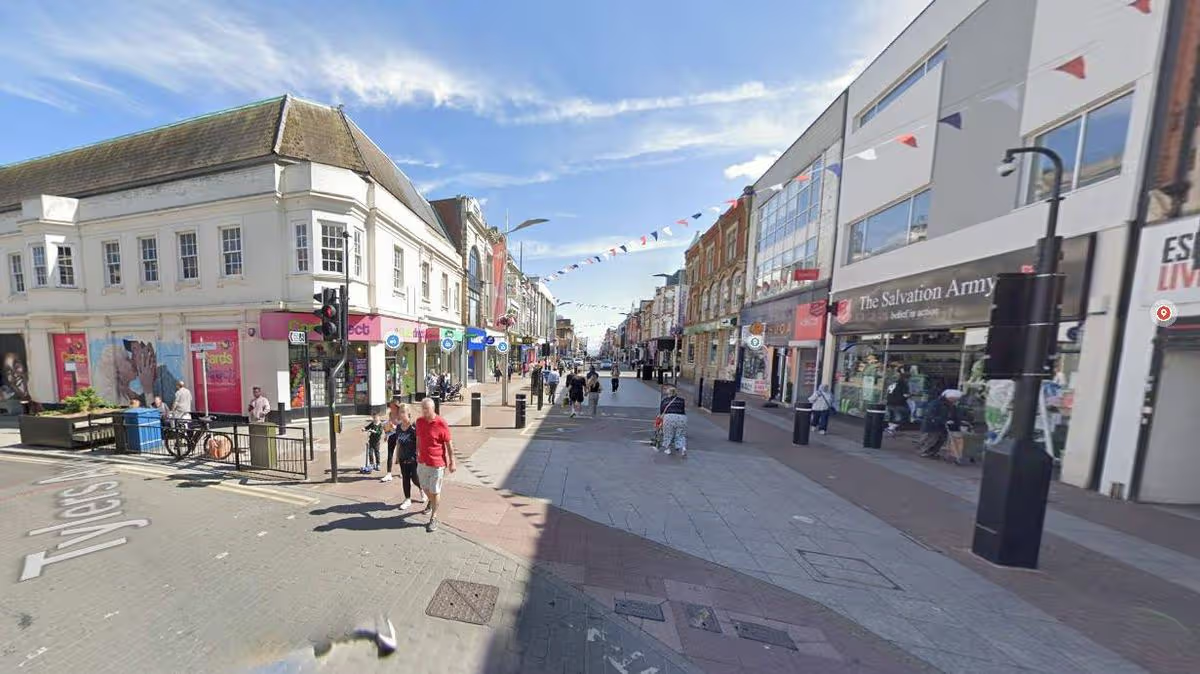
On a Friday evening in early May, the bustling Southend High Street in Essex was transformed from a typical retail and social hub into a scene of alarming violence. What began as a large-scale confrontation involving an estimated thirty young people rapidly escalated into a brutal melee. The conflict was not a simple scuffle; it was a serious public order incident where weapons became a terrifying reality. Bottles and knives were seen and used, turning the street into a dangerous arena. The altercation culminated in two teenagers sustaining significant slash wounds to their faces, injuries severe enough to require immediate hospitalisation. This sudden eruption of collective violence on a main thoroughfare sent shockwaves through the community, abruptly ending the evening’s peace and replacing it with chaos and fear.
Paragraph 2: The Immediate Aftermath and Police Response
The emergency call came into Essex Police just before 8 p.m., prompting a swift and substantial response. Officers descended upon the High Street to find a situation that demanded immediate control and restoration of order. Their first priority was to secure the area, tend to the wounded, and begin the complex process of piecing together what had sparked such a large and armed confrontation. While the two injured youths were rushed to receive medical treatment—their injuries, thankfully, assessed as not life-threatening—police remained on the scene in force. Their visible presence was crucial not only for investigation but to reassure a frightened public and prevent any immediate reignition of violence. The scene was a jarring tableau of a community disrupted, with the normal sounds of evening commerce replaced by sirens and the urgent conversations of law enforcement.
Paragraph 3: Implementing Extraordinary Powers
Recognising the severe threat to public safety and the potential for further violence, Essex Police moved decisively to enact special legislative powers. To prevent the crowd from reforming or the conflict from spilling into neighbouring areas, they instituted a dispersal order under the Anti-Social Behaviour, Crime and Policing Act. This order, covering the High Street, adjacent roads, and the seafront, granted officers the authority to direct individuals to leave the area for a specified time, a tool aimed at proactively diffusing tension. More notably, given the confirmed use of knives, they authorised a Section 60 order. This extraordinary power temporarily suspends the usual requirement for “reasonable suspicion” and allows officers to stop and search anyone in a designated zone for weapons. Simultaneously, a Section 60AA order was activated, enabling officers to demand the removal of face coverings, a measure intended to deter violence and aid in identification. These steps represented a significant, but necessary, escalation in police authority to reclaim the streets.
Paragraph 4: The Human Cost Behind the Headlines
Beyond the legal terminology and the official statements lies a profound human cost. Two young people, likely in their mid-to-late teens, are now recovering in hospital with traumatic facial injuries. The physical scars from such wounds can be lasting, but the psychological impact—the trauma of the attack, the fear, and the potential for lasting disfigurement—can run even deeper. The incident also implicates dozens of other young people, both participants and witnesses, whose lives are now intertwined with a serious police investigation. For their families, and for residents and business owners on the High Street, the event shatters a sense of security. It transforms familiar, everyday spaces into places remembered for danger, forcing a community to confront unsettling questions about youth violence, the accessibility of weapons, and the influences that can lead to such a destructive and public outburst.
Paragraph 5: Community and Policing in the Wake of Violence
In the hours and days following the brawl, the role of local law enforcement shifts from acute response to sustained reassurance and investigation. The police statement emphasised that officers would continue to patrol the area throughout the night and beyond, a visible commitment to deterring any copycat incidents or retaliatory actions. This prolonged presence is vital for restoring public confidence. Meanwhile, detectives begin the meticulous work of reviewing CCTV, speaking to witnesses, and forensic analysis to identify those responsible for the violence and the possession of weapons. The community itself is left to grapple with the aftermath, with local leaders, schools, and youth services likely facing renewed calls to address the underlying issues that fuel such gang-related or group violence among teenagers.
Paragraph 6: A Sobering Reflection on Public Safety
This serious incident on Southend High Street serves as a sobering case study in modern urban challenges. It highlights how quickly a dispute among youths can escalate into a mass violent event when weapons are at hand. The police response, while robust and multi-faceted, is inherently reactive; the dispersal and stop-and-search powers are tools to manage a crisis, not solutions to its root causes. The event inevitably prompts broader societal reflection on topics such as the social dynamics facing teenagers, the channels through which they obtain knives, and the interventions needed to steer young people away from violence. For Southend, the path forward involves both healing from this specific trauma and engaging in the difficult, ongoing work of fostering a community where such a frightening convergence of youth and weaponry becomes unthinkable.