




On a seemingly ordinary October evening in Walsall, a young Sikh woman’s life was shattered by an act of horrific violence, driven by a toxic brew of racial and religious hatred. John Ashby, a 32-year-old man, is standing trial at Birmingham Crown Court, accused of a calculated and brutal attack. The prosecution alleges that Ashby, after spotting the woman in town, deliberately followed her home on a bus, surveilled her property, and then forced his way inside. What followed, as detailed by Prosecutor Phil Bradley KC, was a sustained and sadistic assault during which Ashby repeatedly branded his victim a “Muslim b****,” revealing that his animosity was fueled by the mistaken belief that she was a Muslim woman. This case, therefore, sits at a grim intersection of misogyny, racism, and religious bigotry, representing not just a physical violation but an attack on a person’s very identity and sense of safety in her own home.
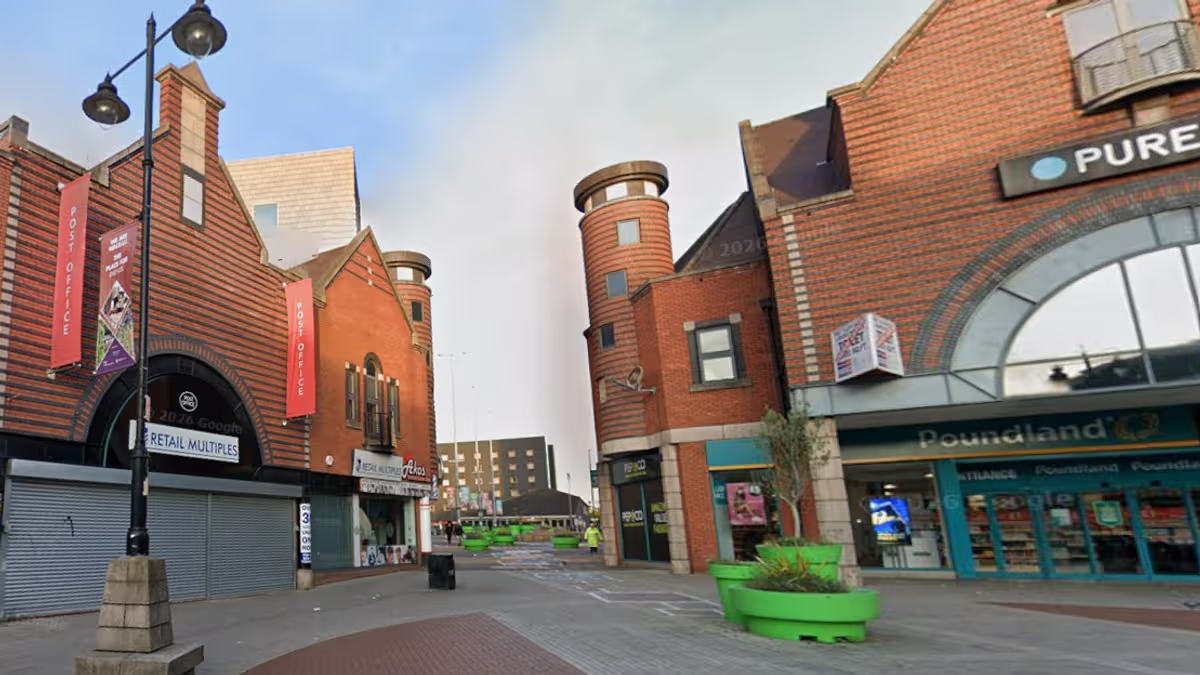
The prosecution outlined a chilling narrative of predation. The woman, who had arrived in the UK for work just weeks prior, was returning home after a trip to Poundland. Unbeknownst to her, Ashby had boarded the same bus and, after moving to sit near her, disembarked to follow her on her short walk home. CCTV evidence placed him scouting her property from a neighbouring driveway, allegedly “assessing how he could get inside.” He armed himself with a stick, hiding it in his jacket, and waited for his moment. Once the woman entered her home and went upstairs, Ashby is accused of barging in as she heard noises and tried to secure the bathroom door. He immediately plunged the room into darkness, announced “he was here to have fun,” and launched a physical and verbal onslaught, striking her with the stick and strangling her.
The assault was profoundly degraded by Ashby’s relentless racist and religious taunts, which the Crown argues makes this a religiously aggravated crime. He allegedly demanded she get into the bathtub, called her “dirty,” and poured hot water over her while commanding her to say “hallelujah.” In a grotesque display of domination, he is accused of slapping her with his genitals and forcing her to repeat a dehumanizing mantra: that he was the “master” and she was a “b**.” The prosecution states he explicitly framed the rape that followed as an act of ethnic and nationalistic conquest, telling her he was there to “give her some British c**, a big white c.” This language transforms the attack from a random act of violence into a deliberate, hate-fueled violation intended to demean not just an individual, but the communities he wrongly associated her with.
In a harrowing struggle for survival, the victim, demonstrating immense courage, eventually seized a chance to flee downstairs under the pretense of fetching oil from the kitchen. She dashed for the front door, only to be dragged back inside by Ashby. It was only when a noise outside allegedly spooked him that she managed to scream for help, telling him it was her housemate returning. Her cries were heard by neighbours, who rushed to the scene to find her naked, hysterical, and utterly traumatized, screaming “help me.” Their intervention ended the ordeal, but the deep psychological scars had been inflicted. The prosecution asserts the evidence linking Ashby to the crime is compelling, including his DNA found on the victim and on items within the home, such as a toothbrush and a vape, and her subsequent identification of him in a police lineup.
Ashby’s alleged attitudes, as presented by the prosecution, further contextualize the hate-driven nature of the attack. When arrested in the Perry Barr area two days later, he reportedly made the comment, “You never see any Englishmen in Perry Barr anymore.” Most tellingly, when shown a photograph of the victim during his police interview—in which he otherwise offered no comment—he asked why she was not wearing a hijab. This question starkly underscores the prosecution’s case: his hostility was explicitly directed at a woman he perceived as Muslim. He denies all charges, including rape, intentional strangulation, robbery, and religiously aggravated assault occasioning actual bodily harm, with the court hearing that the issue at trial is one of consent.
This case holds a disturbing mirror to societal fractures, revealing how prejudice can metastasize into extreme violence. A Sikh woman, targeted due to a bigot’s ignorant conflation of different faiths and identities, suffered an atrocity meant to punish her for simply existing as he perceived her. Her ordeal is a stark reminder of the very real dangers of xenophobia and religious intolerance, and the devastating human cost when hatred is acted upon. As the trial continues, it seeks not only to deliver justice for one woman’s profound suffering but also to formally recognize and condemn the hateful ideology that allegedly fueled her attacker’s cruelty.