

A Stealthy Menace: The Disturbing Spread of Asbestos in Children’s Toys
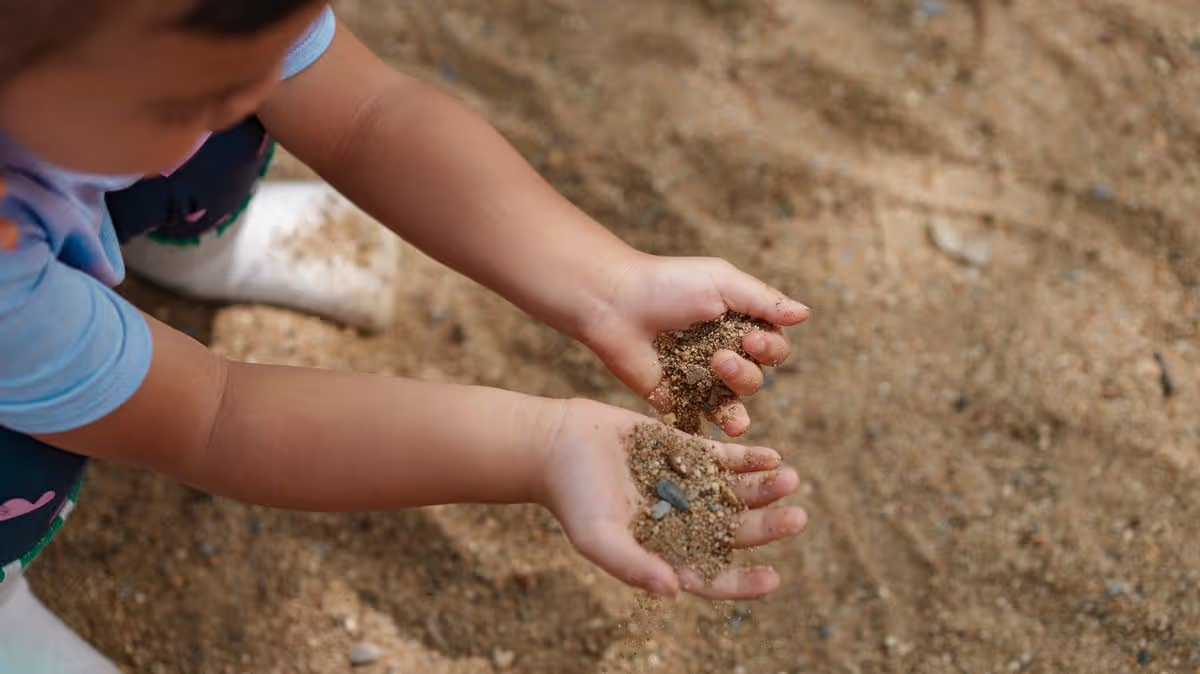
A quiet and alarming public health issue has been unfolding across the United Kingdom, one that strikes at the heart of parental trust and consumer safety. Numerous children’s products, primarily sand-based art and craft kits marketed as educational and creative toys, have been found to be contaminated with deadly asbestos fibres. This contamination has triggered a cascade of recalls, officially exceeding 39 separate notices from the Office for Product Safety and Standards (OPSS) since last November. The repercussions extend beyond living rooms, leading to the closure of children’s playgrounds, school sandpits, and parks—most recently in North East England—as authorities scramble to contain the risk. At the centre of this crisis is a deeply troubling supply chain issue: it is believed the contaminated sand originated from specific quarries in China where asbestos occurs naturally, subsequently finding its way into seemingly innocuous consumer goods.
The danger lies in the specific substance discovered: tremolite asbestos. This is a banned, naturally occurring mineral classified as a human carcinogen by the International Agency for Research on Cancer. All forms of asbestos are prohibited for sale in the UK in any quantity, even at trace levels, due to the severe health risks they pose. When dry, the fine sand in these kits can become airborne, and if inhaled, the microscopic, needle-like asbestos fibres can lodge deep in the lungs. Exposure can lead to devastating diseases such as mesothelioma, asbestosis, and lung cancer, often decades after the initial contact. The profound irony is that these products, like the recalled Montessori sand art tray designed to support fine motor skills and sensory learning, are marketed for hands-on, close-up play, potentially putting children at direct risk during an activity meant for their development.
Recent investigations by the consumer watchdog Which? have exposed critical failures in the retail system, particularly on online marketplaces. Their testing confirmed tremolite asbestos in two additional sand art kits. One, a Montessori-style tray, was being sold on Amazon Marketplace and TikTok Shop. Even more shockingly, a second sand art tray was found for sale on TikTok Shop and by multiple third-party sellers on Amazon months after the same product had been officially recalled by the OPSS in March due to asbestos. This indicates a catastrophic breakdown in the recall process on these platforms, where dangerous, recalled items can remain available for purchase with terrifying ease, highlighting a regulatory grey zone.
The problem is not confined to obscure online listings. Which? also found the contaminated “GL Style Sand Bottle Art Heart or Stars” set, bearing the brand name RMS International Limited, at Asda. While the supermarket initiated a full recall upon notification, the watchdog found what appeared to be the identical kit for sale on eBay through private sellers. This pattern reveals a disturbing trajectory: a contaminated product can be sourced, sold by major retailers, recalled, and then resurface through secondary online resellers, creating a whack-a-mole scenario for safety regulators. It underscores how globalised, complex supply chains and the sheer scale of online commerce can allow hazardous materials to slip through safety nets and circulate widely.
Consumer rights advocates have expressed outrage at these systemic failures. Sue Davies of Which? condemned the situation, stating it is “outrageous that online marketplaces are selling products which may expose children to asbestos,” especially when some items had already been subject to official recall. She emphasised that the current regulatory framework for online marketplaces is “far too limited.” While the Government has proposed new rules that would require such platforms to exercise “due care” in preventing and removing dangerous products, there is an urgent call for robust, enforceable legislation. Critics argue that every moment of delay increases the risk of more dangerous products reaching households, leaving the primary responsibility for vetting product safety with consumers rather than with the platforms facilitating the sales.
In response to the revelations, the involved platforms have taken action. Amazon stated customer safety was its top priority, announcing the removal of all products in the relevant category while it investigates and confirmed the highlighted items were taken down. eBay swiftly removed the identified listings and committed to further sweeps. TikTok confirmed the specific product had been removed from its shop. Asda advised customers to return the product for a full refund. While these reactive measures are necessary, they spotlight a reactive, rather than preventive, model of safety. The ongoing crisis of asbestos in children’s sand serves as a stark warning about the vulnerabilities in modern retail, demanding urgent and stringent regulatory reform to ensure that the digital marketplace is not a sanctuary for goods that would never be tolerated on a physical store shelf.