


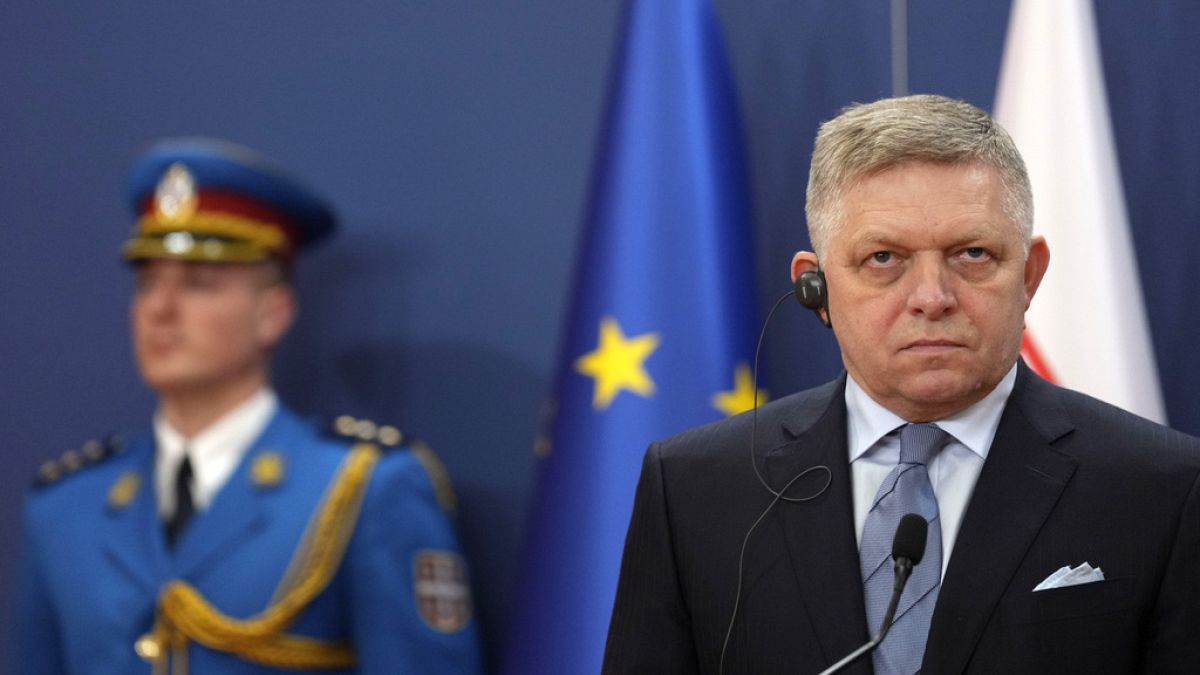
Slovakian Prime Minister Robert Fico’s recent pronouncements on Ukraine’s NATO aspirations and the ongoing conflict with Russia have stirred controversy, reflecting his long-standing pro-Russia stance and skeptical view of Western involvement in the region. Fico has categorically stated his opposition to Ukraine joining NATO, predicting a territorial loss for Ukraine and the continued presence of foreign military forces. While acknowledging Russia’s violation of international law through its invasion, Fico places significant blame on the West for what he perceives as maneuvering Ukraine into a precarious position. This perspective, often echoed in pro-Kremlin narratives, frames the conflict as a consequence of Western expansionism rather than an unprovoked act of aggression. His comments underscore a deep divide within the European Union regarding the approach to the conflict and the future security architecture of Europe.
Fico’s opposition to Ukraine’s NATO membership is not new. He has consistently voiced this position, leveraging his political influence to block any potential progress towards Ukrainian integration into the alliance. His recent pronouncements, made on the eve of crucial EU discussions on Ukraine, reinforce his resolve to prevent NATO expansion, viewing it as a provocative act that escalates tensions with Russia. This stance aligns with his broader skepticism of Western policies towards Russia, which he believes have exacerbated the conflict and undermined regional stability. Fico’s position highlights the complex interplay of geopolitical interests within the EU and the challenges of maintaining a unified front in the face of such divergent perspectives.
The Slovakian Prime Minister’s stance is further complicated by his decision to halt military aid to Ukraine, opting instead to focus solely on humanitarian and civilian assistance. He argues that providing weapons to Ukraine only prolongs the conflict and that the EU should prioritize its role as a peacemaker, facilitating negotiations and de-escalation. This position contrasts sharply with the prevailing view among many NATO members who believe that continued military support for Ukraine is essential to deter further Russian aggression and ensure Ukraine’s ability to defend its sovereignty. Fico’s decision underscores the internal divisions within the EU regarding the most effective means of resolving the conflict and the balance between supporting Ukraine’s defense and pursuing diplomatic solutions.
Fico’s skepticism towards Western involvement in Ukraine and his pro-Russia leanings raise concerns about his potential influence on EU policy discussions regarding the conflict. His public statements, often critical of Western sanctions against Russia, including those targeting Lukoil, reveal a preference for closer ties with Moscow and a skepticism of the effectiveness and fairness of the sanctions regime. This position puts him at odds with numerous EU member states that advocate for maintaining and potentially strengthening sanctions as a means of pressuring Russia to de-escalate and respect Ukraine’s territorial integrity. Fico’s influence within the EU could complicate efforts to maintain a unified and robust response to the ongoing crisis.
Meanwhile, Ukraine views NATO membership as the only viable guarantee of its long-term security, believing that integration into the alliance would deter further Russian aggression and provide a framework for collective defense. This aspiration reflects Ukraine’s deep-seated concerns about its vulnerability to Russian influence and its desire to align itself with Western security structures. However, given Fico’s staunch opposition and the complexities of the NATO accession process, Ukraine’s path to membership remains uncertain and fraught with political obstacles. The ongoing conflict further complicates matters, making it difficult to assess the feasibility and timeline for potential Ukrainian integration into the alliance.
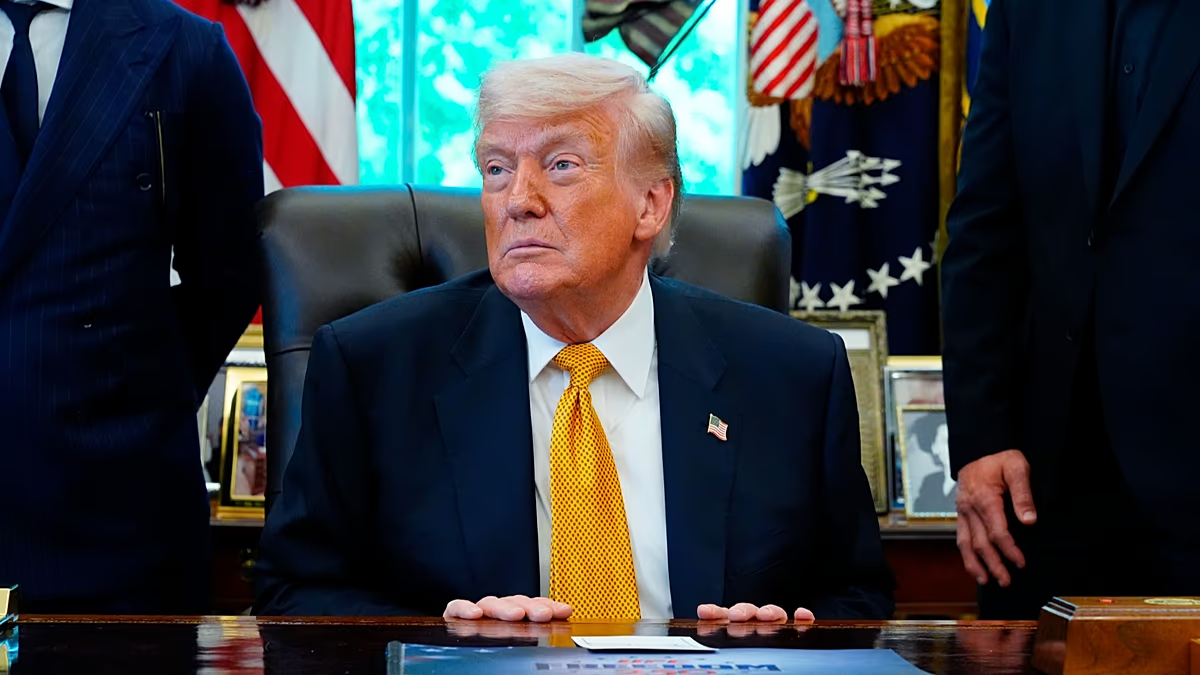
Adding another layer of complexity, the impending second term of US President Donald Trump introduces a degree of unpredictability into the NATO equation. European leaders, including NATO foreign ministers, are awaiting clarity on Trump’s approach to NATO and the Ukrainian conflict. His past rhetoric, characterized by skepticism towards NATO’s effectiveness and a seemingly amicable relationship with Russian President Vladimir Putin, has raised concerns about the future direction of US foreign policy in the region. The uncertainty surrounding Trump’s stance adds to the challenges faced by Ukraine in its pursuit of NATO membership and creates further complexities for the alliance as it navigates the ongoing crisis in Eastern Europe.