In a significant move to solidify European military cooperation and industrial capacity, the German government announced on Monday its intention to acquire a 40% stake in the major defence contractor KNDS. This strategic investment, made in partnership with France, is designed to bolster continental arms production at a critical juncture. The decision deepens state involvement in a company whose tanks and armoured vehicles have become central to Europe’s urgent rearmament efforts, reflecting a shared desire to strengthen the continent’s autonomous defence capabilities amidst a shifting global security landscape.
KNDS itself is a symbol of Franco-German industrial unity, formed in 2015 through the merger of Germany’s Krauss-Maffei Wegmann and France’s Nexter Systems. Prior to this move, the French state held a 50% stake, with the other half belonging to the German family behind Krauss-Maffei Wegmann. Their planned exit provided the opening for the German state to step in directly. The Amsterdam-based group, which reported revenue of €4.4 billion last year and employs over 11,000 people, is now poised to become a uniquely co-owned enterprise, with Berlin and Paris agreeing on future strategy and governance aimed at ensuring equal influence.
The timing of this agreement is deeply emblematic of the current European moment. It comes amid a continent-wide scramble to expand military spending and manufacturing capacity, as governments weigh the persistent threat from Russia’s war in Ukraine against growing uncertainties regarding the long-term reliability of the United States as a security guarantor. Berlin framed its investment in explicitly strategic terms, stating it would secure lasting influence over a business vital to European security, while also reinforcing domestic industrial output, safeguarding key technologies, and ensuring technological independence.
This state-backed consolidation is also seen as a precursor to bringing KNDS to the public markets. While neither government specified a precise timeline, they confirmed the agreement clears the path for a potential stock market listing in the near future. According to reports, the two states plan to eventually trim their direct stakes to around 30% each within a few years of any flotation, while crucially retaining equal voting rights. This structure aims to balance the need for public market capital with the preservation of sovereign strategic oversight, ensuring both nations maintain a decisive say in the company’s direction.
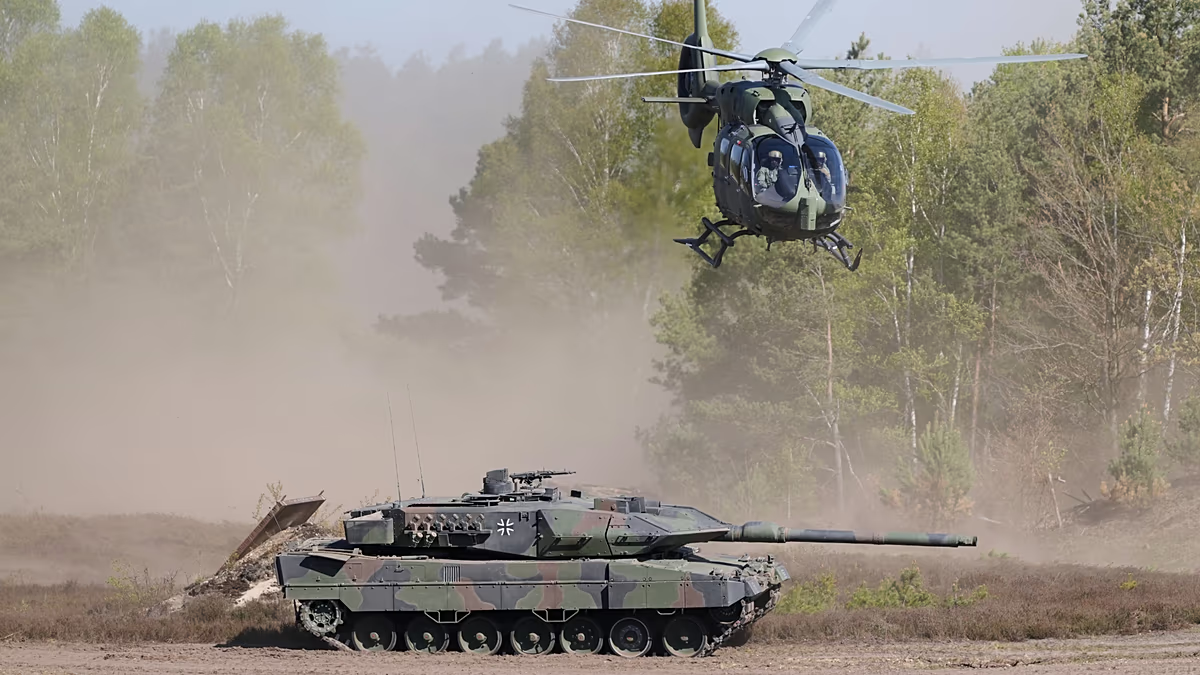
The initiative to bring the German state into KNDS was first championed by Defence Minister Boris Pistorius in 2025 as a means to protect strategic expertise and critical jobs. The company’s product portfolio, which includes the Leopard 2 and Leclerc main battle tanks, the Puma infantry fighting vehicle, and the Boxer and Dingo armoured carriers, is in soaring demand. European armies are urgently seeking to replenish stocks depleted by years of underinvestment and by substantial donations to Ukraine, making the security of this production chain a top national priority for both Berlin and Paris.
Ultimately, this deal represents a profound joint commitment from Europe’s two leading powers to building up the continent’s defence industry and strategic autonomy for the long term. By moving towards a model of shared, structured state ownership, Germany and France are sending a powerful message about their intent to collaboratively shape their security future. They are not merely investing in a company, but in a shared vision of a more self-reliant and resilient European defence ecosystem, capable of facing future challenges from a position of industrial strength and political unity.