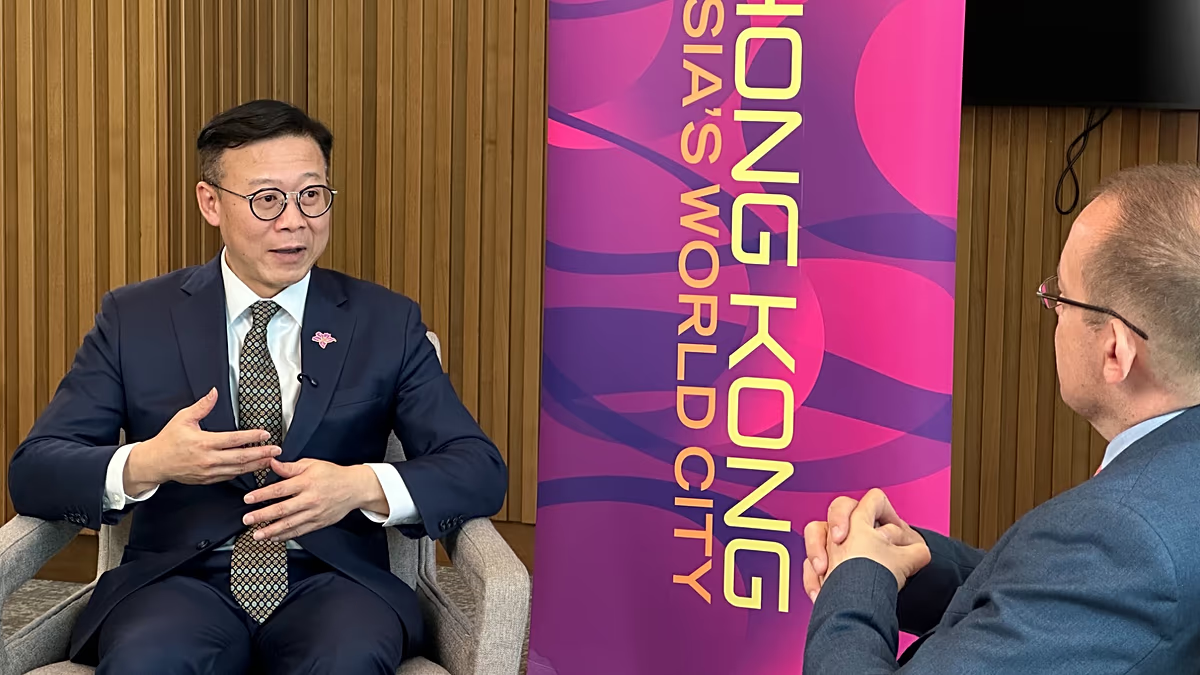



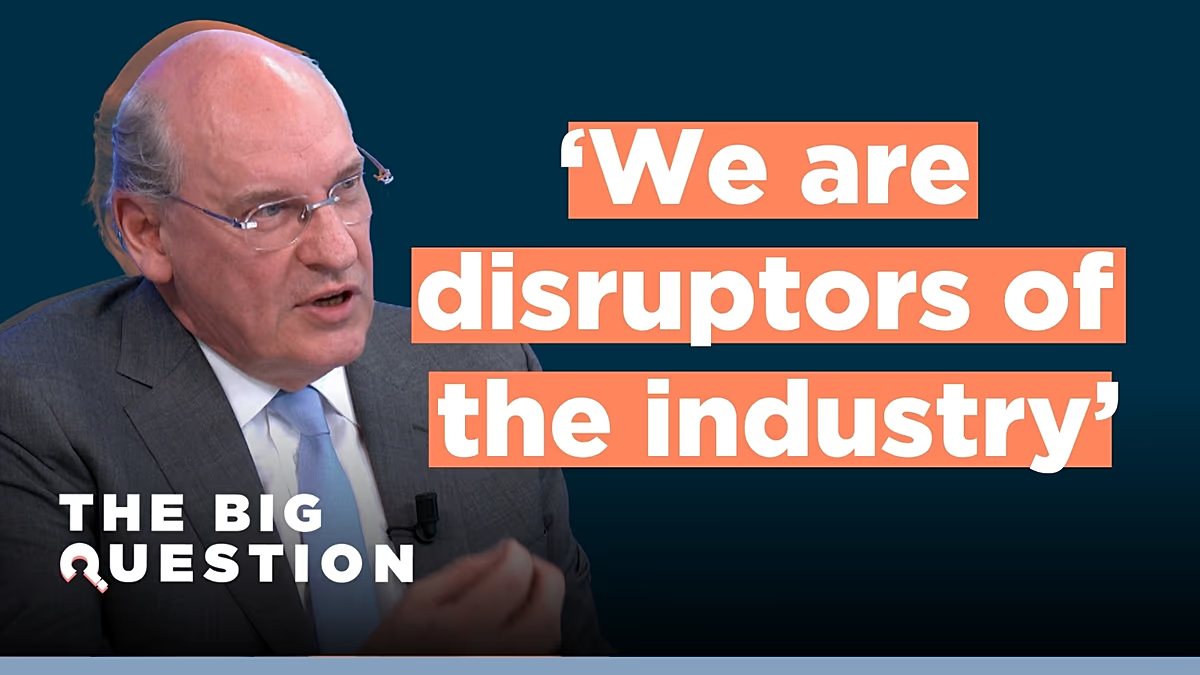
The European aviation sector stands at a pivotal crossroads. Currently valued at $56 billion, the market is projected to surge to over $100 billion by 2030, reflecting a growing global demand for air travel. Yet, this anticipated growth is shadowed by two monumental challenges: the urgent need to meet ambitious European sustainability targets and the increasing geopolitical instability that threatens the traditional fuel supply chain. With recent events causing oil prices to soar past $100 a barrel—and jet fuel costs doubling from $750 to $1,500 per tonne—the industry faces a pressing question: how can it continue to power its planes in a way that is both environmentally responsible and economically secure? This question formed the core of a recent conversation on Euronews Business’s The Big Question, featuring Matti Lievonen, CEO of the sustainable aviation fuel innovator EcoCeres.
In response to these dual crises, companies like EcoCeres are championing Sustainable Aviation Fuel (SAF) as a viable solution. The production of SAF mirrors the process of creating conventional jet fuel, but with a crucial difference: instead of extracting fossil fuels, it utilizes existing biological feedstocks. EcoCeres specializes in transforming what it calls “dirty feedstocks”—such as used cooking oil collected from restaurants, along with animal and fish fats—into a high-performance fuel. The environmental benefit is substantial, with this process reducing lifecycle greenhouse gas emissions by up to 90% compared to traditional fossil-based jet fuel. Based in Hong Kong, EcoCeres has already established a remarkable collection network, partnering with over 350,000 restaurants across China, including major chains like McDonald’s and Subway, to secure its raw materials. Through proprietary technology that filters and processes these wastes, the company has achieved what Matti Lievonen proudly describes as the world’s best conversion rate, boasting an 85% yield from input to output.
Despite considering itself a startup, EcoCeres has rapidly scaled to become the world’s second-largest producer in its field, with an impressive annual output of approximately 770,000 tonnes of SAF. To put this into perspective, a single long-haul flight from Hong Kong to London requires about 60 tonnes of fuel; thus, EcoCeres’ current production can power tens of thousands of such journeys annually. With plans to build a third and fourth production plant and exploring expansion into Europe, the company’s capacity is set to grow significantly. This expansion is timely, as major European carriers like British Airways, Lufthansa, KLM, and AirFrance have already partnered with EcoCeres, integrating SAF into their operations ahead of regulatory mandates. The EU requires a 2% SAF blend in aviation fuel now, increasing to 6% by 2030 and a substantial 70% by 2050, creating a clear and growing market for producers.
For travellers, the transition to sustainable aviation does come with a modest cost implication. Matti Lievonen estimates that on a route like Hong Kong to London, a ticket incorporating a 10% SAF blend would carry a premium of roughly €42. He argues, however, that this is an investment everyone must collectively support. The airline industry itself identifies climate change as its greatest long-term risk, with more frequent and severe hazardous weather events poised to disrupt travel patterns fundamentally. Therefore, decarbonizing aviation is not merely a regulatory obligation but a critical step for the industry’s own future resilience. Furthermore, SAF offers a strategic advantage in terms of energy security. While the price of conventional jet fuel is highly volatile and tied to geopolitical tensions—evidenced by its recent doubling—SAF prices have remained more stable, increasing by only about 30%. Consequently, the price gap is narrowing; where SAF once cost 200-300% more than traditional fuel, it now stands at approximately 150% of the cost, making it an increasingly competitive alternative.
This inevitable shift towards sustainable fuel naturally raises concerns about the future of affordable air travel. Could SAF spell the end for low-cost flights? Lievonen suggests that while all airlines will face the same new cost structures from blending mandates, the fundamental competitive dynamics will remain. Airlines that have built efficient operations and strong business models will retain their price advantages. “It’s not really killing them,” he notes, though he provocatively questions the broader wisdom of ultra-low-cost travel in an era demanding environmental accountability. The added cost of SAF is a tangible step towards internalizing the true environmental impact of flying, a shift that may reshape consumer expectations and industry priorities over time, without entirely eliminating budget-friendly options.
In conclusion, the journey towards sustainable aviation is both a formidable challenge and a necessary evolution. As the industry expands, innovations like those from EcoCeres demonstrate that growth and environmental stewardship can align. By converting waste into valuable fuel, SAF addresses the twin imperatives of reducing carbon emissions and bolstering supply chain security against geopolitical shocks. While passengers may contribute marginally higher fares, this collective effort supports an industry crucial to global connectivity in its transition to a more stable and sustainable future. The path forward requires continued investment, supportive policy, and public acceptance, but the conversation led by The Big Question makes it clear: sustainable aviation fuel is no longer a distant concept but an active and scaling solution taking flight today.