



Paragraph 1
The fragile calm that had briefly settled over global energy markets was shattered over the weekend, reigniting fears of a prolonged disruption to the world’s oil supply. In a sudden reversal, Iran closed the critical Strait of Hormuz once again, just days after signaling it was open for commercial tankers. This move directly contradicted the optimism that had fueled a market rally at the end of the previous week. Compounding the tension, U.S. President Donald Trump declared that an American naval blockade of Iranian ports remained firmly in effect, and the U.S. Navy reportedly seized an Iranian-flagged vessel attempting to circumvent it. Iran condemned the seizure as an act of piracy and promised a response, ensuring that geopolitical temperatures in the Persian Gulf remain dangerously high. This series of events underscores the volatile and unpredictable nature of the ongoing conflict, where diplomatic statements can be overturned by military actions overnight.
Paragraph 2
The immediate financial fallout was stark and concentrated in the oil markets, which are most sensitive to Middle Eastern supply chains. The price of crude oil, which had plummeted nearly 10% on Friday on hopes of a reopening, surged back with a vengeance. U.S. benchmark crude jumped 5.6% to $87.20 a barrel, while the international Brent standard rose 5.3% to over $95. This whipsaw action reflects a market held hostage to headlines, where the physical reality of blocked tankers translates directly into higher costs for energy worldwide. These price spikes are not abstract numbers; they are the precursors to more expensive gasoline, heating oil, and transportation costs, which inevitably filter down to consumers and businesses, acting as a tax on global economic activity.
Paragraph 3
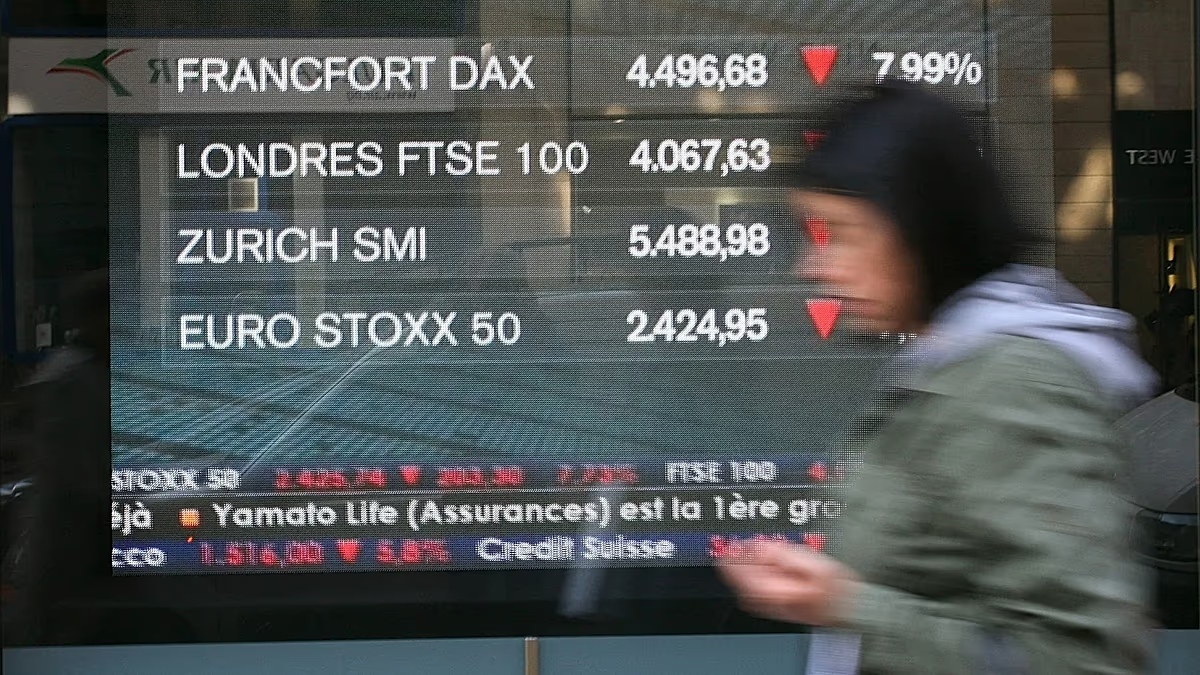
Interestingly, the reaction in global stock markets was more nuanced and seemingly disconnected from the oil shock. Across Asia, major indices mostly climbed higher. Japan’s Nikkei, South Korea’s Kospi, and Hong Kong’s Hang Seng all posted gains, suggesting that investor sentiment was being pulled in multiple directions. This divergence hints at a complex battle between immediate geopolitical fear and other, perhaps more resilient, economic forces. Analysts like Stephen Innes of SPI Asset Management offered a cautionary perspective, suggesting the market’s rise might be fueled more by speculative momentum than solid conviction, warning that “the problem for markets is not the absence of hope; it is the overpricing of it.”
Paragraph 4
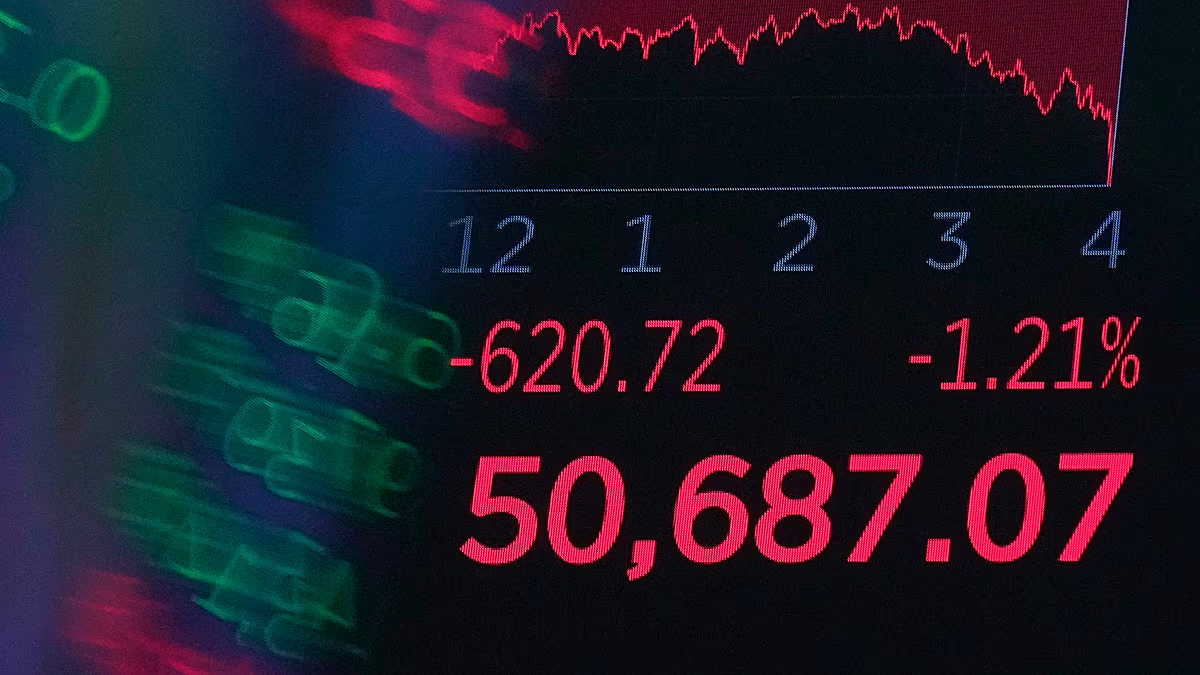
To understand this split reaction, one must look back at the powerful rally that preceded the weekend’s bad news. Just on Friday, U.S. stock markets had soared to record highs, with the S&P 500 leaping 1.2% and the Dow Jones Industrial Average surging 1.8%. This surge was powered by a potent cocktail of relief—stemming from Iran’s initial reopening announcement—and stronger-than-expected corporate earnings reports from American companies. Since a low point in late March, the U.S. market had rallied over 12%, demonstrating a powerful, hope-driven narrative that a worst-case economic scenario could be avoided. The weekend’s events now test the durability of that narrative, forcing investors to weigh robust corporate profits against the tangible risk of an escalating conflict.
Paragraph 5
At the heart of the uncertainty is a precarious diplomatic deadline. A two-week ceasefire between the U.S. and Iran is set to expire imminently, and the recent hostilities in the Strait of Hormuz cast a dark shadow over any new talks aimed at ending the war. President Trump’s mixed messaging—asserting the blockade was “in full force” while also suggesting a deal could come quickly—adds to the confusion. The market is essentially trapped in a cycle of reacting to the latest tweet or official statement, swinging between optimism and gloom. Investors are left to monitor not just traditional economic indicators, but also naval movements and diplomatic communiqués, with the understanding that a single incident could trigger a new wave of volatility.
Paragraph 6
In essence, the global financial landscape has become a tense arena where two opposing forces are locked in a struggle. On one side is the concrete, disruptive reality of geopolitical conflict, physically blocking oil routes and threatening broader instability. On the other is the resilient, forward-looking engine of corporate earnings and a deeply ingrained market hope that a resolution is always just around the corner. The weekend’s events proved that the former can overturn the latter in a matter of hours, particularly in the commodity markets. As the ceasefire deadline looms, the world watches to see whether diplomacy can re-establish a clear path forward or whether the dangerous dance of military posturing and market reactions will continue, keeping the specter of higher energy prices and economic uncertainty firmly in place.