


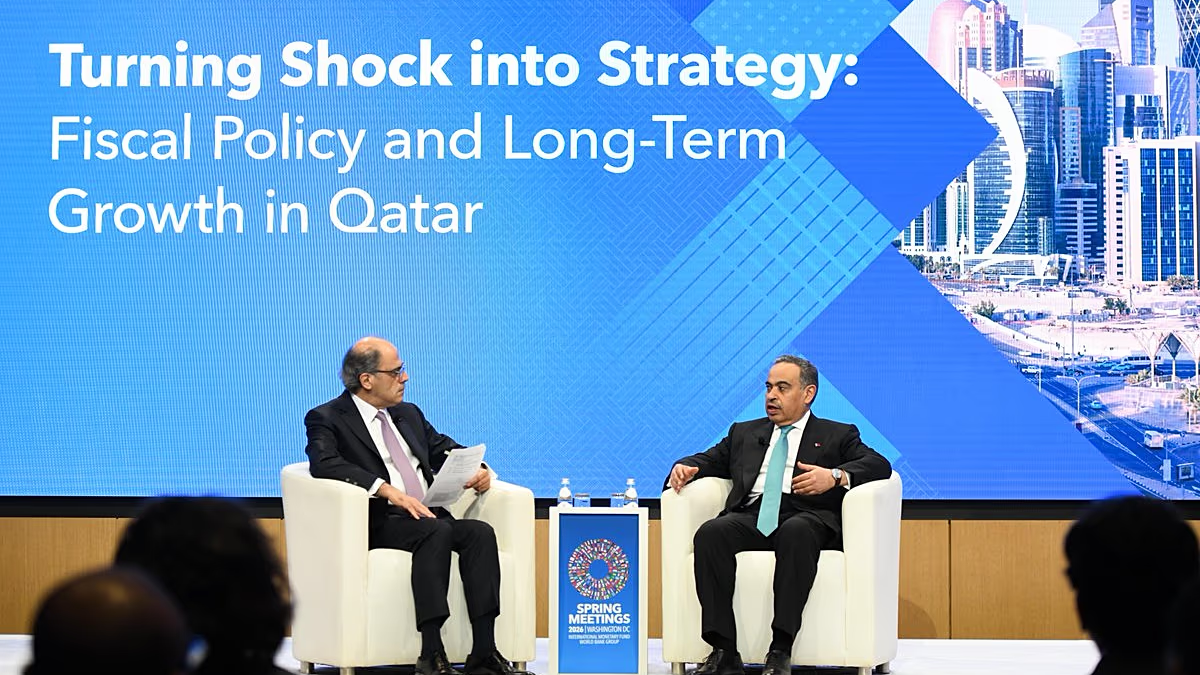
In an address that pierced through the typically measured language of global finance forums, Qatar’s Finance Minister, Ali bin Ahmed Al Kuwari, delivered a sobering prognosis to the International Monetary Fund’s Spring Meetings in Washington. He stated unequivocally that the global economic turmoil experienced thus far—characterized by volatile energy prices and inflationary pressures—is merely “the tip of the iceberg.” The true, more dangerous phase of the crisis is imminent. His central warning was that the world is on the cusp of transitioning from a period of painful price spikes to one of acute physical shortages. If the standoff and ongoing disruptions in the Strait of Hormuz persist, the full force of this shock will be felt worldwide within the coming months, shifting the challenge from one of affordability to one of sheer availability.
The strategic Strait of Hormuz is the world’s most critical energy artery, carrying approximately one-fifth of global oil and gas supplies. However, as Minister Al Kuwari emphasized, its importance extends far beyond fuels. The waterway also facilitates about a third of the global fertilizer trade, making it a linchpin for global food security. Disruptions here threaten to derail planting seasons, potentially triggering cascading food crises. Furthermore, Qatar itself provides roughly 30% of the world’s helium, a non-renewable gas essential for healthcare (MRI machines), advanced electronics, and semiconductor manufacturing. The minister painted a picture of a compounding crisis where energy scarcity converges with threats to food production and critical high-tech supply chains, creating a perfect storm with severe knock-on effects for every sector of the global economy.
The stark reality of these warnings is already visible on the ground in Qatar, a nation that sits at the very epicenter of this geopolitical and economic fault line. The conflict has not been a distant threat but a direct hit: the massive Ras Laffan liquefied natural gas (LNG) facility, one of the planet’s largest, sustained severe damage. This single event knocked out about 17% of Qatar’s export capacity, a significant blow to global gas markets. With repairs potentially taking up to five years, the incident underscores the long-term vulnerability of even the most robust energy infrastructure and guarantees that supply shocks will ripple through international markets for years to come. Qatar’s experience serves as a tangible preview of the fragility of the interconnected systems upon which the modern world depends.
Despite this dire global assessment and the tangible damage to its own infrastructure, Minister Al Kuwari struck a note of resilience regarding Qatar’s domestic economy. He pointed to substantial financial buffers, including a dedicated government “shock fund” and deep sovereign reserves, designed to absorb such impacts and support the economy for many months. Authorities are preparing targeted measures to bolster sectors like aviation, tourism, and manufacturing that have been directly harmed by the disruptions. This bifurcated message is revealing: while Qatar is insulated in the short term by its vast wealth, it is sounding a loud alarm for nations without such cushions. The minister’s reassurance at home only amplifies the gravity of his global warning, highlighting a looming divergence between resource-rich states and the rest of the world.
International economic institutions are aligning with this grim outlook, cautioning that a prolonged closure or instability in the Strait of Hormuz could be the definitive trigger for a global recession. The combination of persistent energy shortages, soaring food prices, and broken supply chains would exacerbate inflation and force central banks to maintain tight financial conditions, stifling growth and investment. The world faces not just an economic adjustment but a fundamental reconfiguration of resource flows. The intermittent ceasefire signals and competing claims over the strait’s status offer little comfort, as the climate of uncertainty itself paralyzes shipping and trade, creating a de facto blockade even without a formal closure.
Minister Al Kuwari’s final words were deliberate and ominous: “The full-fledged impact is coming. It is not far away.” For the world, the message is clear: the economic distress witnessed so far is a prelude. The foundational pillars of global trade—energy, food, and critical materials—are simultaneously under threat. Unless stability is urgently restored to the Strait of Hormuz, the coming months will reveal a crisis far deeper and more systemic than one of rising prices, evolving into a stark battle for resources that will test the resilience of every nation on earth. The tip of the iceberg has been struck; the vast, submerged bulk lies directly ahead.