

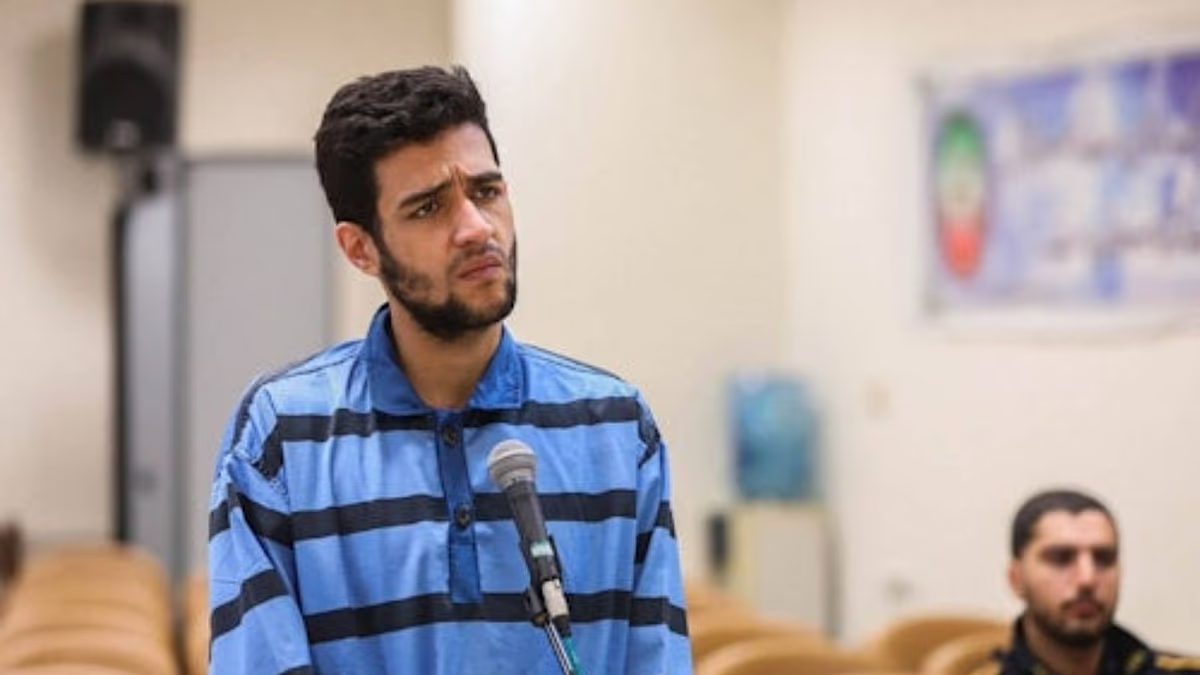
On a Tuesday morning in late April 2026, the Iranian judiciary announced the execution of Amirali Mirjafari. According to the state news agency Mizan, Mirjafari had been convicted of leading a network for Israel’s Mossad intelligence agency, collaborating with the United States, and attempting to set fire to the Gholhak Grand Mosque in Tehran. This act was said to have occurred during the widespread anti-government protests that shook the nation in early January of that year, demonstrations initially sparked by economic grievances before morphing into broader political dissent. The Supreme Court upheld his sentence, leading to his hanging. In official reports, Mirjafari confessed to participating in the protests, damaging public property, and carrying out arson attacks—a confession presented as justification for the ultimate penalty.
However, this judicial process has been met with profound skepticism and alarm from international human rights observers. Organizations like Amnesty International have long documented concerns about Iran’s use of confessions extracted under torture or severe duress, making such admissions highly unreliable. The execution of Mirjafari is not an isolated incident but appears to be part of a grim and accelerating trend. In March 2026, UN Special Rapporteur Mai Sato reported that at least 100 individuals were executed in Iran in January alone, a stark statistic highlighting a drastic surge in state-sanctioned killings. This escalation occurs against a backdrop where comprehensive, verified figures are difficult to obtain, but the trajectory points toward a severe crackdown.
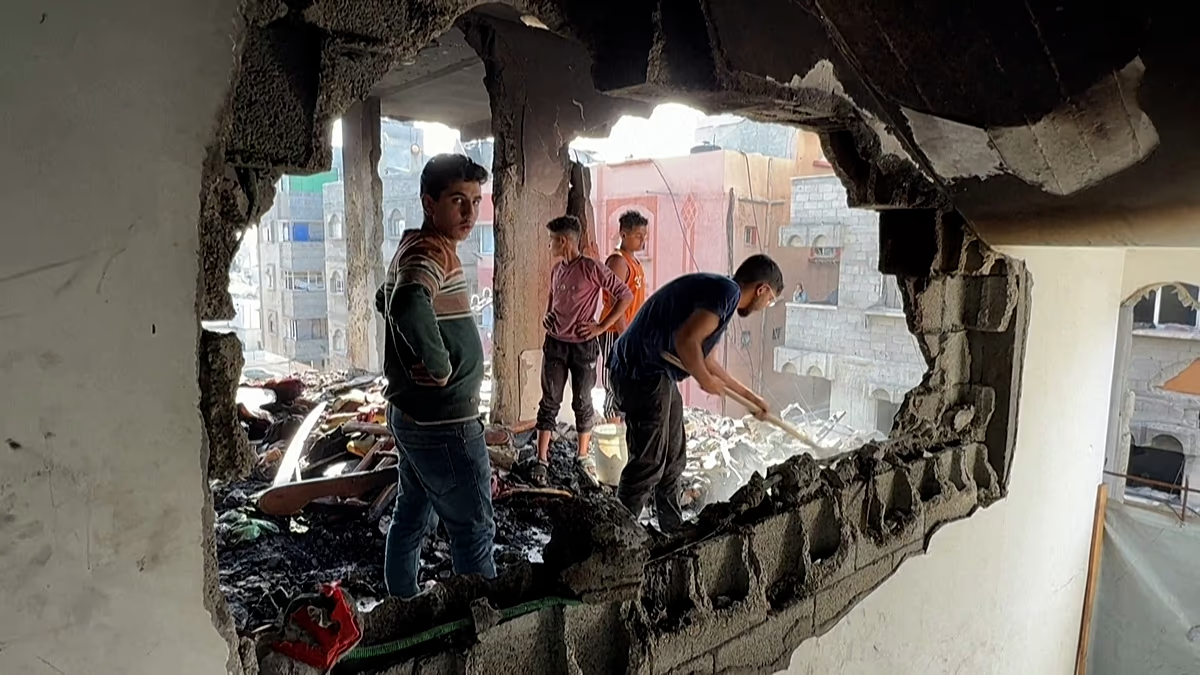
The context for this crackdown is a nation engulfed in what its own officials describe as a “full-scale war.” Since February 28, 2026, Iran has been in a state of open conflict with the United States and Israel, with a fragile ceasefire only taking hold in early April. Within this climate of national crisis, judiciary chief Gholamhossein Mohseni Ejei has publicly called for the faster implementation of sentences—including execution and property confiscation—against those accused of involvement in domestic unrest or of collaborating with foreign adversaries. This rhetoric frames internal dissent as synonymous with external treachery, effectively criminalizing protest and justifying extreme measures under the banner of national security.
Amidst this, a disturbing narrative of mass planned executions has entered the international discourse. US President Donald Trump and White House officials claimed that Iran had halted or canceled around 800 executions in January. Yet, this assertion remains unverified and uncorroborated by independent human rights monitors or journalists. What is verifiable, however, is a clear pattern of accelerating executions, particularly of political prisoners and those linked to the January protests, since the outbreak of the war. Reports indicate these proceedings often occur alongside severe internet blackouts, isolating the accused and obscuring the full scope of the repression from the world.
The human cost of this policy extends beyond a single case. Rights groups warn that many more protesters are at risk of capital punishment, with their trials frequently lacking due process and transparency. One particularly poignant case is that of Bita Hemmati, who is believed to be among the first known female protesters facing the death penalty in connection with the January unrest. Her potential execution symbolizes how the state’s campaign stretches across society, targeting not only those accused of armed action but also participants in peaceful dissent. Each name represents a personal story lost within the cold statistics of a widening purge.
Ultimately, the execution of Amirali Mirjafari is a window into a deeply troubling reality in Iran. It reflects a regime responding to unprecedented internal protests and an external war with escalating brutality, using the judicial system as an instrument of political repression. While official statements speak of enemy collaborators and necessary justice, the international community hears the consistent warnings of human rights defenders about coerced confessions, secretive trials, and a mounting death toll. As a fragile ceasefire holds on the international front, within Iran’s borders, a different kind of war continues—one against its own citizens, waged with gallows and gavels, shrouded in censorship and fear.