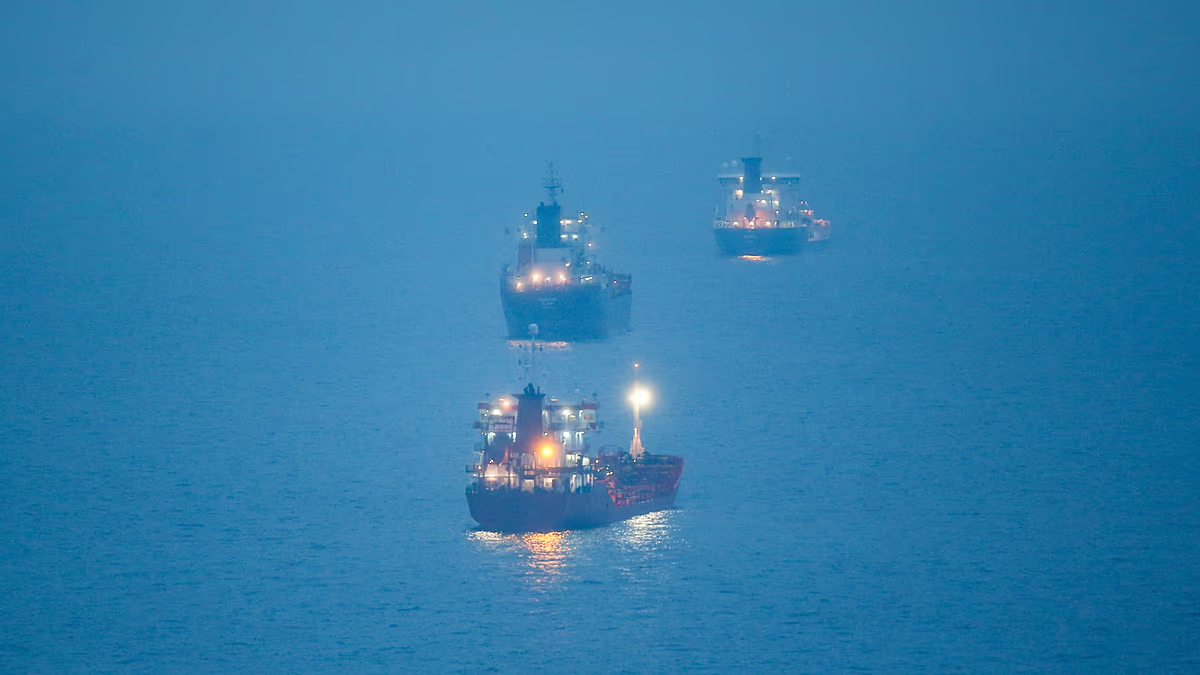



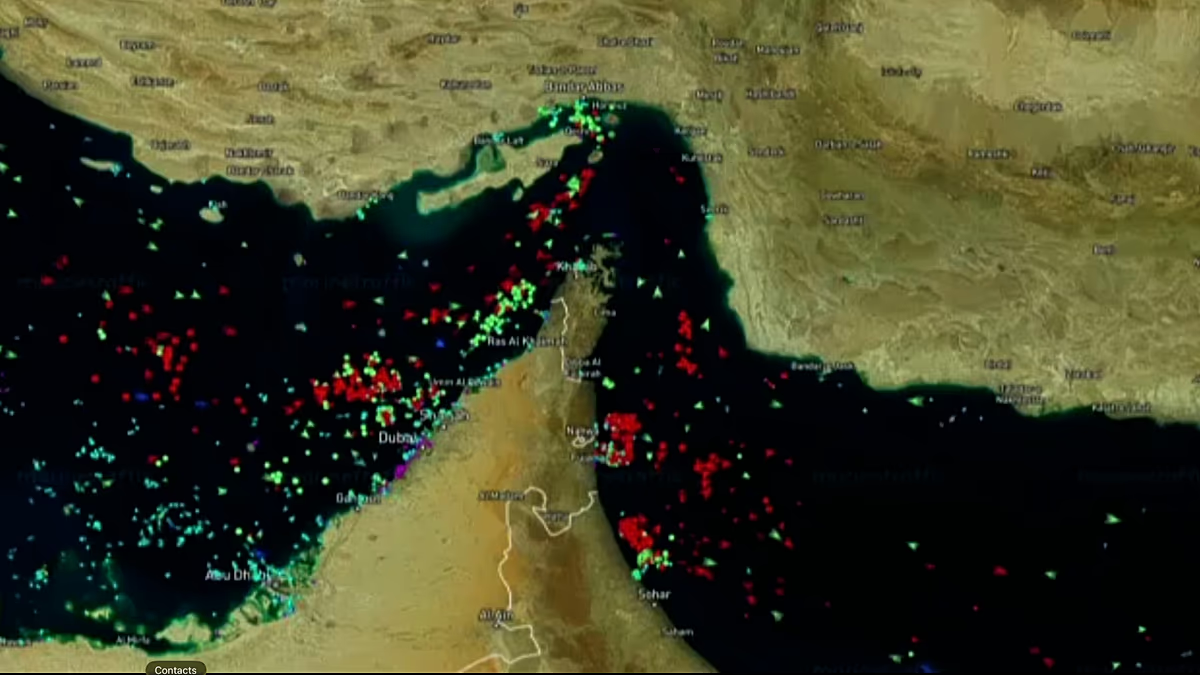
The timelapse footage captured between April 18th and 20th, 2026, presents not just a data visualization of maritime traffic, but a stark and silent portrait of a global economic artery seizing up. The Strait of Hormuz, that narrow, strategically vital channel between the Gulf of Oman and the Persian Gulf, is typically a superhighway of global commerce. On any given day, its waters are dense with the silhouettes of supertankers, each carrying up to two million barrels of the crude oil that powers nations, linking the vast energy reserves of the Middle East to consumers and industries across Asia, Europe, and beyond. Roughly a fifth of the world’s total oil supply, and a third of its seaborne traded oil, flows through this chokepoint. The recent timelapse, however, tells a different story. Instead of a steady, pulsing stream of vessels, it reveals a tense and disrupted flow, a maritime landscape where the normal rhythms of global trade have been replaced by hesitation, rerouting, and alarming gaps in traffic. This visual evidence confirms what shipping logs and insurance markets have been whispering for days: passage has been severely disrupted, casting a long shadow over the global economy.
This disruption does not occur in a vacuum, but is a direct and perilous consequence of the escalating conflict between the United States, Israel, and Iran. Despite a fragile, unnamed truce presumably brokered to prevent all-out war, the waters of the Gulf and the Strait have become the primary battlefield. The truce, it seems, has merely moved the conflict from open aerial warfare to a more shadowy, though no less dangerous, domain of maritime brinkmanship. While a full-scale shooting war may have momentarily paused, the mechanisms of pressure and retaliation have continued unabated. We are likely witnessing a campaign of harassment, involving the threat of seizure, mines, or attacks by Iran’s Islamic Revolutionary Guard Corps navy using fast attack craft and drones. For commercial captains and the multinational companies that own these floating fortunes, the calculation becomes terrifyingly simple: the Strait is no longer a predictable transit route but a potential trap. The decision to slow, stop, or reroute around the Arabian Peninsula—a journey adding thousands of miles and weeks of delay—is a costly but rational one in the face of such palpable risk.
The human and economic costs of this maritime freeze are immense and ripple outwards instantaneously. On the water, the tension is palpable. The crew members aboard those tankers are not just faceless employees; they are seafarers from across the globe, now operating in a state of high alert, their vessels potential pawns in a geopolitical standoff. Their safety is paramount, and the stress of navigating a warzone, even a “cold” one, is immense. Onshore, the impact is measured in soaring prices and mounting anxiety. Global oil markets are intensely sensitive to supply shocks from this region. Even the mere threat of disruption sends futures prices climbing, which translates almost immediately into higher costs for gasoline, heating fuel, and the entire chain of petrochemical-derived products. For economies already grappling with instability, this spike is a body blow, threatening inflation, stifling growth, and placing unbearable pressure on household budgets worldwide.
Furthermore, this crisis exposes the profound fragility of our interconnected global system. The modern world runs on just-in-time supply chains and predictable energy flows. A chokepoint like the Strait of Hormuz is a single point of failure for a staggering portion of this system. The disruption highlights how a regional conflict can—and will—trigger global consequences, reminding us that energy security is national security for every oil-importing nation. The scramble for alternatives begins: releases from strategic petroleum reserves, urgent diplomatic outreach to other oil-producing states, and increased pressure on shipping companies to brave the risks. Yet, there are no easy or quick substitutes for the volume of oil that transits the Strait. The world is, for the moment, held hostage to the tensions playing out in these narrow waters, demonstrating that in the 21st century, economic stability is profoundly vulnerable to geopolitical storms.
The fragile truce itself now hangs in the balance, tested by this very maritime aggression. Iran’s actions in the Strait can be seen as a form of coercive diplomacy—a way to exert tremendous pressure on its adversaries without technically breaking a ceasefire agreement. It signals that Tehran holds a powerful card and is willing to play it to gain leverage in any broader negotiations. For the US and its allies, the challenge is titanic: how to respond forcefully enough to ensure freedom of navigation and deter further escalation, without collapsing the truce entirely and triggering the wider regional war everyone claims to want to avoid. Each naval patrol, each warning shot, each public statement is now a high-wire act. The timelapse footage, in its eerie show of reduced traffic, is thus a real-time referendum on the credibility of this ceasefire and a barometer of the international community’s fear.
In conclusion, the disrupted traffic in the Strait of Hormuz, as captured in those few days of April 2026, is far more than a shipping news update. It is a powerful symbol of a world on the brink, where geopolitics violently intrudes upon the mechanics of daily life for billions of people. The empty sea lanes tell a story of fear, economic vulnerability, and the terrifying ease with which regional conflicts can metastasize into global crises. The situation demands not just tactical naval responses but sober, urgent, and courageous diplomacy. The goal must be to transform the tense quiet of a fragile truce into a genuine and durable peace, one that allows the vital waters of the Hormuz to return to being a conduit for commerce rather than a crucible of conflict. Until then, the world will watch those timelapse maps with held breath, knowing that the flow of oil—and with it, the stability of the global economy—depends on a peace as narrow and precarious as the Strait itself.