

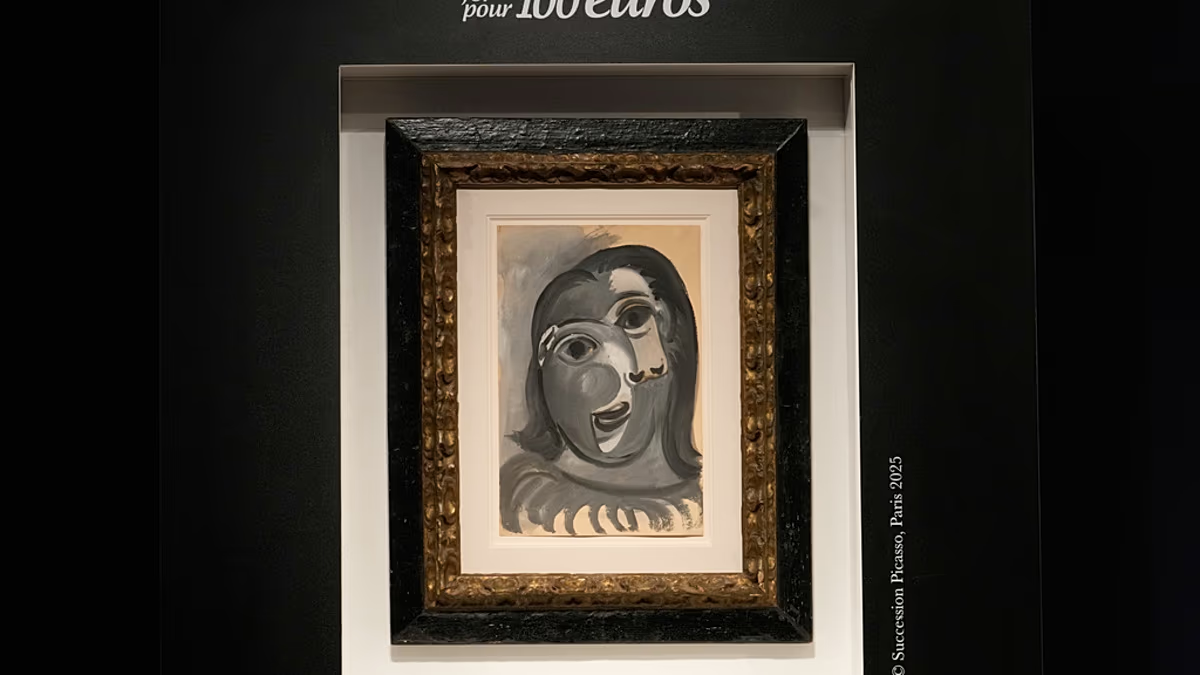
In a stroke of serendipity that reads like a modern-day fairy tale, a Parisian engineer has become the owner of a million-euro Picasso after purchasing a €100 raffle ticket. Ari Hodara, 58, was the name drawn in a live ceremony broadcast by the prestigious Christie’s auction house. The prize was a captivating 1941 portrait titled “Tête de femme” (“Head of a Woman”), depicting Picasso’s famed muse, Dora Maar. Rendered in deep grey and blue gouache, the painting was sourced from the Opera Gallery, which offered it at a preferential price of €1 million for the cause. Hodara, a self-described art lover with a particular passion for Picasso, had stumbled upon the charity raffle online over a weekend meal. His initial reaction to the life-changing news was one of stunned disbelief, asking the organisers, “How do I know this isn’t a joke?” His immediate plan is to share the news with his wife and simply enjoy the masterpiece, intending to keep and cherish it.
This extraordinary event was not a singular gamble but part of a thoughtful, recurring philanthropic initiative. The raffle was masterminded by French journalist Peri Cochin, with the full endorsement of Picasso’s own family and foundation, marking the third such drawing. The first, held in 2013, saw a young American fire-systems worker win “Man with an Opera Hat,” a Cubist-period work. In 2020, an Italian accountant received “Still Life,” a 1921 painting, as a Christmas gift ticket from her son. That work was acquired from billionaire collector David Nahmad, who believed Picasso himself would have approved of this democratic and charitable approach to art ownership. Each event has creatively leveraged the immense appeal of Picasso’s legacy to generate substantial funds for global causes, proving that art can be a powerful engine for goodwill.
The true winner of this raffle, however, is not just one individual but the collective fight against a devastating illness. The €12 million raised from the sale of 120,000 tickets will be directed to the Alzheimer’s Research Foundation, based at Paris’s renowned Pitié-Salpêtrière Hospital. Having become France’s leading private funder of Alzheimer’s research since 2004, the foundation represents a critical frontline in a battle that public funding often leaves underserved. The previous Picasso raffles supported cultural projects in Lebanon and water sanitation in Africa, but this year’s focus taps into a urgent and deeply personal health crisis affecting millions of families worldwide. The staggering sum of €11 million, remaining after the painting’s cost, will fuel vital scientific exploration into a disease that remains poorly understood and incurable.
The director of the foundation, Olivier de Ladoucette, framed the initiative as a necessary response to a profound societal failure. He lamented that funding for Alzheimer’s research remains “derisory,” noting that even in developed societies there is a catastrophic failure to grasp the scale of the public health emergency. “Everyone needs to get involved,” he urged, positioning the raffle as a model of innovative public engagement. By transforming the exclusive world of high-art acquisition into an accessible €100 dream, the campaign builds a vast coalition of micro-donors. It cleverly channels the universal human attraction to fortune and beauty toward a cause defined by loss and forgetfulness, creating a poignant and powerful contrast. This “Picasso initiative,” as de Ladoucette called it, is a building block in an edifice of hope.
For the lucky winner, Ari Hodara, the experience bridges a personal passion with phenomenal luck. As a sales engineer with an appreciation for art, his new possession is more than a financial windfall; it is a direct connection to an artist he admires, a tangible piece of history he can now live with daily. His story underscores the democratising spirit of the raffle—that a masterpiece can move from a private gallery into the home of an everyday art lover, not through vast wealth, but through chance and a charitable heart. It’s a narrative that challenges the traditional gatekeepers of the art world and injects a sense of playful possibility into the often-sober realm of both philanthropy and art collection.
Ultimately, this event is a multilayered triumph. It is a personal dream realized for one man in Paris, a significant financial boost for medical research, and a testament to the enduring power of art to mobilise people. The Picasso raffle demonstrates that creativity can be harnessed not just on the canvas, but in the very methods used to support a better world. It proves that masterpieces can have a second, profound purpose beyond their aesthetic value, serving as beacons to gather resources and attention for humanity’s most pressing challenges. In the end, the story is not merely about a painting won, but about hope being nurtured, one €100 ticket at a time.