



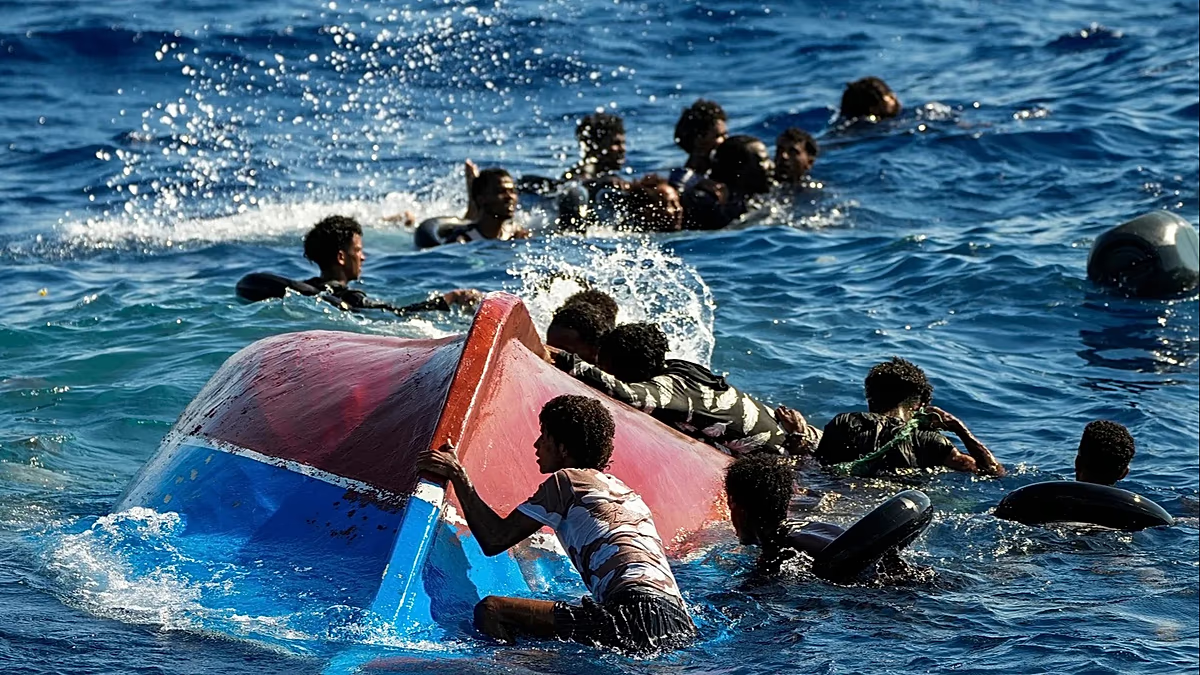
For over a decade, a silent crisis has unfolded along the world’s borders and migratory corridors. In 2025 alone, the United Nations’ International Organisation for Migration documented that 7,904 human beings died or vanished while attempting to reach safety, opportunity, or reunion with family. This grim annual toll, while slightly lower than the record high of the previous year, pushed a devastating cumulative statistic past a harrowing milestone: since 2014, the agency’s Missing Migrants Project has now recorded more than 80,000 deaths and disappearances. These are not abstract figures but represent individual lives cut short—sons, daughters, parents, and friends—each with a story that ended in tragedy. The IOM stresses that these numbers are only the “lowest boundary” of the true count, a conservative estimate that fails to capture the full scale of loss occurring in remote deserts, vast oceans, and other perilous, unmonitored zones where people vanish without a trace.
This enduring catastrophe is not a force of nature but, as the IOM declares, the result of a “global failure to end these preventable deaths.” The agency points to a toxic combination of political inaction, the deliberate closure of safe and legal migration pathways, and in 2025 specifically, an “unprecedented level of aid cuts and restriction of information.” When safe routes are eliminated or made inaccessible, people fleeing conflict, persecution, climate disaster, or profound economic hardship are funneled into ever more dangerous, irregular journeys. Furthermore, efforts to obscure these tragedies—whether through policy or a lack of resources for monitoring—render the missing “invisible,” stripping them of dignity in death and denying their families any hope of closure. The slight statistical decline in some regions, therefore, is not a sign of success but often an indicator of more opaque and restricted movements.
Nowhere is the direct impact of policy on human lives more starkly illustrated than in the Americas. In 2025, a dramatic shift in U.S. border policy and the effective closure of its southern border led to a sharp decrease in northbound movements through Central America. Consequently, recorded deaths on this route plunged. However, the IOM cautions that this apparent positive trend masks a disturbing reality: a severe “dearth of data” from the United States and Mexico, compounded by the agency’s own diminished capacity in the region due to funding cuts. In essence, we may simply be seeing less, not because fewer are dying, but because our eyes have been forcibly shut. The suffering is displaced, not solved, pushing vulnerable individuals towards even more hidden and hazardous alternatives.
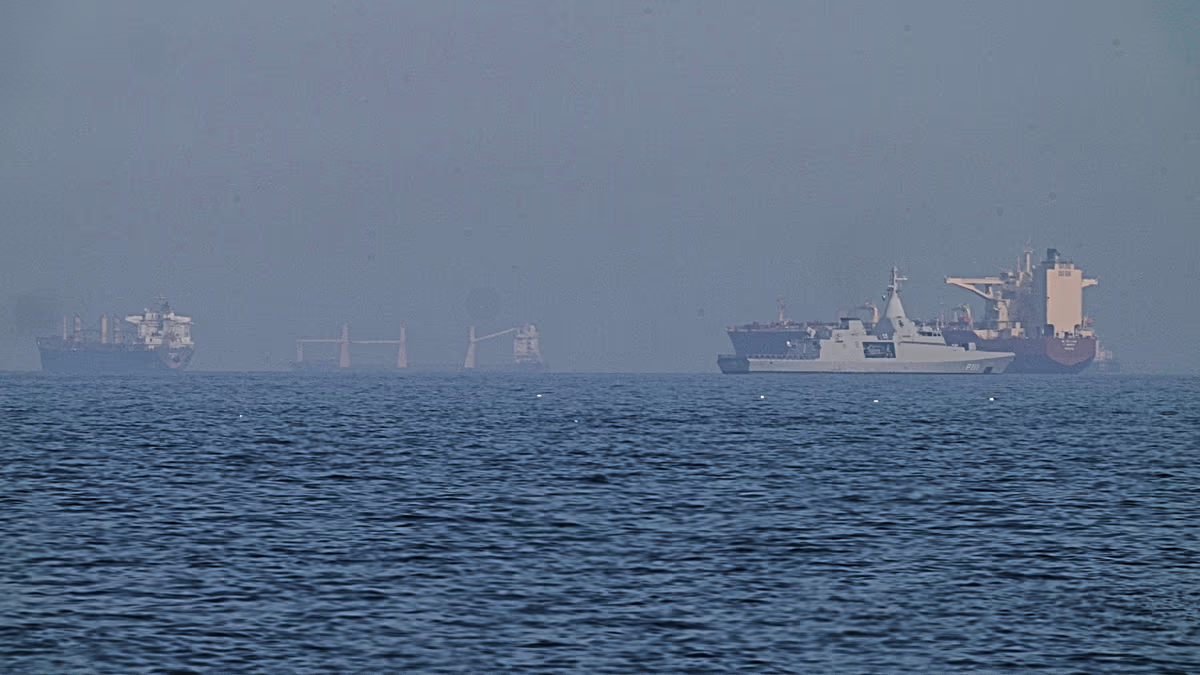
Meanwhile, other regions witnessed record-breaking horror. In Europe, while overall arrivals declined, the central Mediterranean and the deadly Atlantic route to Spain’s Canary Islands remained massive graveyards, accounting for thousands of the 3,400 deaths documented on European sea routes. Simultaneously, in the Bay of Bengal and the Andaman Sea, nearly 900 people, predominantly Rohingya refugees fleeing ongoing persecution, perished or disappeared in 2025—making it the deadliest year on record for this specific crossing. IOM Director General Amy Pope notes that “routes are shifting in response to conflict, climate pressures and policy changes, but the risks are still very real.” The geography of desperation evolves, but the lethal outcomes remain stubbornly constant.
Behind every single one of these 80,000-plus entries in a database are rippling circles of profound anguish. The IOM highlights that at least 340,000 family members have been directly and cruelly impacted by a loved one’s disappearance since 2014. These families exist in a torturous state of limbo—the “ambiguous loss” that is neither death nor life. They endure dire psychological trauma, social stigma, legal battles over inheritance or custody, and economic hardship when a primary breadwinner vanishes. Their search for answers is often met with official indifference or bureaucratic dead ends. They are the invisible casualties of this crisis, left waiting for news that, as Pope somberly acknowledges, may never come.
The solution, as outlined by the agency, requires a fundamental reorientation of global priorities. “Sustained political will,” they argue, is the non-negotiable prerequisite to saving lives. This begins with a commitment to robust, transparent data collection, which is “critical to understanding these routes and designing interventions that can reduce risks.” Ultimately, however, data alone is not enough. It must inform the creation of expanded safe and legal migration pathways—such as humanitarian corridors, enhanced refugee resettlement, and regular labor migration channels—that offer realistic alternatives to smugglers and treacherous journeys. The staggering toll of 80,000 lives lost is a searing indictment of a world that has chosen to fortify borders over protecting people. Until that choice changes, this silent crisis will continue to claim its victims, leaving countless more families in an endless, grieving wait.