



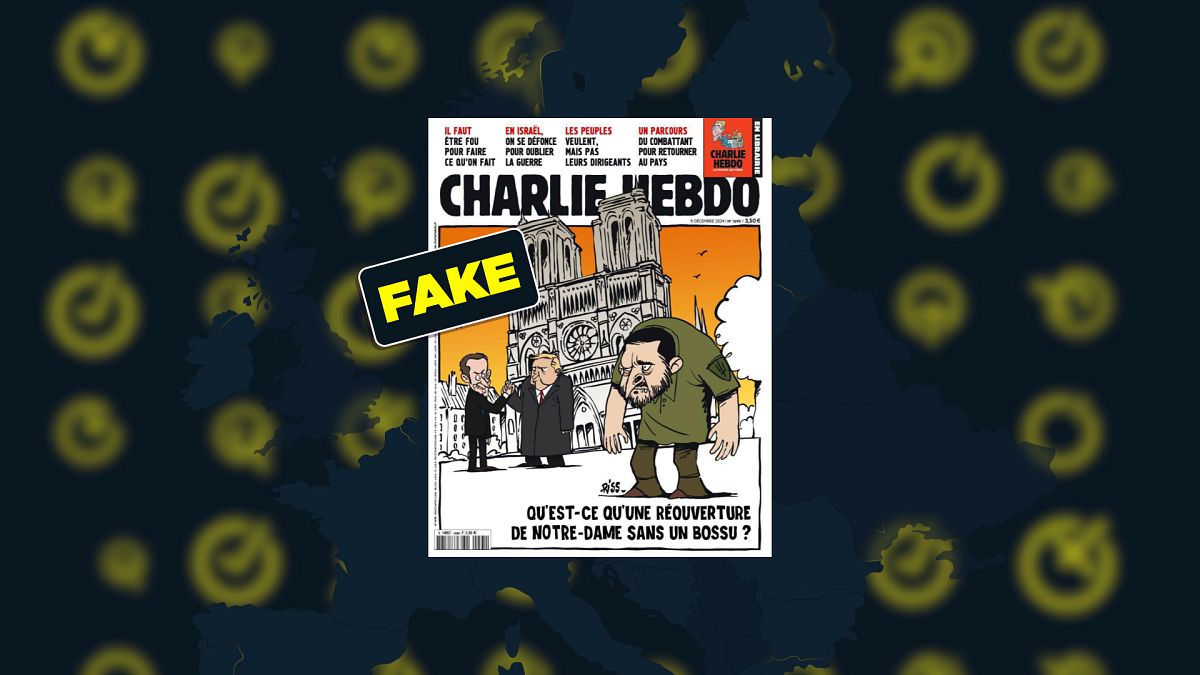
The proliferation of a fabricated Charlie Hebdo magazine cover depicting Ukrainian President Volodymyr Zelenskyy as Quasimodo, the hunchback from Victor Hugo’s renowned novel, serves as a stark reminder of the insidious role of disinformation in modern geopolitical conflicts. This fabricated image, disseminated across social media platforms, exemplifies the calculated tactics employed in Russian propaganda efforts to undermine support for Ukraine and erode Zelenskyy’s international standing. The image, featuring a distorted portrayal of Zelenskyy alongside unrelated figures like Donald Trump and Emmanuel Macron, is often accompanied by captions deriding Zelenskyy’s appeals for international assistance. This manipulation attempts to foster a narrative that even satirical publications like Charlie Hebdo have turned against the Ukrainian president, thereby insinuating a waning global support for his cause.
A closer examination of the fabricated cover reveals several inconsistencies that expose its fraudulent nature. Firstly, the image is conspicuously absent from Charlie Hebdo’s official website. A search for the purported issue number, 1690, reveals an entirely different cover featuring caricatures of Bashar al-Assad, Vladimir Putin, and Iran’s Supreme Leader Ali Khamenei, satirizing al-Assad’s flight to Moscow for refuge. Secondly, the fake cover claims a publication date of Monday, December 9th, which contradicts Charlie Hebdo’s established Wednesday publication schedule. These discrepancies unequivocally confirm the image’s inauthenticity, highlighting the deliberate attempt to mislead and manipulate public perception.
The dissemination of this fake cover follows a well-established pattern of Russian disinformation campaigns utilizing fabricated news materials to sow discord and manipulate narratives. Pro-Russian accounts and media outlets are frequently identified as the primary vectors for spreading this disinformation, suggesting a coordinated effort to erode international sympathy for Ukraine. This tactic aligns with broader Russian propaganda strategies aimed at destabilizing support for Ukraine and fostering division within the international community.
This incident underscores a broader trend within Russian disinformation operations, which often involve the creation and dissemination of fabricated media content, including fake newspaper and magazine covers. These falsified materials serve as potent tools for shaping narratives, discrediting opponents, and manipulating public opinion. The ease with which such fabrications can be disseminated through social media amplifies their impact, making them a highly effective tool in information warfare.
The use of fake news materials in propaganda campaigns serves multiple purposes. It allows for the targeted dissemination of false narratives, often tailored to resonate with specific audiences or exploit existing societal divisions. These narratives can be designed to sow confusion, erode trust in legitimate sources of information, and create an environment conducive to the acceptance of alternative, often pro-Kremlin, viewpoints. The sheer volume of disinformation circulating online can also overwhelm fact-checking efforts and create a sense of ambiguity that benefits the propagandist.
The “Operation Overload” disinformation campaign, involving the dissemination of fabricated Euronews reports, provides a compelling example of how fake news materials are strategically deployed to achieve specific objectives. This operation demonstrated the potential to manipulate media narratives, exhaust verification resources, and amplify the reach of disinformation, effectively polluting the information landscape and hindering informed decision-making. The use of reputable news outlets as a facade further enhances the credibility of these fabrications, making them more persuasive and difficult to debunk. This case serves as a cautionary tale against the dangers of unchecked disinformation and the necessity of critical media literacy in the digital age.
The Charlie Hebdo incident emphasizes the crucial need for heightened vigilance in the face of online disinformation, particularly during times of geopolitical conflict. The ease with which manipulated images and fabricated news stories can be disseminated across social media platforms demands critical analysis of information encountered online. Verifying sources, cross-referencing information, and scrutinizing inconsistencies are essential practices for discerning genuine news from fabricated narratives. This incident also underscores the importance of media literacy and the development of critical thinking skills to navigate the complex information environment of the digital age effectively.