



The Humble Legume: A Powerful Prescription for Heart Health
In an era where dietary advice often feels complex and contradictory, a comprehensive scientific review offers a refreshingly simple and accessible message: incorporating more beans, peas, and soy into our diets could be a transformative step toward protecting our heart health. Published in BMJ Nutrition Prevention and Health, the research synthesizes data from over 100,000 participants across 12 studies, presenting compelling evidence that these everyday foods are potent allies in the fight against high blood pressure, a silent but major risk factor for heart attacks and strokes. This finding cuts through the noise, pointing us toward affordable, versatile pantry staples as a cornerstone of preventive health.
The study zeroes in on legumes—the family of plants that includes beans, peas, lentils, chickpeas, and peanuts—as well as soy-based foods like tofu and tempeh. The analysis revealed a strikingly clear dose-response relationship. Consuming an average of just under two portions (approximately 170 grams) of legumes daily was associated with a 30% lower risk of developing hypertension. To visualize this, 100 grams equates to about one cup or five to six tablespoons of cooked beans or lentils, an amount easily incorporated into a single meal. Similarly, eating 60 to 80 grams of soy foods daily was linked to a 28-29% risk reduction. These are not abstract or extreme quantities but practical, achievable dietary shifts.
So, what gives legumes and soy their blood pressure-lowering superpowers? As explained by study author Dr. Dagfinn Aune, the benefit lies in their unique nutritional profile. They are rich repositories of potassium and magnesium, minerals proven to help relax blood vessels and counteract the effects of sodium. Furthermore, they are an excellent source of dietary fiber, which contributes to cardiovascular health through multiple mechanisms, including improving cholesterol levels and promoting a healthier gut microbiome. Beyond these staples, legumes contain a suite of bioactive compounds that support overall vascular function. Importantly, they deliver this nutritional bounty while being naturally low in saturated fat and salt—the very dietary culprits often implicated in hypertension.
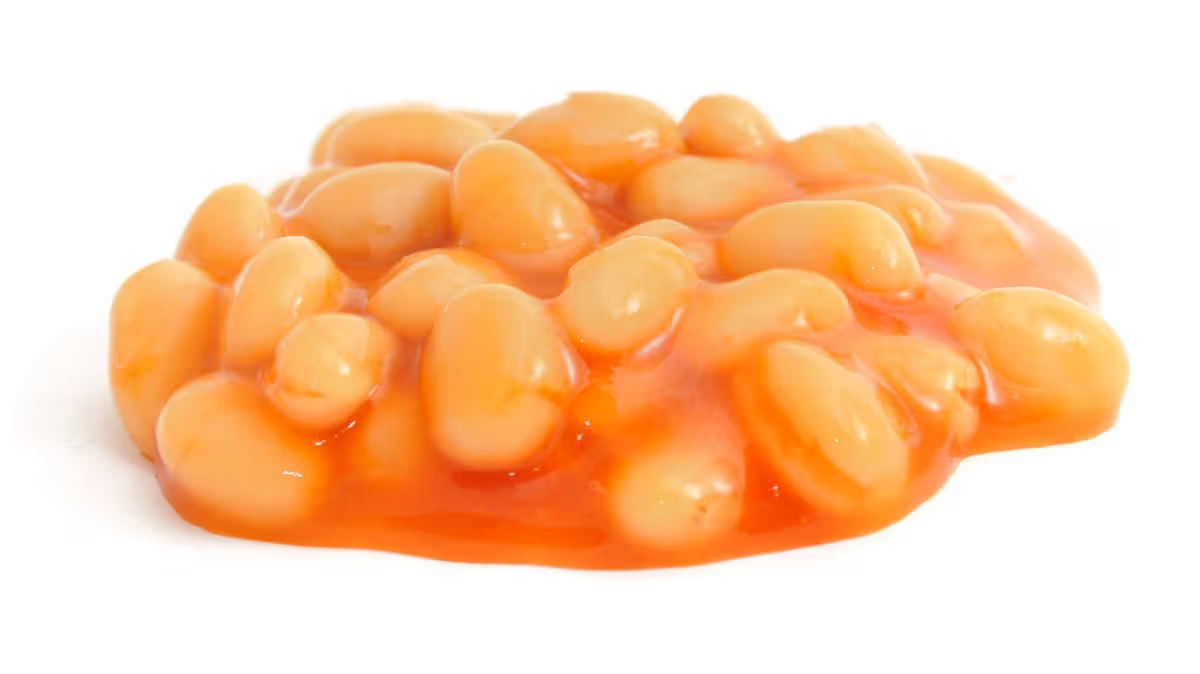
This research powerfully reinforces the concept of food as replacement. The health impact is magnified when legumes and soy displace less healthy options, particularly processed and red meats. Swapping sausages for baked beans on a breakfast plate, or choosing a lentil Bolognese over a minced beef version, accomplishes two beneficial things: it adds a wealth of protective nutrients while simultaneously removing sources of excess saturated fat, salt, and preservatives. Tracy Parker, a senior dietitian at the British Heart Foundation, emphasized this “double benefit” in her commentary on the study. She notes that such simple, affordable swaps are a pragmatic way for people to make a meaningful difference to their cardiovascular risk profile.
While the findings are clear, a note of nuance is important, particularly regarding popular canned foods. Baked beans, a beloved staple, are indeed made from healthful navy or haricot beans. However, the tomato sauce they are often packed in can contain significant added sugars and salt, which can mitigate their benefits. Opting for reduced-sugar and reduced-salt varieties, or preparing homemade versions, allows one to capture the full advantages of the legumes. The guidance is not about perfection but about informed choices—reading labels and recognizing that a can of beans in a simple tomato sauce is still a far superior choice to processed meat products.
Ultimately, this review consolidates a compelling body of evidence into actionable public health advice. It dovetails seamlessly with existing UK and international guidelines promoting plant-based proteins. For individuals concerned about heart health, managing blood pressure, or simply seeking to eat more nutritiously, the message is straightforward: embracing beans, lentils, chickpeas, peas, and soy is a profoundly effective strategy. They are not just sides or supplements but can be hearty, satisfying centerpieces of a meal. In championing these accessible foods, the research empowers us to take control of our health with every forkful, proving that powerful medicine can indeed come from the kitchen cupboard.