

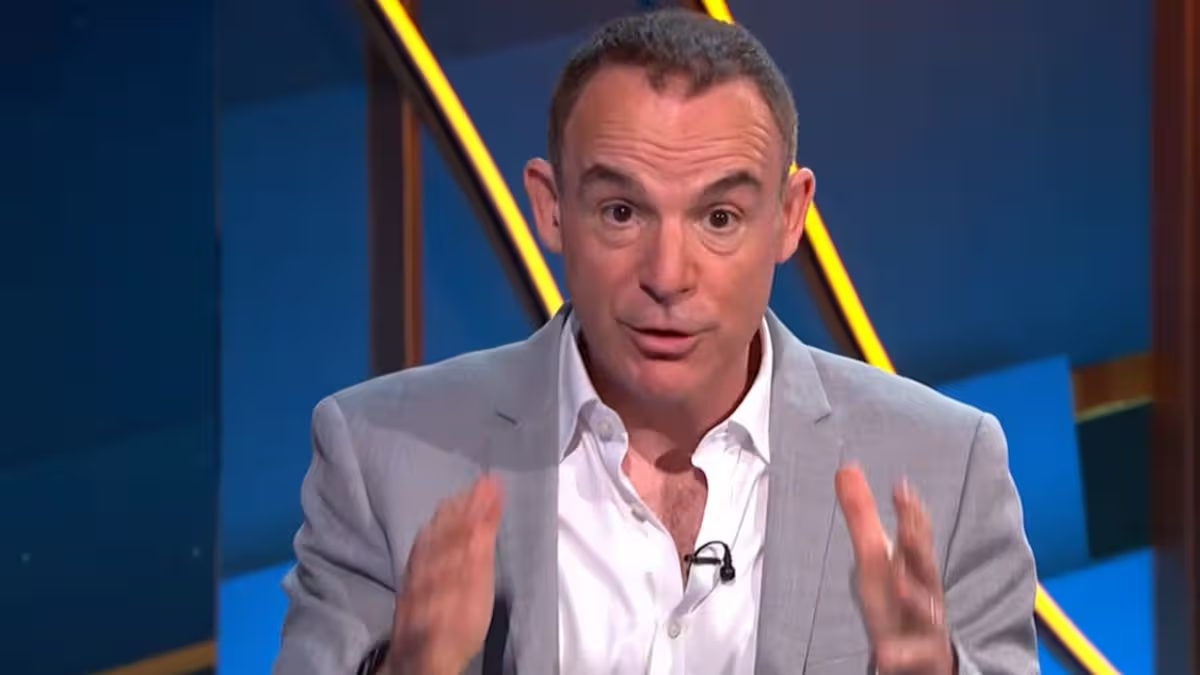



In a recent YouTube video, esteemed personal finance expert Martin Lewis delivered a crucial and timely piece of advice for millions of UK households. Addressing the vast audience who pay their energy bills via monthly direct debit—a method used by roughly 60% of customers—Lewis pinpointed the beginning of May as the “perfect time” to take a specific financial action. His message was directed at customers of all major suppliers, including Octopus Energy, OVO, British Gas, EDF, and ScottishPower. The core issue at hand is the staggering sum of over £3 billion collectively held by energy companies in customer credit balances. Lewis emphasized that for individuals, this isn’t abstract corporate finance; it’s their own money, and a significant portion of it may be ripe for reclaiming.
The logic behind this seasonal advice is rooted in the annual cycle of energy consumption. Lewis explained that early May represents the “bottom of the curve” in the direct debit cycle. After the high-usage winter months and before any potential summer spikes, this is the point in the year when a household’s credit balance with their supplier should logically be at its lowest. If your account is significantly in credit now, it strongly suggests your monthly payments are set too high. To conduct an accurate check, Lewis advised homeowners to first ensure their account is up-to-date by submitting a current meter reading or confirming their smart meter is transmitting correctly. Once an accurate balance is confirmed, his rule of thumb is clear: if you have more than a month and a half’s worth of direct debit payments sitting as credit, it’s too much. For example, if your monthly payment is £200 and your credit balance is £600, you have six weeks’ worth of payments banked. In that scenario, Lewis advocates proactively contacting your supplier to ask for the excess—in this case, £300—to be refunded.
This push for consumers to claim back their credit is part of a broader, urgent campaign by Lewis regarding the structure of the UK energy market. In a separate segment on ITV’s This Morning, he expressed shock at how many people remain unaware they are on a “price cap” tariff. He clarified in plain terms that the price cap set by regulator Ofgem applies to the “do nothing” tariff—the standard variable rate you default to if you haven’t actively chosen a fixed deal. This cap, which adjusts every three months, limits the unit rates and standing charges but is not a cap on total bills. Lewis highlighted a critical flaw in the mechanism: it operates on a significant time lag. The cap for April, which saw a 6.7% decrease, was based on wholesale prices from the previous November to February. Conversely, the upcoming July cap is being calculated based on prices from February to May, a period heavily influenced by geopolitical conflict, leading to predictions of a sharp 12-14% rise.
It is this impending increase that forms the basis for Lewis’s second, equally vital piece of advice. He urges those on the variable price cap to seriously consider switching to a fixed-rate tariff now. The market for switchable fixes, he explained, reacts to current wholesale prices in real-time, unlike the lagging price cap. Following a recent ceasefire, wholesale gas prices have fallen. Consequently, while fixes were more expensive than the cap just weeks ago, the cheapest fixes available at the time of his advice were about 6% cheaper than the current April price cap. By locking in a fixed rate now, households can secure a rate below today’s prices and shield themselves from the predicted July surge. Lewis is transparent about the uncertainty, noting the cap could fall again in October, but suggests the security and immediate savings make a compelling case.
The overarching theme of Lewis’s guidance is one of proactive financial engagement. He is effectively coaching the public to stop being passive consumers of essential services and to become active managers of their household budgets. The two tips are powerfully connected: first, recoup the excess cash you’ve already paid that is sitting idly with your supplier; second, use that vigilance to reassess your entire tariff structure, potentially moving to a fixed deal to avoid near-certain future price hikes. This approach turns energy bills from a frustrating, opaque cost into something manageable and optimizable.
Ultimately, Martin Lewis’s advice cuts through the complexity of the energy market with actionable steps. He empowers people to check their credit balances in May, request rightful refunds, and critically evaluate their tariff against the volatile price cap system. His message is a reminder that in an era of high living costs, diligence and timely action can yield direct financial benefits, putting hundreds of pounds back into people’s pockets and providing much-needed stability in household budgeting. In a landscape often seen as bewildering, Lewis provides a clear roadmap for navigating it more smartly and cost-effectively.