



A Fallen Kingpin: Moldova’s Long-Awaited Verdict
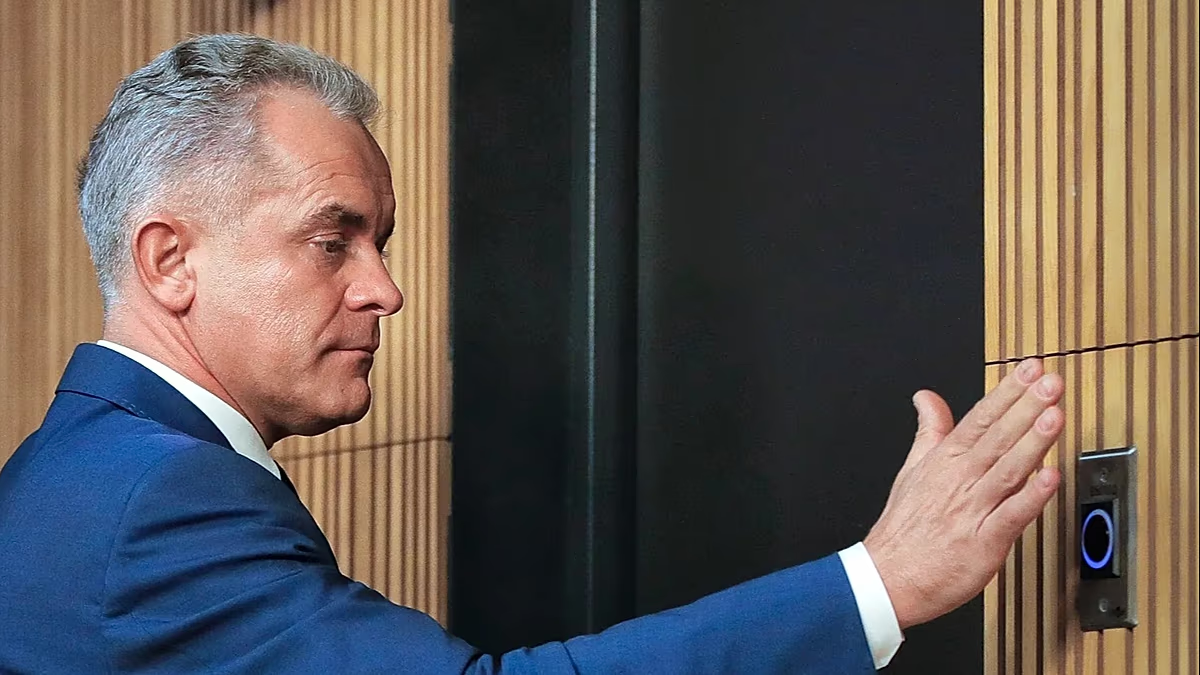
In a decisive moment for Moldovan justice, a court in Chișinău has delivered a monumental verdict, sentencing the once-untouchable oligarch, Vladimir Plahotniuc, to 19 years in prison. The ruling, handed down on a Wednesday in April 2026, centers on one of the most devastating financial crimes in the nation’s modern history: the disappearance of approximately one billion dollars from the Moldovan banking system in 2014. This sum, staggering in any context, represented a crippling one-eighth of the small country’s entire economic output at the time, a theft that drained public trust and state resources alike. The court also moved to reclaim ill-gotten gains, ordering the seizure of around $60 million from Plahotniuc’s accounts. This sentence marks the formal climax of a dramatic decade-long saga, transforming a man who once operated from the shadowy pinnacle of power into a convicted felon, his wealth and influence now formally stripped by the state he is accused of plundering.
Plahotniuc’s journey to this verdict was neither swift nor straightforward, but a protracted flight from justice. Once a formidable businessman, lawmaker, and the de facto leader of the Democratic Party, he wielded immense influence over Moldova’s political and economic landscape for years. However, as corruption charges mounted in 2019, culminating in allegations tied to the billion-dollar bank fraud, he chose exile over facing the courts, fleeing the country. His run ended in 2025 at Athens International Airport, where he was apprehended under an Interpol alert and subsequently extradited back to Moldova to stand trial. His absence continued even on the day of his sentencing; the 60-year-old was not present in the courtroom to hear the judge’s pronouncement, a final physical disconnection from the legal reckoning unfolding in his homeland.
From the outset, Plahotniuc and his defense have framed the entire proceeding as a politically motivated sham, a narrative his lawyer, Lucian Rogac, forcefully reiterated following the verdict. Dismissing the trial as “flawed from the outset” and the sentence as “clearly illegal,” Rogac condemned the process as one conducted “in a tremendous rush, with numerous violations of the defendant’s rights.” He immediately announced plans for an appeal, ensuring the legal battle will continue. This claim of political persecution is a common refrain among powerful figures facing justice in post-Soviet states, creating a parallel court of public opinion where every guilty verdict is painted as a tool of rival factions. The prosecution, meanwhile, had sought the maximum penalty of 25 years, arguing the crimes were of the utmost severity, a request the court partially fulfilled with its substantial 19-year term.
The specific charges paint a picture of systemic corruption that extended far beyond simple theft. Prosecutors accused Plahotniuc of not merely participating in fraud, but of forming and leading a vast criminal organization. His alleged portfolio included large-scale money laundering and a scheme of breathtaking fraud that siphoned funds from three Moldovan banks. Furthermore, his reach was said to have corrupted the very mechanisms of state power: he was charged with controlling law enforcement agencies to harass and target political opponents and business rivals, and with meddling in democratic elections to maintain his clique’s hold on power. In a stark reflection of his perceived threat to Moldova’s sovereignty, he was also accused of involvement in pro-Russian political campaigns aimed at derailing the country’s stated pro-European Union course, positioning him as an actor compromising national integrity for personal and political gain.
This perception of Plahotniuc as a malign actor of international concern was solidified years before his conviction in a Moldovan courtroom. In 2022, both the United States and the United Kingdom took independent action against him. The US State Department added him to its sanctions list for significant corruption, citing his alleged use of political influence for personal profit. Similarly, the UK government imposed sanctions, freezing his assets within its jurisdiction and barring him from entering the country. These coordinated international measures isolated him financially and politically, signaling that the Western world viewed him not just as a domestic problem for Moldova, but as a promoter of the graft and instability that undermines democratic institutions. This global censure lent significant weight to the domestic charges and limited his avenues for safe haven.
Ultimately, the 19-year sentence for Vladimir Plahotniuc represents far more than the punishment of one man. For Moldova, a country long plagued by corruption scandals and powerful oligarchs who operate above the law, it is a potent symbol. It is a statement that even the most entrenched and seemingly untouchable figures can be held accountable, and that colossal crimes against the state and its people will not be forgotten. While the appeals process may prolong the final chapter, and while debates over political motivations will persist, the verdict stands as a landmark. It attempts to draw a line under a period of profound national trauma—the “theft of the century” that crippled an economy—and offers a measure of long-delayed justice for the Moldovan public. The case underscores a fragile but determined effort to strengthen the rule of law and steer the country toward a future where institutions, not influential individuals, hold the ultimate power.