

On Monday, within the halls of a summit in Armenia designed to foster European unity, a diplomatic confrontation erupted between Azerbaijani President Ilham Aliyev and European Parliament President Roberta Metsola. The setting was the European Political Community (EPC) meeting in Yerevan, a forum comprising leaders from nearly 50 European nations, including EU members, candidate countries, and strategic partners. Against a backdrop of delicate peace negotiations between Armenia and Azerbaijan, Aliyev launched an unscheduled, sharp critique of the European Parliament, accusing it of “spreading slander and lies” about his country. This verbal clash, which led to Azerbaijan announcing a suspension of all parliamentary cooperation with the EU body, underscores the profound tensions between democratic institutional oversight and the sensitivities of national sovereignty in a geopolitically volatile region.
Aliyev’s grievances were specific and deeply felt. He pointed to the European Parliament’s adoption of 14 separate resolutions critical of Azerbaijan, a record he described as “a kind of obsession.” Central to his ire was the assertion that these actions, particularly the most recent resolution passed just last week in Strasbourg, were actively sabotaging the fragile peace process brokered between Armenia and Azerbaijan following the Nagorno-Karabakh conflict. The latest resolution, while largely focused on supporting democratic resilience in Armenia, also called for the right of return for Armenians who fled in 2023, labeled the detention of Armenian prisoners by Azerbaijan as “unjust,” and urged for their release. Aliyev framed these interventions not as constructive criticism, but as hostile obstacles deliberately placed by EU lawmakers.
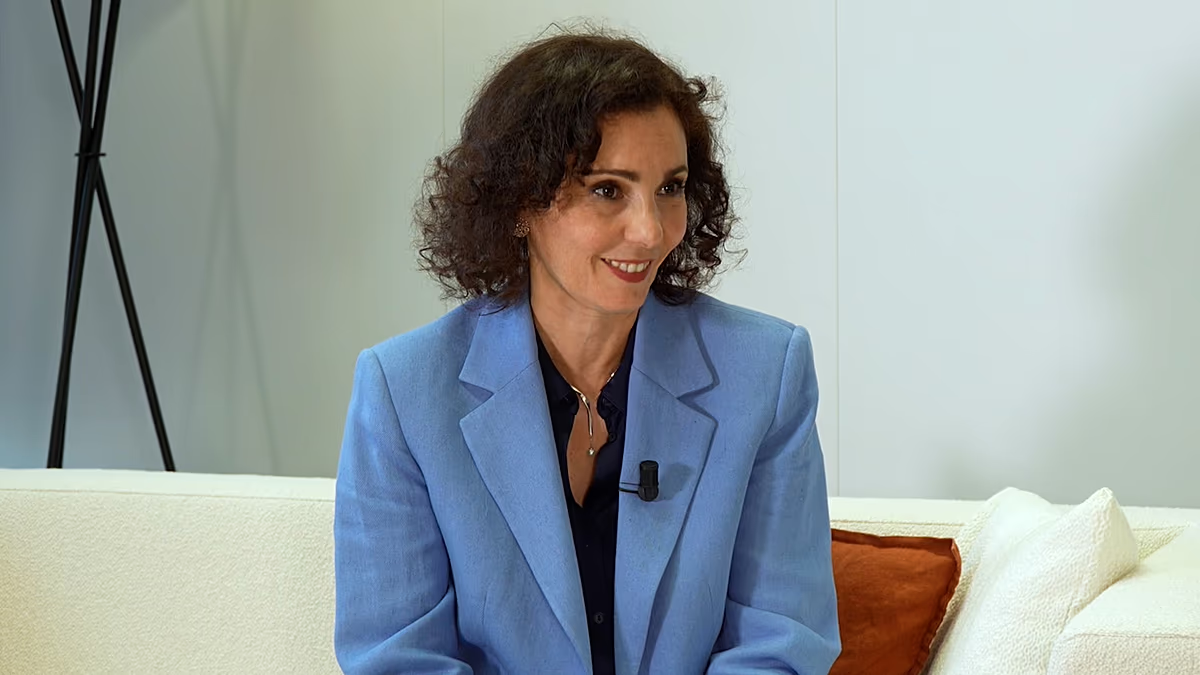
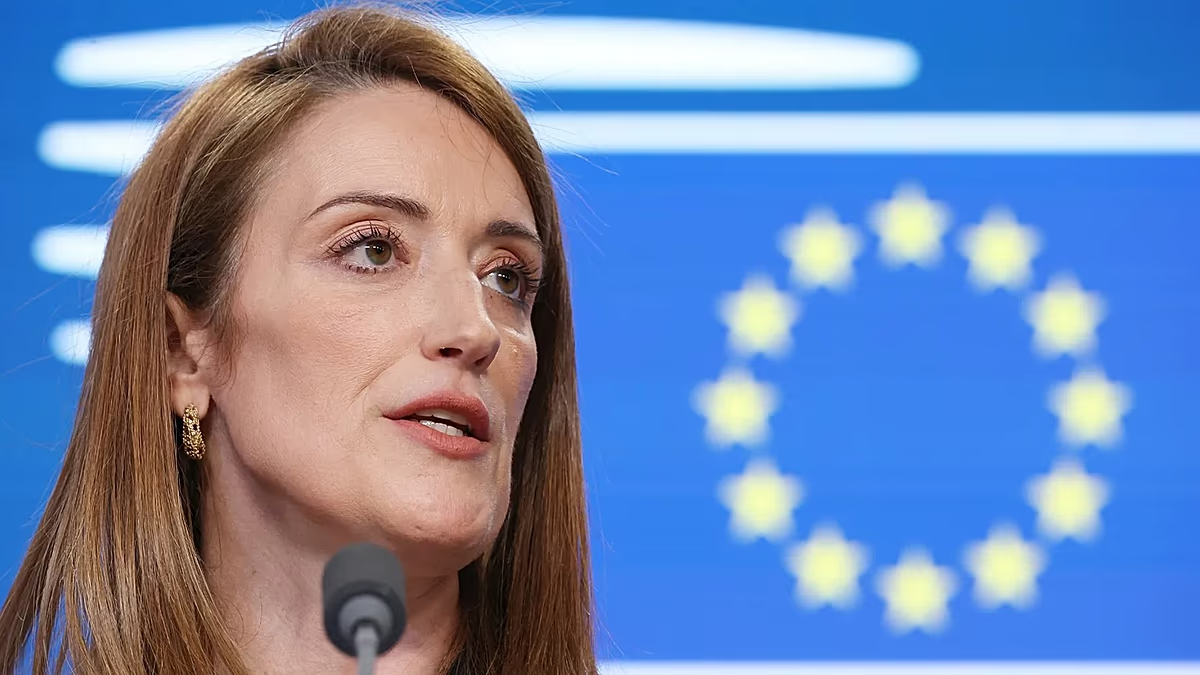
In a swift and firm rebuttal, Roberta Metsola seized the floor to defend the institutional integrity and democratic mandate of the European Parliament. Emphasizing that the Parliament is a directly elected body whose resolutions represent the majority will of its members, she stated plainly, “We will never change the way we work, even if it is uncomfortable.” Her message was clear: the Parliament’s role in scrutinizing human rights, democratic principles, and international conflicts is independent and non-negotiable, regardless of how its conclusions are received by external governments. This stand highlighted a fundamental EU principle—that parliamentary diplomacy, rooted in democratic accountability, operates separately from the executive-driven diplomacy of the European Commission.
Indeed, Aliyev’s criticism was notably selective. While he condemned the Parliament, he simultaneously praised the efforts of the European Commission in fostering relations with Azerbaijan. This distinction reveals a strategic understanding of the EU’s dual-track diplomacy: the Commission, under the leadership of the Council, engages in pragmatic bilateral relations, particularly vital with an energy exporter like Azerbaijan; the Parliament, however, operates as a guardian of values. For Baku, this creates a frustrating dichotomy where one EU institution builds economic and political bridges while another, from its perspective, persistently undermines them with value-based condemnations.
The fallout from this exchange was immediate and concrete. Azerbaijan’s parliament, following a recommendation from a specially established commission, approved a resolution to suspend all cooperation with the European Parliament. Hikmet Hajiyev, a senior presidential aide, branded the EU resolution a “diplomatic disgrace and failure,” crystallizing the view that such actions are not merely disagreeable but actively harmful. This move, however, does not equate to a rupture with the EU as a whole, as Aliyev’s continued engagement with the Commission and scheduled meetings with EU foreign policy chief Kaja Kallas and Italian Prime Minister Giorgia Meloni demonstrate. The targeted suspension aims to isolate and reject the parliamentary channel specifically.
This incident lays bare the complex challenges facing European diplomacy in the South Caucasus. The EPC summit itself was conceived as an opportunity to advance dialogue between Armenia and Azerbaijan, and the next meeting is ironically scheduled for Azerbaijan in 2028. The clash between Aliyev and Metsola, however, illustrates how deeply entrenched disagreements over values, narrative, and sovereignty can disrupt even forums dedicated to peace. It poses a critical question for the EU: how to balance its unwavering commitment to democratic principles and human rights—voiced through its Parliament—with the pragmatic geopolitics necessary to secure stability and peace in a region still healing from decades of conflict. The path forward requires navigating the uncomfortable space where holding principles accountable can, in the short term, strain the very relationships needed to build a lasting peace.