

In a significant potential shift of climate policy, the European Commission is drafting plans to suspend financial penalties for methane emissions from oil and gas companies during periods of energy market crisis. According to a leaked document obtained by Euronews, the EU executive body is considering a waiver for fines in scenarios involving gas shortages, emergency storage drawdowns, or major oil supply shocks. This draft text, circulated among EU member states, explicitly states that penalties should not jeopardize the security of gas or oil supplies during times of market stress. This move is widely interpreted as a major concession, responding to intense pressure from both the international energy industry and key geopolitical partners who have argued that strict enforcement could destabilize energy flows to Europe amidst ongoing global volatility.
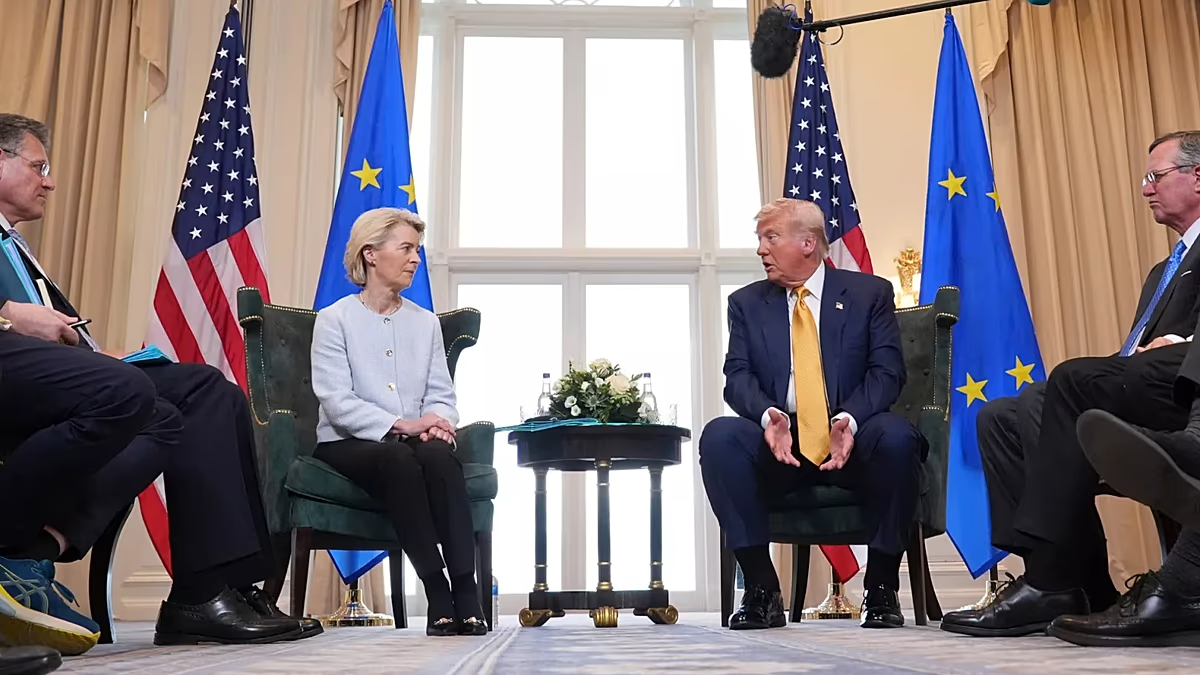
The pressure to soften the EU’s pioneering methane regulation has been mounting for months, notably from major oil and gas producers and explicitly from US Energy Secretary Chris Wright. Their argument centers on the risk that the rules could disrupt trade, deter investment, and complicate Europe’s energy security, especially as the continent has grown increasingly reliant on imported liquefied natural gas (LNG)—a significant portion of which originates from the United States. Brussels officials are acutely aware that stringent penalties could strain transatlantic relations and potentially divert lucrative LNG cargoes to Asian markets willing to overlook methane performance. This concern was starkly quantified in a March study by industry groups and Wood Mackenzie, which warned that from 2027, the rules could render nearly half of EU gas imports and the vast majority of oil imports non-compliant, highlighting the immense practical challenge of full enforcement.
However, this proposed flexibility has ignited criticism from environmental advocates and some lawmakers, who fear it fundamentally undermines the credibility and effectiveness of the landmark legislation. Critics argue that by embedding such broad escape clauses, the EU is attempting to avoid a confrontation with major exporters and powerful energy companies, effectively watering down its own regulatory framework. This concern is amplified by the fact that the Commission had already delayed key implementation deadlines from 2025 to 2027 in response to industry lobbying. The latest proposal, they contend, goes further by weakening the financial incentives that are crucial for ensuring compliance and rigorous monitoring, potentially letting major suppliers off the hook by claiming that fines would disrupt the market.
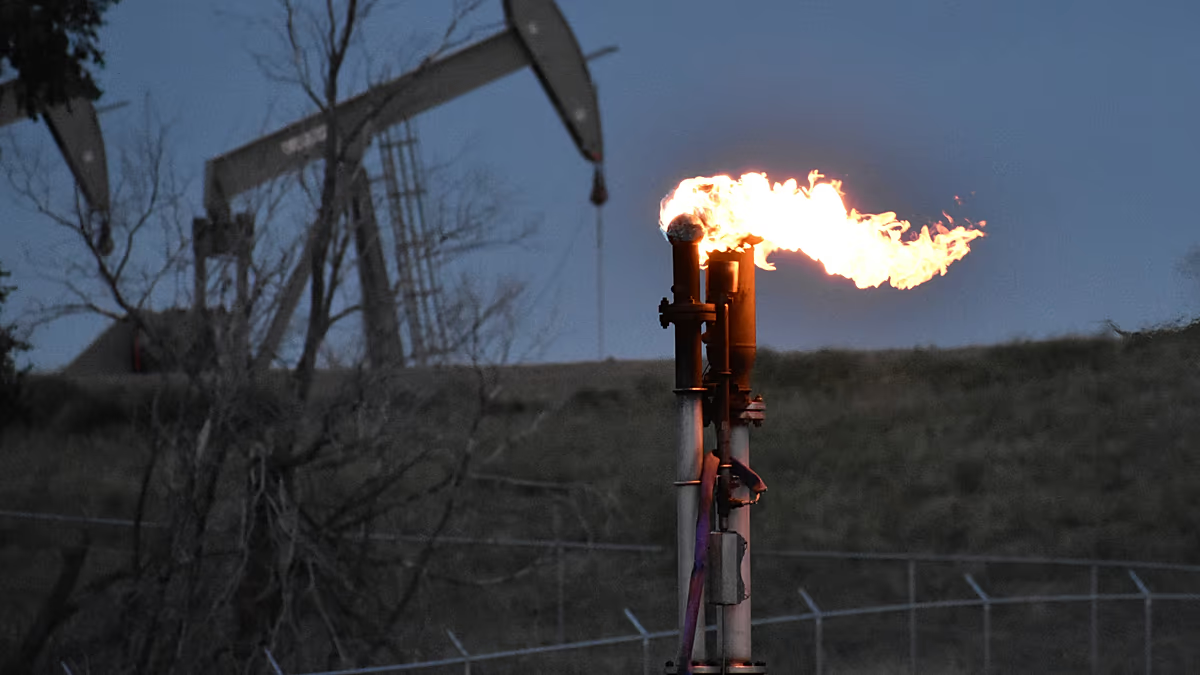
To understand the stakes, it is essential to recall the purpose and scope of the EU’s methane regulation, adopted by member states in May 2025. As a cornerstone of the bloc’s Green Deal, it established the first comprehensive framework for measuring, reporting, and verifying methane emissions from the energy sector. Methane is an extraordinarily potent greenhouse gas, with over 80 times the warming power of carbon dioxide over a 20-year period, and is responsible for roughly 30% of global temperature rise since the Industrial Revolution. The rules mandate energy operators to detect and repair leaks, measure emissions at source, and implement mitigation measures. Crucially, the regulation has an extraterritorial dimension: it applies to EU energy imports, using global monitoring tools to increase transparency for oil, gas, and coal entering the single market.
The draft guidance now under consideration instructs national regulators to weigh a wide array of factors—from LNG availability to storage obligations—before imposing fines, stressing that penalties must not worsen a crisis or undermine storage goals. In practice, this would allow suppliers to argue that enforcement could disrupt the market. This creates a tension with voices, including several US Democratic lawmakers, who in February urged the EU to uphold strict, consistent rules for all suppliers. They argued that clear standards are essential to reduce trade barriers, reward producers who use available emission-reduction technologies, and prevent a “race to the bottom” on environmental performance. Their call stood in contrast to US Energy Secretary Wright’s earlier remarks praising voluntary, innovation-driven US methane reductions over regulation.
Ultimately, the leaked proposal reveals the difficult balancing act facing the European Union: reconciling its ambitious climate leadership with the hard realities of energy security and geopolitical economics. The Commission spokesperson’s prior comment about ensuring “uniform and coordinated implementation” without threatening supply underscores this tightrope walk. If confirmed, these emergency suspensions, though intended as temporary, risk creating lasting loopholes and setting a precedent that could chill rigorous enforcement. The coming debate will thus determine not only the immediate fate of methane fines but also the broader resolve of the EU to enforce its climate standards against powerful external economic interests, testing the bloc’s commitment to turning regulatory ambition into tangible environmental impact.