

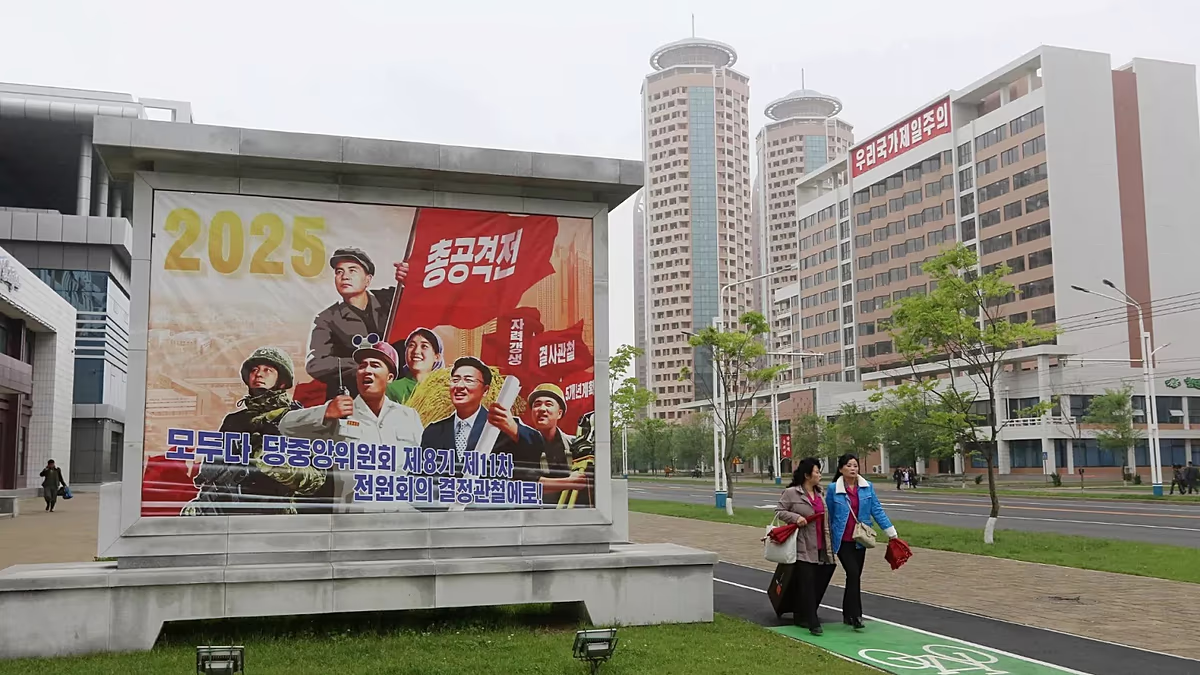
For years, the narrative surrounding North Korea’s economy has been one of unyielding hardship, defined by isolation, chronic shortages, and the overwhelming burden of sustaining a massive military and nuclear program under the weight of stringent international sanctions. The country’s rigid socialist planning system has long stifled growth, while events like the devastating mid-1990s famine and the more recent COVID-19 pandemic have pushed significant portions of the population into profound deprivation. Without publishing official economic data, the North’s fortunes have often been gauged by external observation, typically painting a picture of a nation in a perpetual state of contraction and survival mode, its nominal GDP—estimated by Seoul at around $30 billion in 2024—a mere sliver of the colossal South Korean economy just across the demilitarized zone.
However, a new assessment from South Korea’s unification ministry suggests a subtle but significant shift is underway. According to a report published in April 2026, North Korea appears to have “moved beyond a period of contraction” and “entered a phase of gradual recovery.” This turnaround is particularly notable because it is occurring even as Pyongyang continues to defiantly advance its banned nuclear and missile programs, vowing never to abandon them despite decades of global pressure. The key to this unexpected resilience, the report finds, lies not in internal reform but in a strategic geopolitical realignment, as Pyongyang deepens its trade and diplomatic bonds with two powerful neighbors: Russia and China.
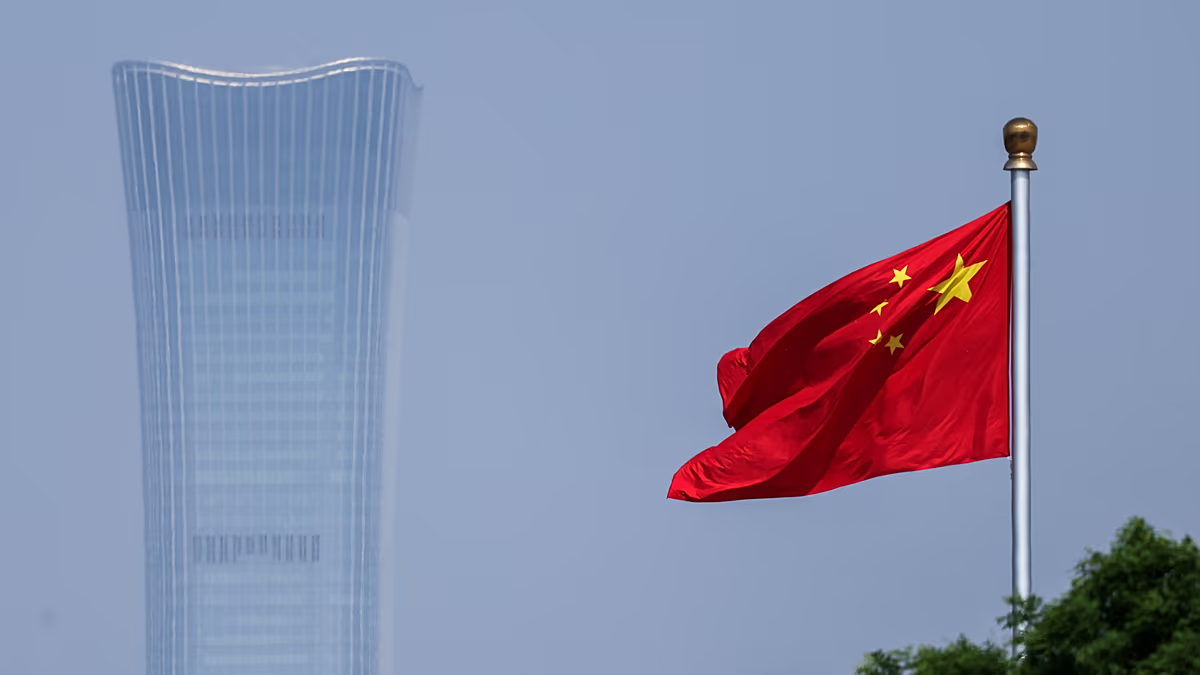
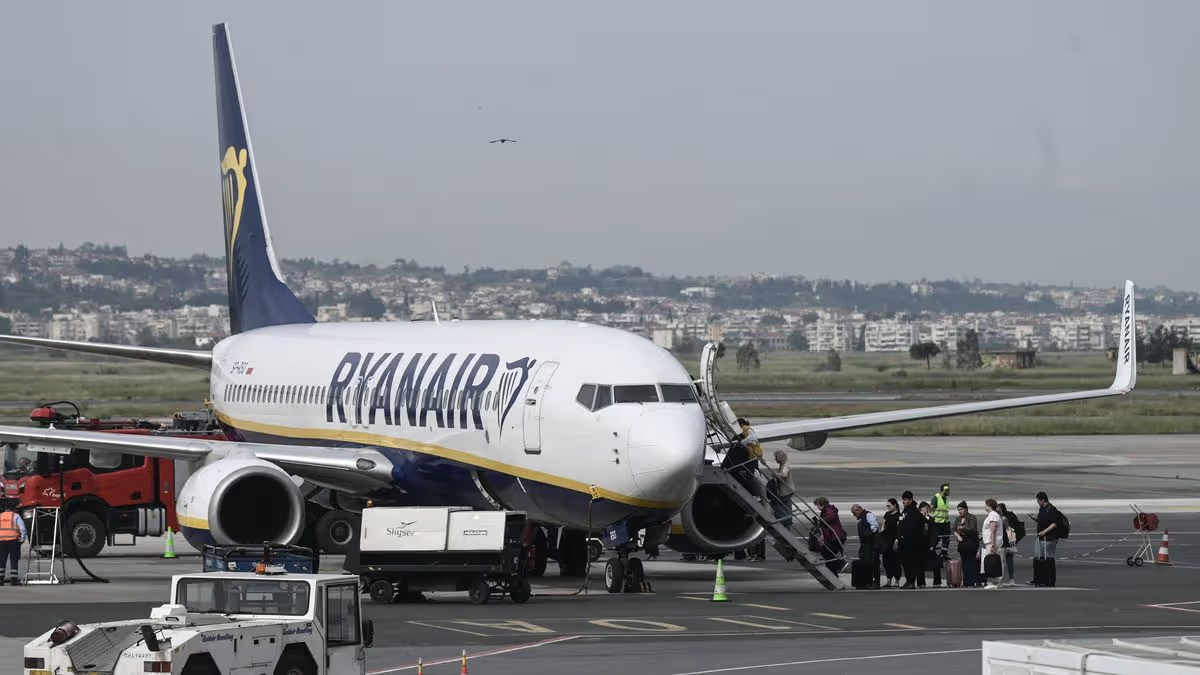
China has long been North Korea’s primary economic lifeline and diplomatic shield, but this relationship is now visibly reactivating and expanding. Concrete signs of this warming include the resumption of direct Air China flights between Beijing and Pyongyang after a six-year hiatus and the restart of daily passenger rail services linking the capitals. During a high-level visit to Pyongyang, China’s foreign minister expressed a desire to further “promote practical cooperation,” signaling a willingness to bolster ties beyond mere political support. This improving trade corridor with its largest partner is providing North Korea with crucial goods, foreign currency, and a measure of economic stability it has lacked for years.
Perhaps even more transformative is the rapidly deepening partnership with Russia, which has accelerated dramatically since Moscow’s full-scale invasion of Ukraine in 2022. This relationship has evolved into a transactional alliance of mutual necessity. In return for providing Russia with substantial shipments of artillery shells and rockets—and reportedly even committing troops to aid in the conflict—North Korea is believed to be receiving not just vital economic assistance but also valuable military technology and knowledge. This barter arrangement gives Pyongyang resources and support that circumvent international sanctions, directly fueling both its military ambitions and its economic bottom line. Analysts see this as a pivotal factor in the current recovery, effectively making North Korea a beneficiary of the wider global tensions.
This external support seems to have provided the regime in Pyongyang with a renewed sense of confidence. In a major political congress earlier in the year, leader Kim Jong-un declared that the country had overcome its “worst difficulties” of the past half-decade and was now entering a new stage characterized by “optimism and confidence in the future.” He vowed to focus on lifting living standards for the population. While such proclamations from the closed state must be viewed with caution, they align with the South Korean assessment of a fragile recovery. The improved outlook suggests that the international sanctions regime, while still a heavy constraint, is being partially offset by the willingness of Moscow and Beijing to engage economically and politically.
Ultimately, this economic shift presents a complex challenge. For South Korea, which outlined in the same report its basic plan for developing relations with the North through the end of the decade, the dynamics have grown more intricate. Pyongyang’s recovery is not built on diplomacy or denuclearization but on antagonistic alliances that flourish amidst global discord. The North Korean economy, while showing signs of life, remains a tool of the regime’s military-first policy, now reinforced by powerful patrons. This means that any hope for a more stable and open Korean Peninsula must now contend with the fact that Pyongyang’s isolation is decreasing not through engagement with the West, but through its integration into an alternative bloc that is actively contesting the existing international order. The economic recovery, therefore, is less a sign of coming peace and more an indicator of a world increasingly divided.