



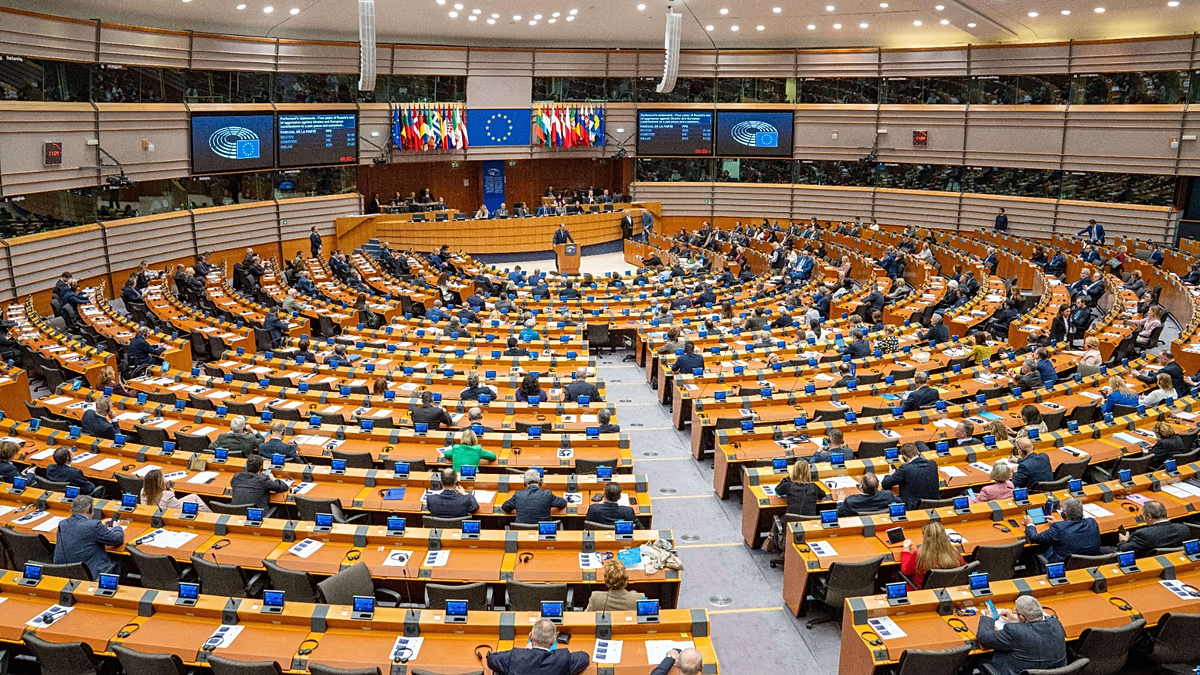
In a significant step toward shaping the European Union’s financial future, members of the European Parliament on the Committee on Budgets have advanced their vision for the EU’s next long-term budget. Meeting on Wednesday, the MEPs outlined a framework that advocates for a substantial 10% increase in overall funding, while also drawing a firm line on how to manage historic debts accrued during the pandemic. Their position sets the stage for intricate negotiations, highlighting a clear divergence from the European Commission’s initial proposal and underscoring the Parliament’s desire to protect key investment areas from being undermined by past financial obligations.
Central to the Parliament’s proposal is the call to increase the budget by 10%, with these additional resources being evenly distributed across the EU’s three core priorities. First, funding would bolster national plans designed to address specific member state needs. Second, a Competitiveness Fund would receive a boost to strengthen Europe’s standing in the global economy, ensuring its industries and markets remain robust. Third, increases are earmarked for Horizon programs—focusing on innovation, education, and research—and for Global Europe, which finances the EU’s external actions in security, development projects abroad, and humanitarian aid. This balanced approach reflects a holistic strategy to foster internal resilience while maintaining the Union’s role as a global actor.
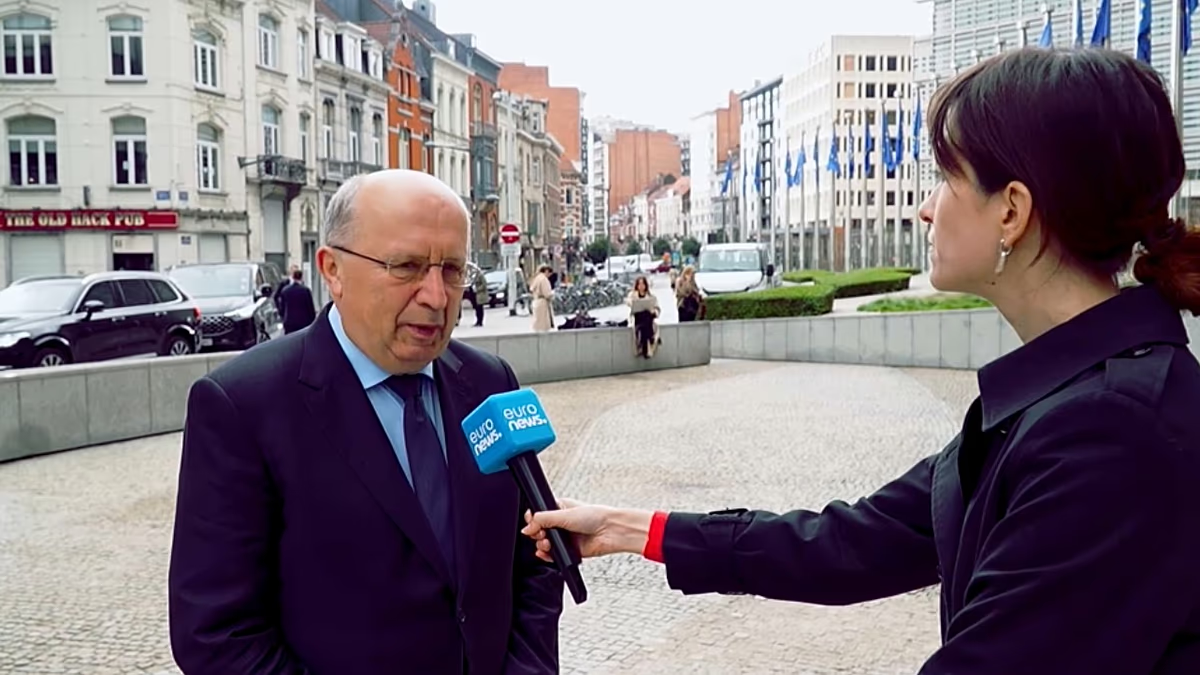
However, the most politically charged element of the Parliament’s position concerns the repayment of the massive “Next Generation EU” debt. This joint debt instrument, agreed upon in 2020, was a landmark response to the economic devastation of the COVID-19 crisis. The European Commission has proposed handling the repayments within the existing budget framework, but MEPs are vehemently opposed. Centre-right co-rapporteur Siegfried Mureşan captured this sentiment, arguing forcefully that, “Next Generation EU debt must be repaid above the budget ceilings, not at the expense of farmers, SMEs, researchers or Erasmus students.” By insisting these repayments exist outside the standard budget limits, Parliament aims to shield vital current programs from cuts, ensuring that future generations aren’t penalized for today’s necessary recovery efforts.
Another major point of contention is the European Commission’s innovative idea to implement the budget through comprehensive national plans—one for each member state. While the Commission frames this as a simplification, MEPs express deep reservations. They warn that consolidating diverse funding streams into single national plans could obscure how money is spent, reduce transparency for citizens, and inadvertently pit different regions or sectors against each other in a competition for resources. This, they argue, might undermine the very EU policies the budget is meant to advance, creating fragmentation rather than cohesion. The Parliament’s proposal therefore resists this architectural shift, advocating for a clearer, more program-specific approach that maintains direct EU oversight and policy alignment.
Beyond these headline issues, the Parliament’s report raises red flags about other risks lurking in the Commission’s proposals, particularly concerning budget flexibility. The Commission seeks to expand programs to cover wider areas, making it easier to reallocate funds as crises emerge. While flexibility is crucial, MEPs caution that too much of it can blur accountability and create confusion for the local authorities, businesses, and organizations that depend on predictable funding. In response, the Parliament is calling for a stronger role in monitoring how the budget is executed, emphasizing that financial agility must not come at the cost of transparency and democratic oversight. They seek a system that is both responsive to emergencies and rigorously accountable to European citizens.
The path ahead is now clearly marked. The European Parliament’s plenary session is scheduled to vote on this position on April 29th, which would formally adopt it as their negotiating mandate. Concurrently, the 27 EU member states must coalesce around their own joint position, a process that has yet to be completed. Once both sides have their stances, intense negotiations will begin between the co-legislators—the Parliament and the Council representing the member states. With an ambitious deadline to reach a final agreement by December, the coming months will test the EU’s ability to balance fiscal responsibility, strategic investment, and political unity, ultimately deciding the financial blueprint that will guide the Union through the challenges of the latter half of this decade.