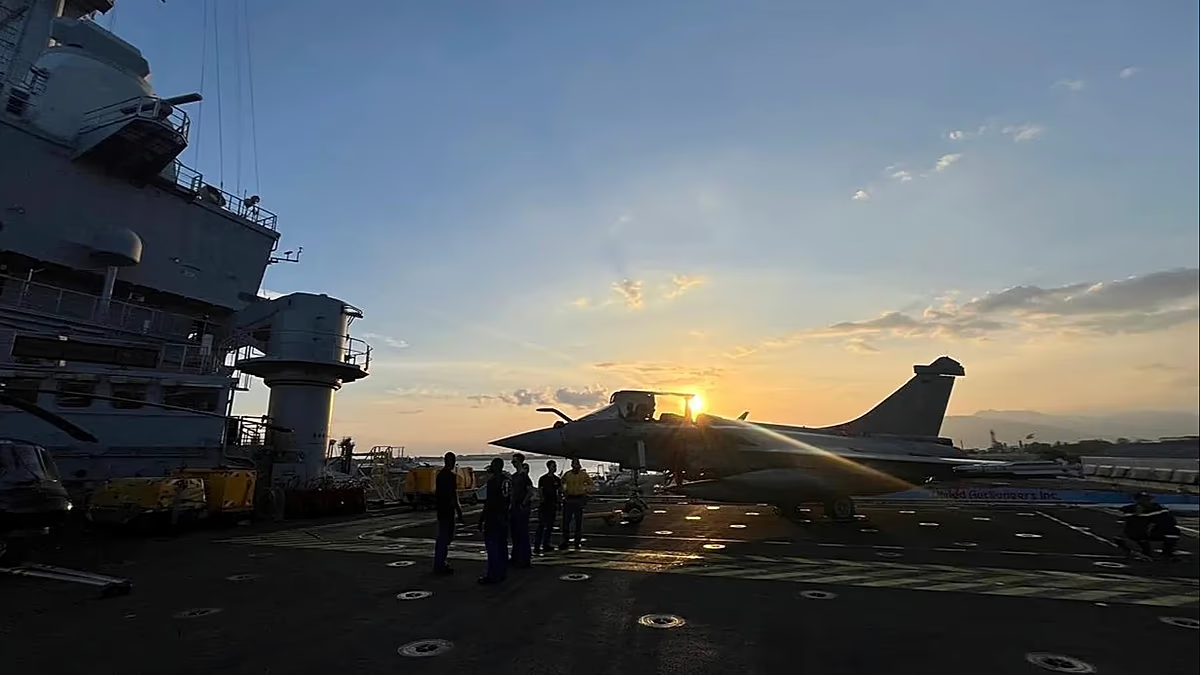



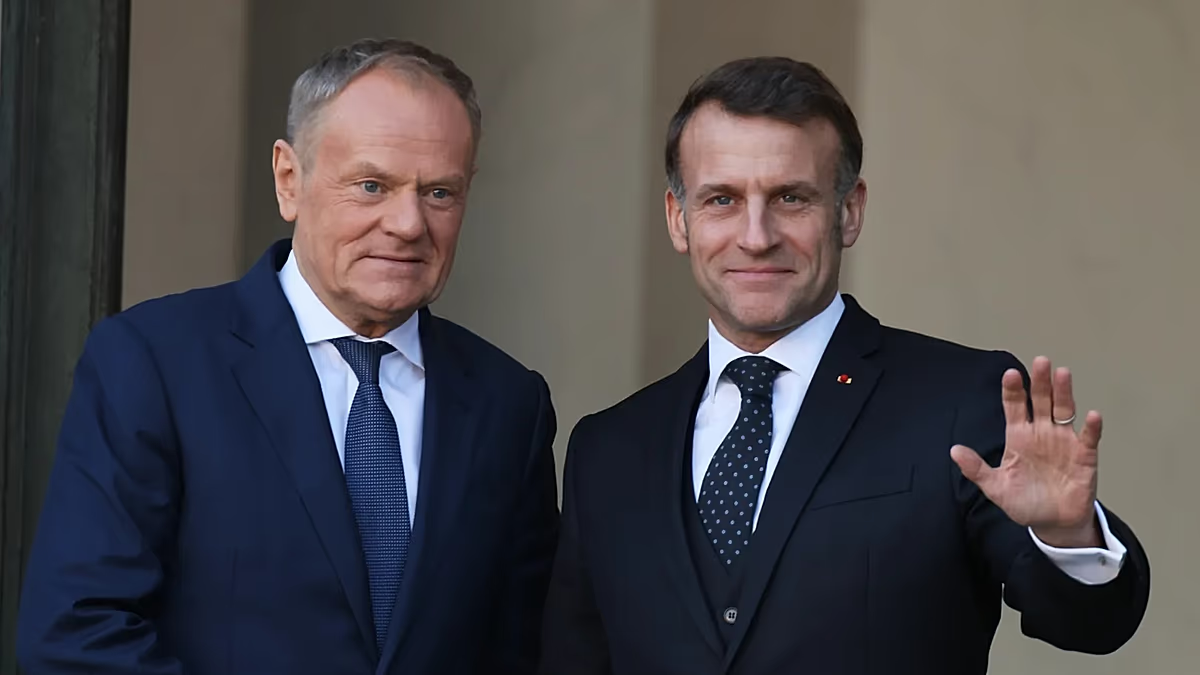
In a significant move emblematic of a shifting European security landscape, the leaders of France and Poland met in the historic port city of Gdańsk to chart a bold new course in defence cooperation. French President Emmanuel Macron and Polish Prime Minister Donald Tusk announced a strategic partnership intended to be without bounds, spanning advanced domains from nuclear deterrence and military satellites to joint exercises, intelligence sharing, and integrated defence industrial projects. This public commitment, solidified with a treaty of friendship signed the previous year, signals a profound recognition that the continent’s security architecture must evolve rapidly. The meeting was not merely a routine diplomatic engagement but a deliberate statement of unity and resolve, framed against the backdrop of two converging storms: an aggressive, expansionist Russia on NATO’s eastern flank and growing uncertainty over the long-term commitment of the United States to the transatlantic alliance.
The most striking element of the new cooperation is its potential extension into the realm of nuclear deterrence. President Macron indicated that concrete work in the coming months could lead to the deployment of French warplanes carrying nuclear warheads to Polish territory. While France maintains ultimate and sole control over the decision to use such force—a cornerstone of its independent nuclear doctrine—Poland could play critical supporting roles in early warning systems and air defence. This represents a monumental step for Poland, which shares a long border with Ukraine and feels the direct heat of Russian belligerence more acutely than many Western European nations. For France, it is an extension of its role as the EU’s sole nuclear power, offering a European pillar of strategic deterrence. Prime Minister Tusk’s declaration that this cooperation “knows no bounds” underscores the depth of mutual trust being built and a shared understanding that the old security paradigms are insufficient.
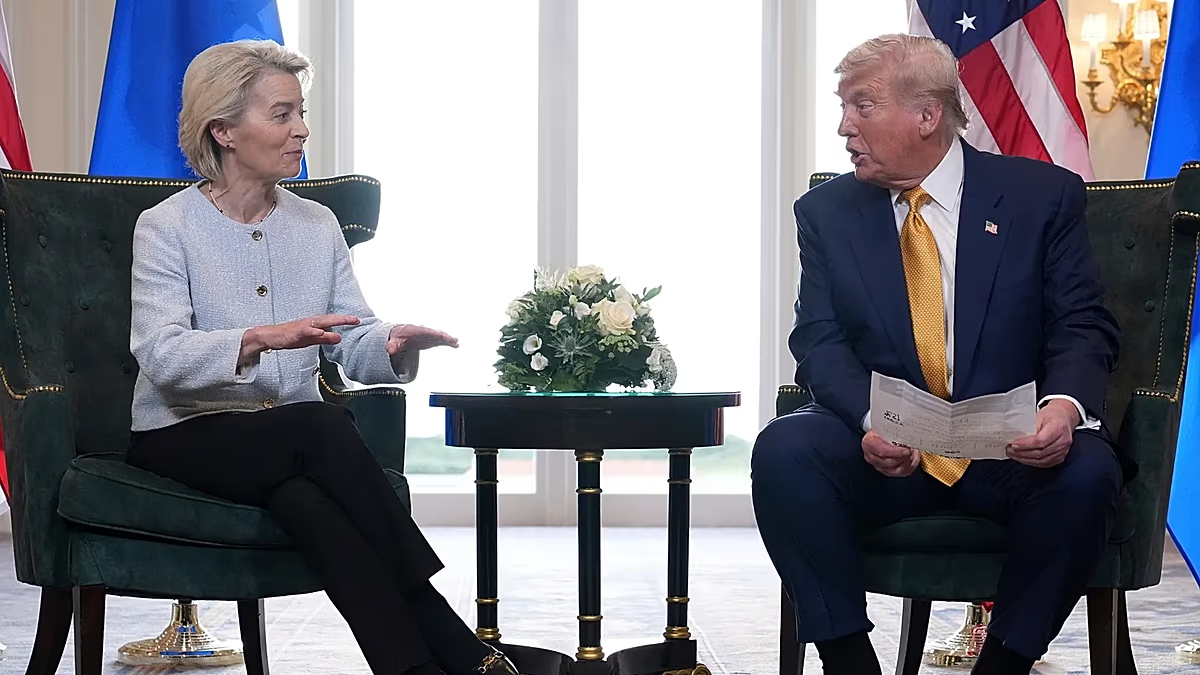
The urgency driving this Franco-Polish alignment is twofold and palpable. Firstly, Russia’s full-scale invasion of Ukraine has fundamentally rewritten Europe’s threat assessment, particularly for frontline states like Poland and the Baltic nations. There is a pervasive fear that a militarized Russia, operating a wartime economy, may not stop at Ukraine’s borders, making the defence of NATO’s eastern frontier an immediate and existential priority. Secondly, the political climate in the United States, exemplified by former President Donald Trump’s repeated disparagement of NATO as a “paper tiger” and his questioning of American commitments, has injected deep anxiety into European capitals. European leaders are being forced to contemplate a future where they must ensure their own security with less reliance on Washington. This meeting in Gdańsk was, therefore, a tangible act of European adaptation—a move from anxious rhetoric to concrete planning for greater strategic autonomy.
However, this burgeoning partnership must navigate a complex web of historical allegiances and industrial realities. President Macron has long championed a “European preference” in defence procurement, aiming to build a more integrated and self-reliant continental defence industrial base. This vision sometimes clashes with the deep-seated attachments in Eastern Europe, especially in Poland, to its security relationship with the United States. Poland’s military, in the midst of a historic, multi-billion dollar modernization, is heavily equipped with American hardware, including F-35 jets, Apache helicopters, Abrams tanks, and Patriot missile systems. A European diplomat noted the scale of these “colossal orders,” highlighting a practical tension. While Poland participates in new EU defence financing initiatives like the SAFE programme, it walks a careful line, seeking to strengthen Europe without alienating the crucial transatlantic partner. President Tusk himself acknowledged that while “Washington’s strategy has indeed changed,” the Polish-American bond remains vital.
Domestic political currents in Poland add another layer of complexity to this strategic pivot. Prime Minister Tusk’s pro-European government, elected in 2023, is actively pursuing this deeper integration with France and the EU’s defence ambitions. Yet, he faces opposition from the country’s nationalist President, Karol Nawrocki, who has criticized mechanisms like the SAFE programme as potential threats to Polish sovereignty. This internal friction reflects a broader national debate on how to balance the undeniable gravitational pull of European cooperation with the traditional, hard-power assurance provided by the United States. The success of the initiatives announced in Gdańsk will depend not only on Franco-Polish diplomacy but also on Tusk’s ability to sustain a domestic consensus around a new, more European-facing defence posture while managing a volatile political landscape.
In conclusion, the meeting between Macron and Tusk in Gdańsk marks a pivotal moment in post-Cold War European history. It is a direct response to a world where geopolitical certainties have dissolved, replaced by the stark realities of Russian aggression and American unpredictability. The proposed collaboration—from the symbolic weight of nuclear discussions to the practical work on satellites and joint drills—represents a determined effort to weave a stronger, more interdependent European security fabric. It acknowledges that while the transatlantic alliance remains irreplaceable, Europe must take greater responsibility for its own defence. The path forward is fraught with challenges, from aligning strategic cultures to reconciling industrial policies and navigating domestic politics. Yet, the very act of embarking on this path together signifies a mature and necessary evolution: a Europe that is finally, and earnestly, building the capacity to stand firm on its own foundations, prepared to secure its own future.