



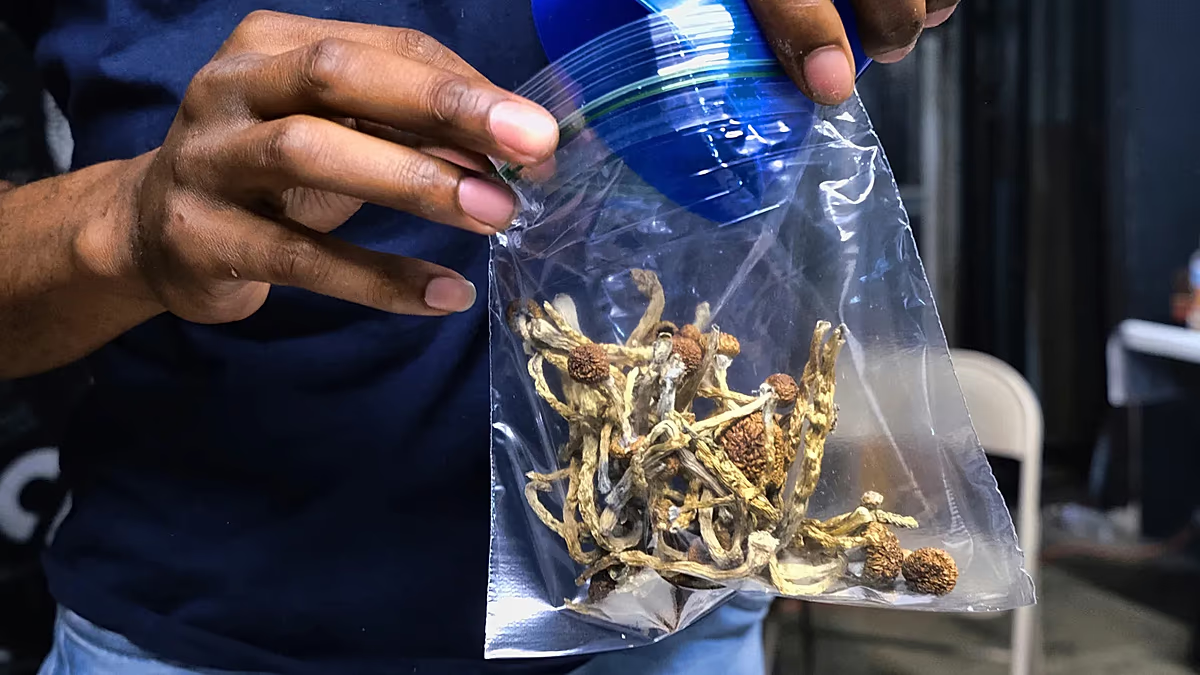
In a landmark move to advance mental health treatment, U.S. President Donald Trump, with the support of prominent figures like Health Secretary Robert F. Kennedy Jr. and commentator Joe Rogan, has taken significant steps to ease the decades-long restrictions on psychedelic drug research. Standing alongside top medical officials, the president signed an executive order aimed at accelerating scientific studies into substances like psilocybin (found in “magic mushrooms”) and LSD. These compounds have long been classified as Schedule I drugs, denoting a high potential for abuse and no accepted medical use, which has severely limited legitimate clinical investigation. The new directive seeks to dismantle bureaucratic barriers, improve data coordination between key agencies like the Food and Drug Administration (FDA) and the Department of Veterans Affairs, and create a pathway for the swift rescheduling of any psychedelics that gain FDA approval for therapeutic use. This marks a pivotal shift in federal policy, moving from a stance of blanket prohibition to one cautiously embracing the potential medical value of these substances, though it stops short of immediately legalizing or decriminalizing them for public use.
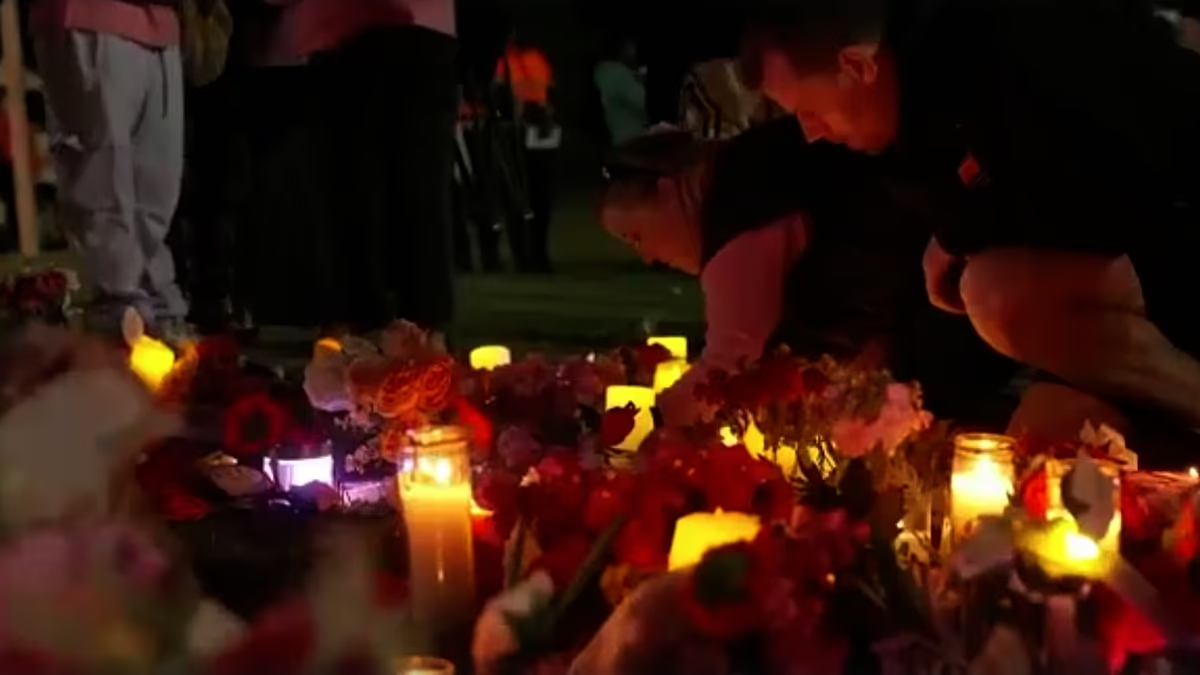
The urgency behind this policy shift is deeply human, rooted in a growing mental health crisis, particularly among the nation’s military veterans. For years, veterans grappling with post-traumatic stress disorder (PTSD), severe depression, and profound anxiety have voiced that conventional treatments often fall tragically short. Many report that standard pharmaceutical cocktails not only fail to alleviate their suffering but also produce numbing side effects that distance them from their own lives, identities, and loved ones. The stark toll of this treatment gap is measured in heartbreaking statistics; in 2023 alone, 6,398 veterans died by suicide. This dire reality has fueled a powerful advocacy movement, with veterans, scientists, and mental health professionals pushing for research into alternative therapies. Psychedelics, once relegated to the counterculture of the 1960s, are now being reconsidered as potential breakthrough medicines for conditions where other options have repeatedly failed, offering a glimmer of hope to those who have felt abandoned by the current system.
During the White House signing ceremony, President Trump highlighted one such substance, ibogaine, citing claims of an 80 to 90 percent reduction in depression and anxiety symptoms within a month for some patients. His lighthearted quip, “Can I have some, please?” underscored a broader, more serious point: the transformative potential these drugs may hold. However, the administration and researchers alike are quick to emphasize a crucial caveat—this executive order is fundamentally about enabling research, not endorsing widespread, unregulated use. The full spectrum of benefits and risks associated with psychedelic-assisted therapy remains largely unknown precisely because legal and regulatory hurdles have stifled large-scale, rigorous clinical trials for over half a century. While early, small-scale studies and anecdotal reports suggest remarkable promise in facilitating breakthroughs in psychotherapy, the safety profiles of these powerful substances are not yet fully mapped, necessitating a careful, evidence-based approach.
Indeed, the path forward is one of cautious optimism, tempered by scientific rigor and concern for patient safety. Substances like ibogaine, for example, are not without significant risk; preliminary data indicates potential cardiotoxic effects that could cause serious heart damage. The president’s order, therefore, strategically focuses on removing obstacles for federal researchers to conduct the necessary studies that will definitively answer questions about efficacy, dosage, therapeutic protocols, and long-term outcomes. By streamlining collaboration between the FDA and the Veterans Affairs department, the policy aims to fast-track the generation of high-quality data. This data will be essential for the FDA to make informed decisions about potentially rescheduling specific compounds, which would then open the door to regulated clinical use under professional supervision. The change recognizes that the current “Schedule I” status, which asserts “no accepted medical use,” is increasingly at odds with emerging scientific evidence, and it creates a mechanism for policy to evolve alongside that evidence.
This policy evolution reflects a significant cultural and scientific reckoning. For generations, the war on drugs framed all psychedelics as dangerous substances of abuse with no redeeming value, effectively halting scientific inquiry. Now, a confluence of factors—persistent mental health epidemics, compelling preliminary research, and relentless advocacy from patient groups—is challenging that narrative. The involvement of figures like Joe Rogan, who has used his platform to discuss psychedelics openly, signals a shift in public discourse toward a more nuanced understanding of these compounds. The administration’s move can be seen as a pragmatic response to this shift, choosing to regulate through research rather than through continued outright prohibition. It acknowledges that for individuals trapped in cycles of treatment-resistant mental illness, the potential of these therapies represents not just a clinical option, but a profound hope for reclaiming their lives.
Ultimately, the executive order is a foundational step, not a final destination. It does not mean that psychedelic therapies will be available at local clinics tomorrow; rather, it sets the stage for the rigorous scientific work required to get there. The coming years will see researchers working to translate anecdotal hope into validated, reproducible treatments. The goal is to build a robust framework where, if proven safe and effective, these powerful tools can be integrated responsibly into the medical mainstream, offering new avenues for healing. This move humanizes the issue by placing the focus squarely on alleviating human suffering—on giving veterans and countless others battling invisible wounds a chance at a future defined not by trauma, but by recovery. It is a testament to the power of perseverance from patients and advocates, and a promise that science, when allowed to proceed unhindered by outdated stigma, can offer new light in our darkest corners.