


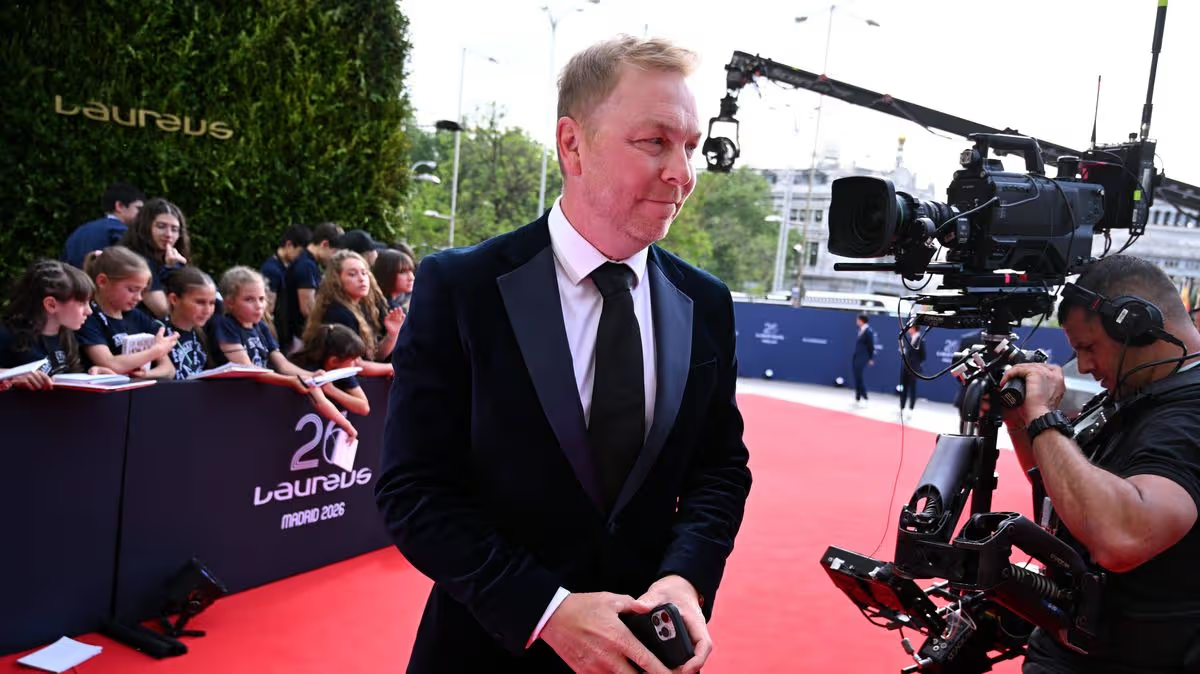
In the pantheon of modern British sporting heroes, Sir Chris Hoy stands as a titan, a man whose legs powered him to a record six Olympic gold medals and inspired a nation. Yet for the last three years, the 50-year-old legend has been engaged in a profoundly personal and grueling race against time, following a diagnosis of stage four prostate cancer that had spread to his bones. With a devastating initial prognosis of perhaps two to four years to live, Hoy’s world was irrevocably altered. However, from the outset, he has met this challenge with the same unwavering determination that defined his cycling career. Choosing to go public with his diagnosis in 2024, he struck a characteristically balanced tone, acknowledging the immense difficulty of the preceding months while affirming his intention to live as fully as possible. “I’m optimistic, positive and surrounded by love for which I’m truly grateful,” he shared, a statement that became a mantra for his approach, one focused on continuing to work, ride his bike, and cherish normality in the face of extraordinary adversity.
Since that day, Hoy has transformed his personal battle into a public mission, leveraging his platform to raise vital awareness and funds for prostate cancer research. His resilience, however, has been tested beyond the cancer itself. In a cruel twist, the athlete suffered a horrific mountain biking crash in Wales last year, resulting in multiple serious fractures to his lower right leg and knee. The injury was so severe he was treated in a major trauma ward, where doctors delivered another sobering warning: he was at genuine risk of amputation due to compartment syndrome, a dangerous condition involving increased pressure in the muscles. Hoy later reflected on being told this while lying in hospital, describing it as “the last thing he needed” amid his ongoing cancer treatment. Undeterred, he approached his recovery with legendary grit, sometimes enduring five or six hours of daily rehabilitation to rebuild the neural pathways to his leg, a testament to his incredible physical and mental fortitude.
Navigating the dual challenges of advanced cancer and a major injury would be enough to break most spirits, but Hoy has consistently looked forward with hope. Central to his optimism is a belief in the rapid advancement of medical science, particularly the role artificial intelligence could play in accelerating the development of new, life-extending treatments. He speaks thoughtfully about placing his faith in researchers, suggesting that for patients like him, “hanging in there” could mean the difference between missing and benefiting from a groundbreaking therapy just around the corner. “One of the real positives of AI has to be in the field of medicine,” he has said, viewing technology not with trepidation but as a potential lifeline. This forward-looking perspective allows him to balance the grim reality of his prognosis with a pragmatic and hopeful focus on the future of oncology.
This hope is further bolstered by tangible progress in cancer treatment. Hoy has spoken with cautious enthusiasm about new drugs currently in clinical trials, specifically noting breakthroughs in immunotherapy. This form of treatment, which harnesses the body’s own immune system to target cancer cells with precision, offers a less destructive alternative to traditional therapies and represents a significant line of new defence. He describes living from “scan to scan and blood test to blood test,” a cycle familiar to many cancer patients, where stability is a victory. Knowing that promising new options are on the horizon provides a crucial psychological buffer, a sense that the medical arsenal is expanding even as he manages his current regimen. “It’s always nice to know you’ve got a few more lines of defence stacked up,” he admits, allowing him to focus on the immediate goal of enjoying each day.
The journey is not his alone. Sir Chris’s personal struggle is mirrored within his own family, as his wife, Sarra, battles multiple sclerosis. This shared experience of navigating serious health conditions has undoubtedly deepened their bond, creating a private world of mutual understanding and support away from the public eye. While Hoy channels his energy into public advocacy and fundraising, this parallel battle underscores the profound personal resilience required behind the scenes. It paints a picture of a family facing profound challenges with unity, adding another layer of depth and humanity to Hoy’s public persona. His fight is not just for himself, but within the context of a loving partnership where strength is a shared resource.
Through it all, from the shock of diagnosis to the threat of amputation and the relentless cycle of treatment, Sir Chris Hoy’s story has evolved from one of sporting glory to one of profound human courage. He is no longer just the knighted champion on the podium, but a man demonstrating how to face mortality with grace, tenacity, and an unextinguished spark of optimism. By sharing his updates—the fears, the setbacks, and the hopes—he has given a public face to a private struggle, offering solidarity to countless others on similar paths. His legacy, therefore, is being redefined in real time: it is being forged not on the velodrome, but in hospital wards, during rehab sessions, and through a steadfast commitment to living meaningfully, one day at a time, with unwavering hope for the next.