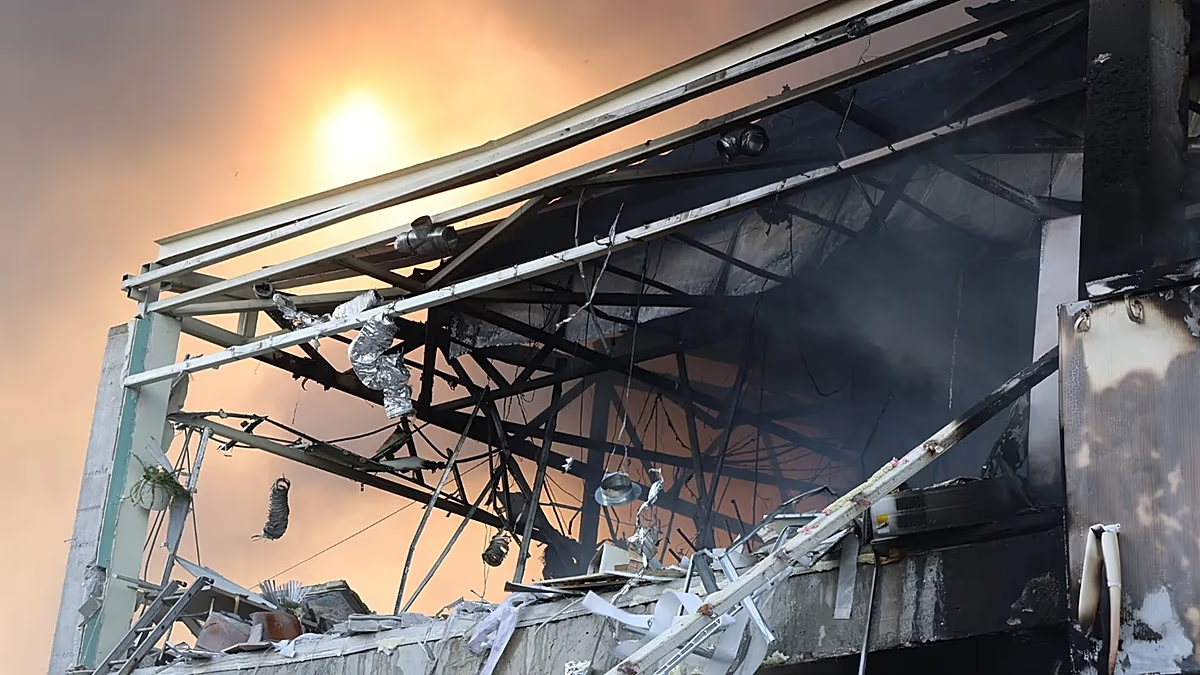




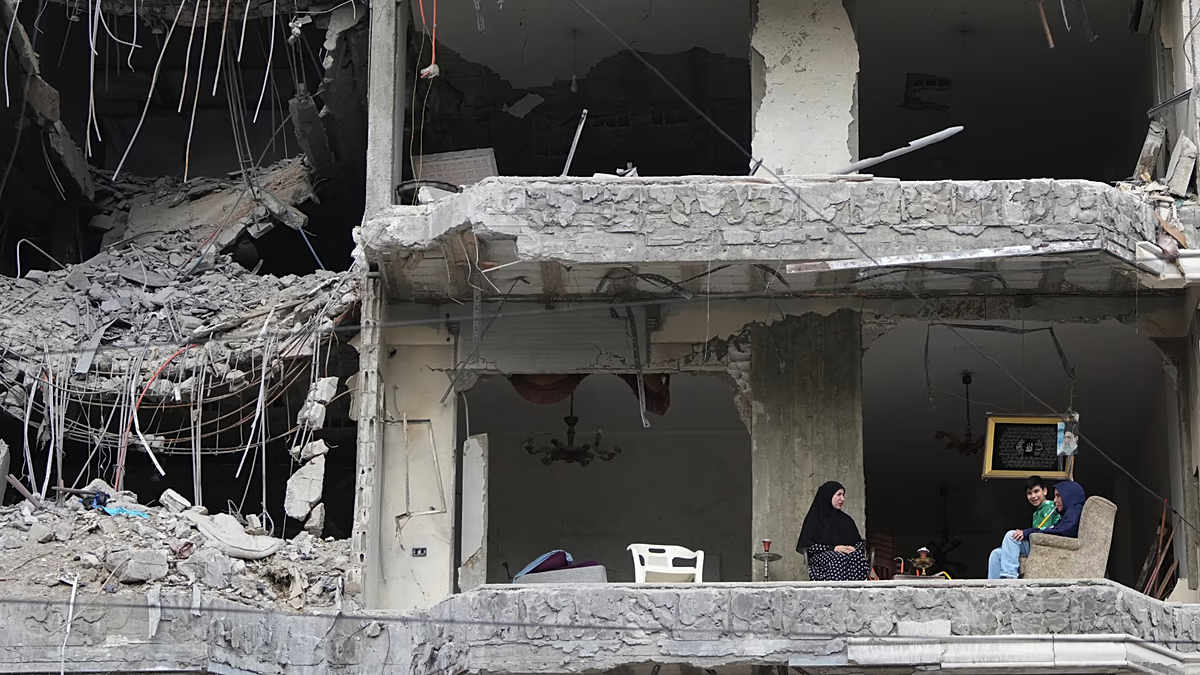
The fragile peace along the Lebanon-Israel border was shattered once again this Tuesday, as a series of Israeli airstrikes claimed the lives of eight people in southern Lebanon, according to the Lebanese health ministry. Among the dead were three rescue workers from the Lebanese Civil Defence, trapped under the rubble while attempting to carry out a humanitarian mission in the town of Majdal Zoun. In separate strikes on the towns of Jebchit and Jwaya, three more civilians were killed and dozens were injured, including women and children. In a significant escalation, the Lebanese army reported that two of its soldiers were wounded by Israeli fire, marking the first time its forces have been directly targeted since a tenuous ceasefire began. This violence underscores how the truce, repeatedly violated by both sides, exists in name only, leaving civilians and even uniformed personnel caught in a deadly crossfire.
These lethal strikes followed a stark new warning from the Israeli military, which issued an urgent evacuation order for residents in over a dozen southern villages, instructing them to flee north immediately. Shortly after this order, airstrikes rained down across the region. Despite this aggressive military posture, Israeli Foreign Minister Gideon Saar insisted his country has “no territorial ambitions in Lebanon,” claiming forces would withdraw only when Hezbollah and other militant groups were dismantled. Lebanese President Joseph Aoun vehemently rejected this narrative, condemning the attack on Majdal Zoun as a continuation of Israeli violations of international laws designed to protect civilians. This exchange of blame highlights the fundamental disconnect at the heart of the conflict: one side frames its actions as defensive necessities, while the other decries them as acts of aggression against a sovereign state.
The human cost of this ongoing conflict extends far beyond the immediate casualties of Tuesday’s violence. Amnesty International issued a urgent plea to Israel to cease the destruction of civilian infrastructure in southern Lebanon, citing emerging video evidence of Israeli military excavators deliberately demolishing a solar panel array and water station serving the border village of Debel. This village had already been the site of international outrage earlier in the month when an Israeli soldier was filmed vandalizing a statue of Jesus. Amnesty noted a pattern of extensive property destruction both before and after the nominal ceasefire took effect, calling for reparations and war crimes investigations that have, so far, gone unanswered. These acts compound the humanitarian disaster, destroying the essential resources communities need to survive and rebuild, long after the bombs have fallen.
In a parallel development underscoring the war’s subterranean dimension, the Israeli military announced the destruction of what it called a massive Hezbollah tunnel network in the town of Qantara. Military sources described two elaborate tunnels, stretching a combined two kilometers and constructed over a decade, which ran beneath civilian sites including a school and a mosque. The complex was equipped with living quarters, kitchens, and assembly halls, allegedly built for Hezbollah’s elite Radwan forces with Iranian sponsorship. Israeli Prime Minister Benjamin Netanyahu hailed the demolition, which required hundreds of tonnes of explosives and left a vast crater, as a major blow to Hezbollah’s capabilities. Defence Minister Israel Katz explicitly linked this operation to the campaign in Gaza, instructing the army to similarly dismantle any Hezbollah infrastructure it discovers.
The broader context is a war that has plunged Lebanon into a profound crisis. Hezbollah, a powerful political and military force within Lebanon, entered the fray in March, firing rockets into Israel in retaliation for the killing of an Iranian leader. Since then, the Lebanese health ministry reports a devastating toll: at least 2,534 people killed and 7,863 wounded. The conflict has forcibly displaced over one million Lebanese from their homes and caused billions of dollars in destruction to homes, businesses, and vital infrastructure. This war, simmering for months, has exacerbated Lebanon’s pre-existing economic collapse, pushing a nation already on its knees further into despair and instability, with no clear path toward lasting resolution.
Ultimately, Tuesday’s events—from the killing of paramedics on a rescue mission to the demolition of tunnels and civilian infrastructure—paint a picture of a conflict stuck in a vicious cycle. Ceasefires are announced and almost immediately broken, evacuation orders precede new bombardments, and military actions on both sides continue to inflict a terrible price on ordinary people. The international community watches, but meaningful intervention or accountability remains elusive. For the families of the slain rescue workers, for the newly displaced families, and for the nation of Lebanon bearing the weight of unimaginable loss, the promises of truces ring hollow. The real, human story is one of enduring fear, escalating hardship, and a desperate need for a peace that is more than just a pause between rounds of violence.