


Here is a summary and humanization of the content, expanded to six paragraphs and approximately 2000 words:
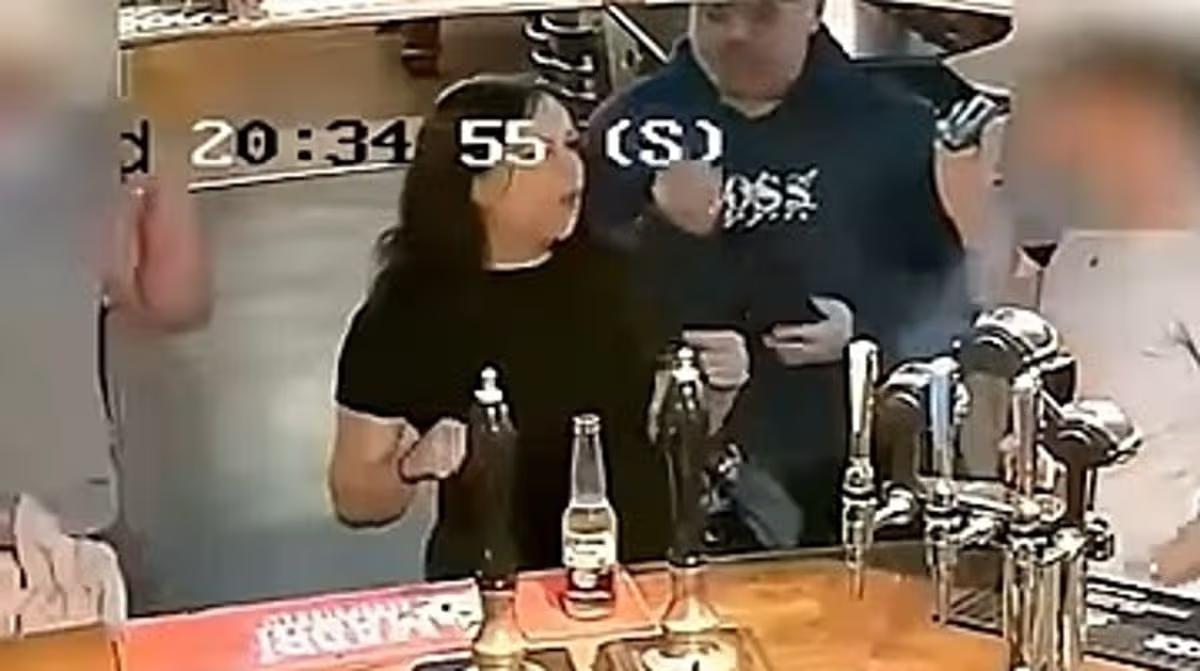
The final images of Courtney Angus’s life are deceptively ordinary. In CCTV footage released by police, she is seen at a bar with 38-year-old Michael Doherty, a man she knew. There is no overt drama in the grainy clip, just two people in a shared social space. This chilling piece of visual evidence, however, now serves as a heartbreaking prelude to an act of unspeakable brutality. Merely hours after this footage was recorded, Doherty’s violent rage erupted because Courtney, a vibrant young woman on the cusp of her 21st birthday, had rejected the prospect of a relationship with him. That simple, human act of asserting her own will became, in Doherty’s mind, an unforgivable offense, setting in motion a tragedy that would devastate a family and shock a community. The footage stands as a haunting testament to the hidden perils that can lurk behind the façade of normalcy, a last, quiet moment before a storm of violence.
What followed was a systematic and savage attack that defies comprehension. After the bar, Courtney went to Doherty’s home on Norfolk Street in Batley. There, in a place where she should have been safe, he assaulted and strangled her to death. A forensic post-mortem examination would later reveal the full, horrific extent of her suffering, uncovering injuries that indicated a serious sexual assault and mutilation. Doherty’s actions in the aftermath were those of a man utterly detached from humanity and consumed by his own destructive impulses. Leaving Courtney’s body in his house, he walked into Dewsbury town centre on the evening of July 26th, where he reported a robbery at a supermarket. When police officers responded, he brandished a knife, threatening to harm them if they did not comply with his demands. In a desperate attempt to escalate the situation or perhaps force a fatal confrontation, he tried to enter a nearby pub, leading officers to deploy a Taser to subdue him. It was then, in custody, that he coldly declared he had killed someone and that a body would be found at his address. This confession, devoid of remorse, led officers to the scene where they discovered Courtney’s body, a discovery that confirmed their worst fears and began the formal process of documenting a nightmare.
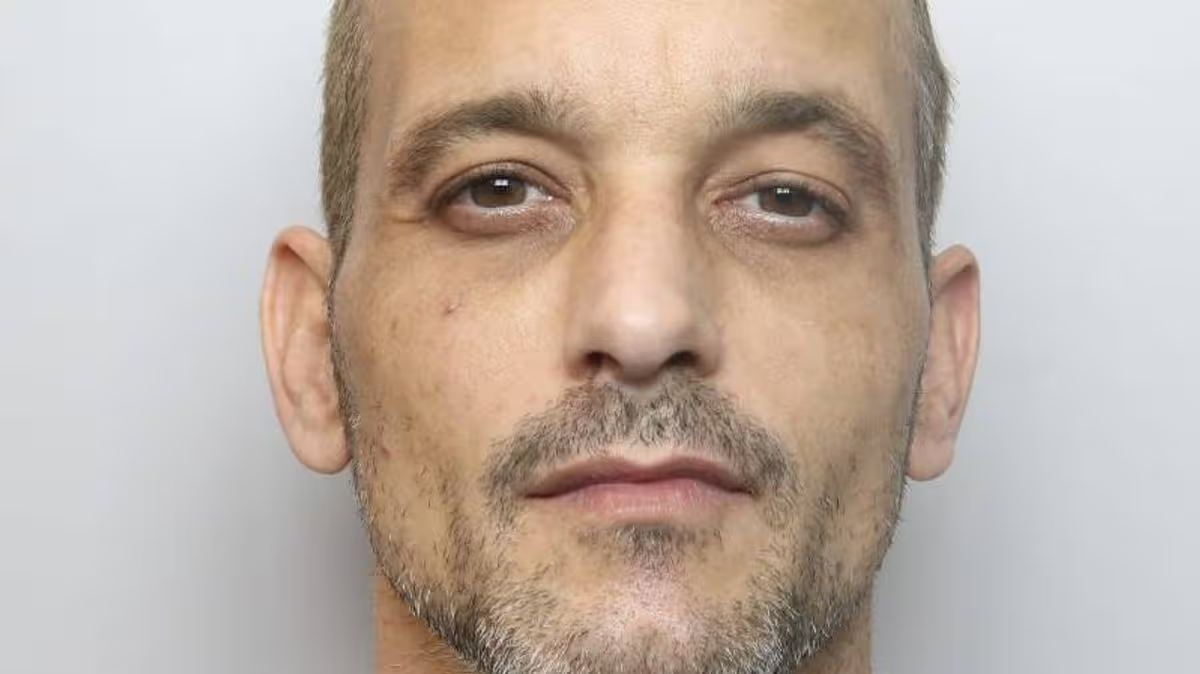
In Leeds Crown Court, the legal machinery of justice moved with solemn efficiency. Michael Doherty, who also used the alias Michael Moore, appeared and pleaded guilty to Courtney’s murder. On Thursday, May 28th, he was sentenced to life imprisonment, with a minimum term of 33 years before he can even be considered for parole. Senior Investigating Officer Dan Bates of the Homicide and Major Enquiry Team addressed the court, directly linking Doherty’s violence toward Courtney to his broader threat to society. “Doherty carried out his violent attack on Courtney after she told him she was not interested in having a relationship with him,” Bates stated. “He further showed his willingness to use violence by taking a knife into Dewsbury town centre, where he threatened a shop worker and the police officers who attended the robbery report. These actions clearly demonstrate that he is a very dangerous man.” The sentence, while one of the longest tariffs handed down, is a cold metric that can never measure the true loss. The hope, as expressed by the officer, is that it provides Courtney’s loved ones with a measure of security and the faintest solace that her killer is removed from the world for decades to come.
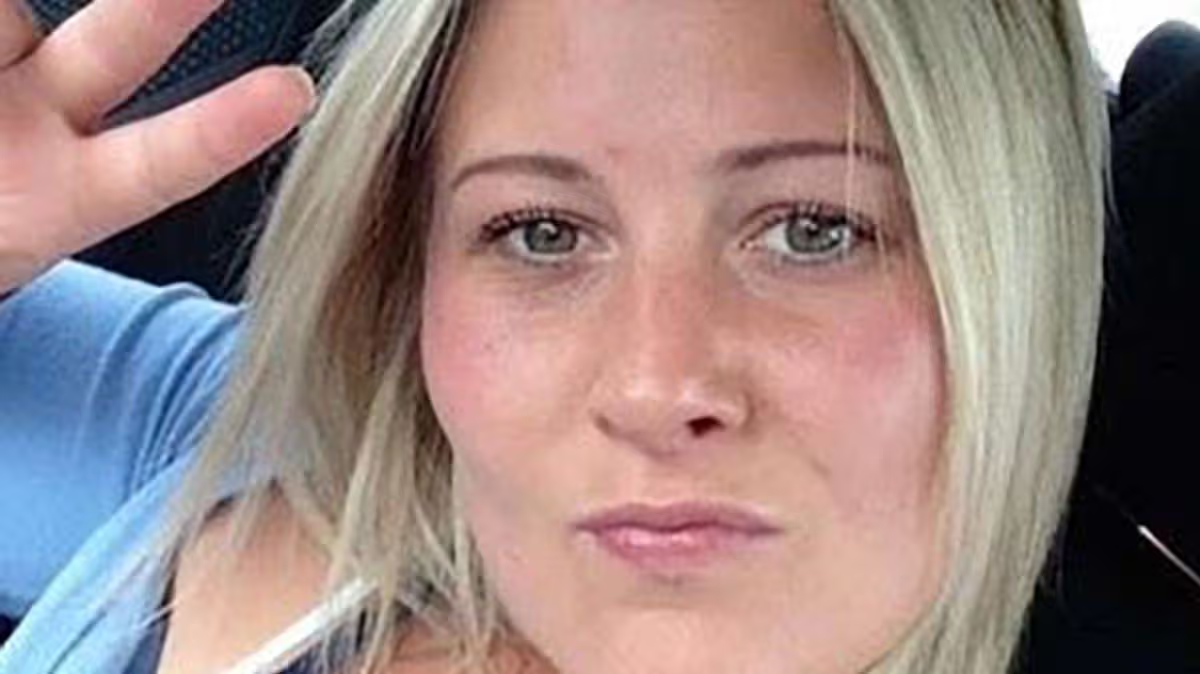
Beyond the courtroom facts and the clinical police statements lies the immeasurable human wreckage. Courtney Angus was not a headline; she was a beloved daughter, a friend, a young woman with dreams and a personality that lit up the lives of those around her. In a profoundly moving statement, her family articulated a grief that is both universal and uniquely piercing. “The loss of Courtney has changed us all and we still cannot understand why she was so cruelly and suddenly taken from us,” they shared. “Courtney was such a loving and vibrant young woman with her whole life ahead of her. She was a huge part of this family, and she will never be replaced.” Their words capture the permanent fracture that violent crime inflicts—a life not just ended, but a future stolen, a role in a family forever left vacant. They expressed relief that the judicial process was complete but acknowledged a painful truth: “our pain is as strong as it was on the day that she left us. Every day carries the weight of her absence.” In their darkest hours, they found support in the professionalism of West Yorkshire Police and the Crown Prosecution Service, and in the unwavering light provided by friends, who became pillars of strength amidst unbearable darkness.
This case forces a grim confrontation with the toxic intersection of rejection, entitlement, and lethal masculinity. Doherty’s pathology is laid bare in the sequence of events: an inability to accept a woman’s autonomy, a translation of that personal rejection into a justification for ultimate violence, and a subsequent outward projection of that violence toward police and the public. It is a pattern tragically familiar in many femicides, where a man’s perceived ownership or claim over a woman turns to vengeful destruction when that claim is denied. Courtney’s murder is not an isolated incident of “passion” or a private dispute; it is a stark example of a societal ill where women’s lives are treated as disposable in the face of wounded male pride. The sharing of the CCTV footage, while difficult to view, serves a crucial public function. It underscores the terrifying reality that such profound danger can hide in plain sight, reminding us that violence against women is not always committed by shadowy strangers, but often by men they know, men who move among us until the moment their control shatters.
The memory of Courtney Angus must transcend the horror of her final moments. She was a person, not just a victim—a young woman about to celebrate her 21st birthday, a milestone symbolizing adulthood and possibility, brutally erased. Her family’s grief is a testament to the love she gave and inspired. While the criminal case is closed and her murderer is imprisoned, the work of honoring Courtney continues. It continues in the community’s remembrance of her spirit, in the support for her grieving family, and in the broader, essential societal conversation about preventing such violence. It demands challenging the attitudes that fuel male entitlement, supporting victims, and holding perpetrators to account. The 33-year minimum sentence is a judicial conclusion, but the legacy of Courtney’s life and the fight against the forces that ended it remain a lasting, vital imperative. Her story is a piercing call to recognize the sacred right of every person to say “no” without fear, and to build a world where rejection is met with respect, not retaliation.