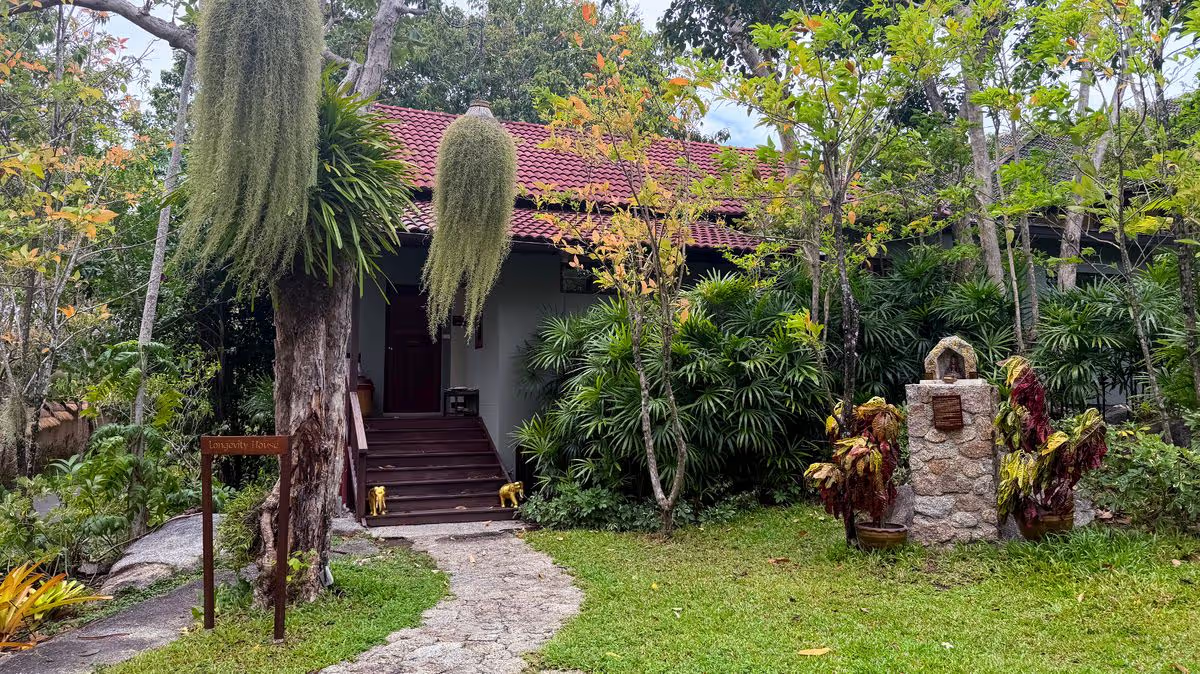




Tucked away on the lush, tropical island of Koh Samui in Thailand, the Kamalaya wellness retreat presents itself as a sanctuary for profound personal change. Described as a place of “holistic healing” and a “dream of supporting you to truly flourish,” it boasts unique features like a historic monk’s cave and offers a range of high-end spiritual experiences. Among these is a 75-minute private fire ceremony, priced at over £172, intended for those seeking emotional uplift or a symbolic new beginning. This idyllic haven, however, is not just a destination for wealthy seekers of serenity; it is also owned by Christopher Harborne, a crypto billionaire who has become a pivotal financial backer of Nigel Farage and the Reform UK party, intertwining this remote paradise with contemporary British political controversies.
Christopher Harborne, estimated to be worth £18 billion and ranked sixth on the Sunday Times Rich List, acquired Kamalaya in 2021. He frames his ownership not as a mere business venture but as a “philanthropic investment”—a heartfelt commitment to preserving the retreat’s founding principles as a place of “healing, connection, and growth.” Having been a guest himself for months, he was inspired to safeguard its philosophy. The resort encourages disconnection from digital distractions, promoting instead immersive wellness programs. Accommodation options underscore its luxury clientele, including a penthouse pool suite costing £941 per night. It was here, in a villa on the property, that Harborne was photographed with Nigel Farage in 2022, during a visit for Harborne’s birthday, highlighting the personal friendship between the financier and the politician.
However, the transition to Harborne’s ownership was not entirely seamless. The original founders, John and Karina Stewart, who sold the business completely to Harborne after initially entering a partnership, later characterized their exit as due to “incompatibility.” After three years of working as advisors under the new ownership, they concluded that their business and wellness philosophies were “simply divergent and incompatible” with those of the controlling shareholder. This reported “bust-up” suggests that the retreat’s serene image may have undergone internal tensions as its mission aligned with a new billionaire custodian whose primary public profile is now linked to political funding rather than wellness advocacy.
The retreat’s client list and offered services reflect a niche market of affluent individuals seeking spiritual solace. Past guests include Sarah Ferguson, the Duchess of York, who in her autobiography recalled a “magical” meditation session at Kamalaya. Beyond the fire ceremony, the resort offers one-on-one spiritual guidance sessions for £131.56, aimed at those navigating life’s challenges or grief, and private mantra chanting for over £63, designed to “profoundly transform the human experience.” These services, while part of a broader global wellness trend, are packaged within an exclusive, high-cost environment, mirroring the economic stature of its owner and his associates.
This connection between a Thai “transformation sanctuary” and British politics has moved from the background to the foreground due to a parliamentary inquiry. Nigel Farage is currently under investigation by the Parliamentary Standards Commissioner for allegedly failing to declare a £5 million gift from Christopher Harborne. While Reform UK claims the money was a “personal, unconditional gift” for Farage’s security needs—later described by Farage himself as a “reward” for his Brexit campaigning—the probe examines whether it breached Commons rules on transparency. This scrutiny directly links the wealth generated from Harborne’s ventures, including perhaps the discretionary spending of guests at Kamalaya, to the financial engine of a major political movement.
Thus, Kamalaya exists in two parallel narratives: one as a tranquil hillside retreat offering fire ceremonies and mantra chanting for personal renewal, and another as a tangible asset of a billionaire whose capital is influencing the landscape of UK politics. The retreat’s stated mission of fostering “growth for all who visit” stands in quiet contrast to the grown of political contention it is inadvertently associated with. As the parliamentary standards probe continues, this Thai island sanctuary serves as a reminder of how personal wealth, personal wellness, and political power can intersect in increasingly global and complex ways, far from the shores of Westminster.