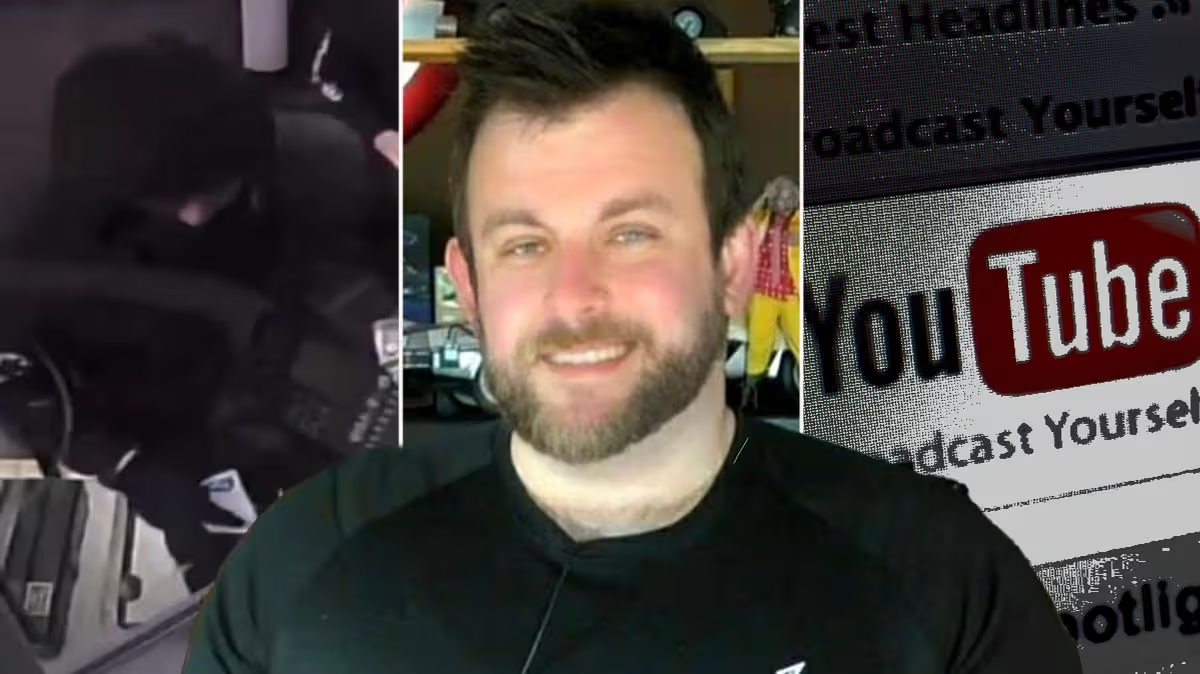



The mysterious disappearance of Lee Andrews, husband of television personality Katie Price, has evolved from a private family crisis into a public saga of conflicting claims and deepening uncertainty. In mid-May, Andrews vanished, prompting his wife to make a startling public assertion: she claimed he had been kidnapped, telling her podcast audience that their last FaceTime call showed him bound and in a dirty van, being taken to what he called a “black site.” This dramatic account immediately captured media attention, painting a picture of an international thriller unfolding in real-time. However, the narrative began to shift amidst public skepticism, particularly when it was noted that Andrews’s Instagram account showed activity, such as following new profiles, which seemed incongruous with someone allegedly bound and captive. The initial kidnapping story soon gave way to a new, albeit still serious, explanation from Price: her husband had been located, but was imprisoned in Dubai on suspicion of espionage.
The emotional toll on Katie Price during this period was palpable, as described by sources close to her. Friends reported she was “very scared, very anxious, very worried” throughout the ordeal, a natural reaction to a spouse’s unexplained disappearance under such alarming circumstances. The situation took a seemingly positive turn when reports emerged that Andrews would be released on Monday, June 1st, contingent upon paying a substantial four-figure fine. Relief appeared to be in sight, with Price reportedly making plans to fly to Dubai to meet him upon his anticipated release. This development offered a glimmer of resolution to a weeks-long nightmare, suggesting that the bureaucratic wheels were finally turning and that the family’s ordeal was nearing an end.
Yet, Monday passed without event. As the calendar turned to Tuesday, June 2nd, both in the UK and in Dubai, there was no sign of Lee Andrews’s release, nor any official confirmation of his status from authorities. This anticlimax plunged the situation back into ambiguity, leaving more questions than answers. The promised resolution evaporated, extending the period of anxious limbo for Price and intensifying media speculation. The absence of concrete information or a visible release undermined the earlier narrative of a straightforward, if costly, bureaucratic resolution, casting further doubt on the sequence of events and the true nature of Andrews’s detention.
Amidst this unfolding public drama, a particularly revealing and humanizing moment occurred during a telephone conversation between the couple, as recounted by Price on her podcast with her sister, Sophie. In that rushed call, Price disclosed that she bluntly told her husband, “you are the most hated man in Britain.” His bewildered response—“what, what, why?”—highlighted his apparent isolation from the media firestorm his disappearance had ignited. Price explained that the public and press largely viewed the entire episode as an elaborate scam, with many suspecting she was complicit. This exchange peeled back the layers of the sensational headlines, revealing the profound personal strain: a wife struggling to manage her own fear and public ridicule while trying to prepare her incarcerated husband for the maelstrom awaiting him upon his return. “It’s been a b****y nightmare,” she summarized, underscoring the viral frenzy that had come to define their private crisis.
The overarching narrative of Lee Andrews’s disappearance is now shrouded in unresolved contradictions. The account morphed from a kidnapping, to an espionage arrest, to a pending release, and now to a continued silence. This shifting storyline has inevitably fueled public skepticism, with many questioning the veracity of the claims. Despite the doubt, the human elements of fear, anxiety, and the desperate desire for a loved one’s safety remain undeniably real for Katie Price and her family. Her actions—publicly pleading for information, preparing for a reunion, and navigating a barrage of suspicion—speak to the turmoil of anyone caught in an inexplicable international incident, amplified to a deafening degree by the spotlight of fame.
As of now, the saga remains incomplete, a cliffhanger with no clear resolution in sight. Lee Andrews’s whereabouts and exact legal status are unconfirmed, and the promised release has not materialized. The episode stands as a stark reminder of how quickly a personal crisis can spiral into a complex public puzzle, where personal anguish intersects with legal ambiguity and media scrutiny. For Katie Price, the nightmare continues, suspended between hope and frustration, awaiting a conclusion that seems perpetually just out of reach. The story of Lee Andrews is no longer just about a missing man or an espionage claim; it is a portrait of a family trapped in a crucible of uncertainty, grappling with a private ordeal under the unrelenting gaze of the public eye.