




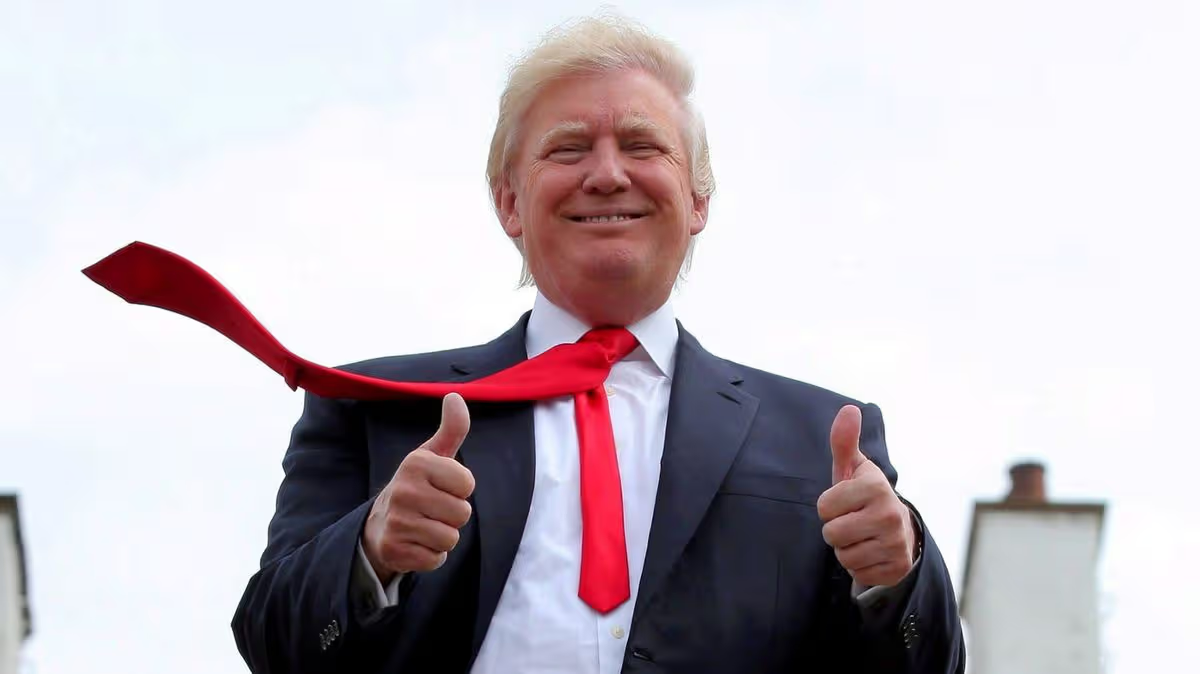
A new poll reveals the depth of public frustration in Britain as households brace for a fresh spike in energy costs, with a significant majority placing blame squarely on former US President Donald Trump. According to the survey conducted by Survation for the End Fuel Poverty Coalition, three-quarters of the British public hold Trump responsible for the impending surge in their bills, a consequence of the recent conflict in Iran. The sentiment is so potent that 63% of respondents have branded the expected price hikes a “Trump Tax,” a direct levy on their household finances. This public anger intertwines with broader concerns about energy industry practices, with 65% also blaming the sector directly. The findings paint a picture of a populace feeling victimized by distant geopolitical maneuvers and corporate profiteering, creating a potent political issue as bills are set to rise.
The context for this public outcry is a toxic mix of international conflict and domestic energy policy. Trump has repeatedly pressured the UK government to resume and expand drilling in the North Sea, a stance at odds with Prime Minister Keir Starmer’s halt on new oil and gas licences. The poll suggests the British public is sceptical of this push, seeing it as exacerbating, not alleviating, their burdens. Furthermore, a majority of 64% believe the energy industry is capitalizing on the Iran conflict to inflate profits, a perception of wartime profiteering that fuels resentment. This consensus crosses party lines, with voters from all major political affiliations expressing strong support for the existing Windfall Tax on energy firms, and nearly half calling for it to be extended to more companies within the industry. The message is clear: the public sees the solution in tighter regulation of excess profits, not in a return to intensive fossil fuel extraction.
Campaigners warn that this looming “Trump Tax” arrives at a time of acute vulnerability for millions. Simon Francis, coordinator of the End Fuel Poverty Coalition, highlighted that countless families are already forced to cut back on essentials, with the worst of the bill increases still on the horizon. He argues that against this backdrop, any move to scrap the Energy Profits Levy would be “not just economically wrong but politically tone deaf,” noting that public support for maintaining the tax outweighs opposition by more than two to one. The plea is for policymakers to listen to the struggling public, not to industry lobbyists seeking tax breaks. This sentiment underscores a growing demand for governments to prioritize shield citizens from global market volatility and corporate greed, rather than accommodating the financial interests of the fossil fuel sector.
The critique extends beyond immediate blame to a fundamental challenge of the UK’s energy strategy. Robert Palmer of Uplift, a group advocating for a transition from North Sea oil, states plainly: “People know they’re being hit with a Trump Tax, plain and simple.” He connects rising bills, fuel costs, and mortgages to a shared root cause: a crippling dependence on fossil fuels. This dependence, he argues, impoverishes everyone except oil and gas executives and shareholders who profit from the crisis. Palmer forcefully rejects Trump’s calls for more drilling, stating, “We can’t drill our way out of this crisis.” His reasoning is grounded in practical realities: more North Sea extraction would not reduce consumer bills and would have a negligible impact on the UK’s overall gas supply, given the basin’s mature and depleted state.
Instead, the polling and campaigners point toward a clear alternative path: energy independence through renewables and efficiency. Palmer argues that the only durable way to insulate the nation from such geopolitical shocks and price spikes is to accelerate the build-out of renewable energy like wind power, and to massively upgrade the nation’s housing stock with solar panels and heat pumps. This two-pronged approach would sever the tether to volatile global oil and gas markets while addressing the climate crisis. The poll indicates this logic resonates widely, suggesting that “the public gets this, even if Donald Trump doesn’t.” The vision is of a future where energy bills are controlled by domestic sun and wind, not by international conflicts or the whims of fossil fuel cartels.
Ultimately, the survey presents a stark mandate for the British government. The public is drawing direct lines between geopolitics, corporate profits, and their own financial pain, and is demanding a coherent response. This involves both holding the line on taxing windfall profits and aggressively accelerating the transition to a cleaner, cheaper, and more secure energy system. It also requires direct support for households, both in retrofitting homes to be more efficient and in providing aid for those who will inevitably struggle to pay the bills in the interim. The “Trump Tax” has become more than a catchy phrase; it is a crystallization of public anxiety over energy security and a call for a decisive break from the failed policies of the past. The government’s response will be a critical test of its ability to protect its citizens from global instability and build a more resilient economic future.