



The Human Story of Travel: From Souvenirs to Skills, From Plans to Plots
The impulse to explore is timeless, but the way we fulfill it is always changing. We’ve moved from simply documenting a place with a photograph to capturing its kinetic energy in short videos. Our appetites have shifted from the pure relaxation of a beach to the dynamic pulse of a city, and from the comfort of familiar favorites to the thrill of discovering untouched corners of the world. This evolution speaks to a deeper craving: we no longer want to just see a place; we are increasingly determined to feel it, to understand it, and to become a part of its story, however briefly. Travel today is less about checking sites off a list and more about weaving oneself into the local tapestry.
This shift is powerfully documented in recent trends, revealing that modern travelers, particularly younger generations, are prioritizing experience over almost everything else. A significant global study found that 64% of Millennials and Gen Z would even sacrifice traditional job benefits for the chance to travel more. This isn’t casual tourism; it’s a serious commitment to immersion. The primary goal now is to create lasting memories and engage authentically with local cultures and flavors. This intent has crystallized into new, playful trends that guide how people approach their journeys: “sight-doing,” “lore chasing,” “snackpacking,” and turning personal milestones into extended voyages.
“Sight-doing” perfectly captures the move from passive observation to active participation. It’s the philosophy that the best souvenir isn’t a trinket, but a skill. While cooking classes remain popular, travelers are now seeking hands-on activities deeply rooted in their destination’s heritage—like crafting a perfume in Paris, learning traditional knitting in Estonia, or practicing batik art in Indonesia. The data supports this beautifully: 80% of travelers believe such activities foster a higher appreciation for local culture, and 76% agree that the learned skill stays with them longer than any physical object. It’s a shift from acquiring something to becoming someone, even temporarily, who understands the craft and soul of a place.
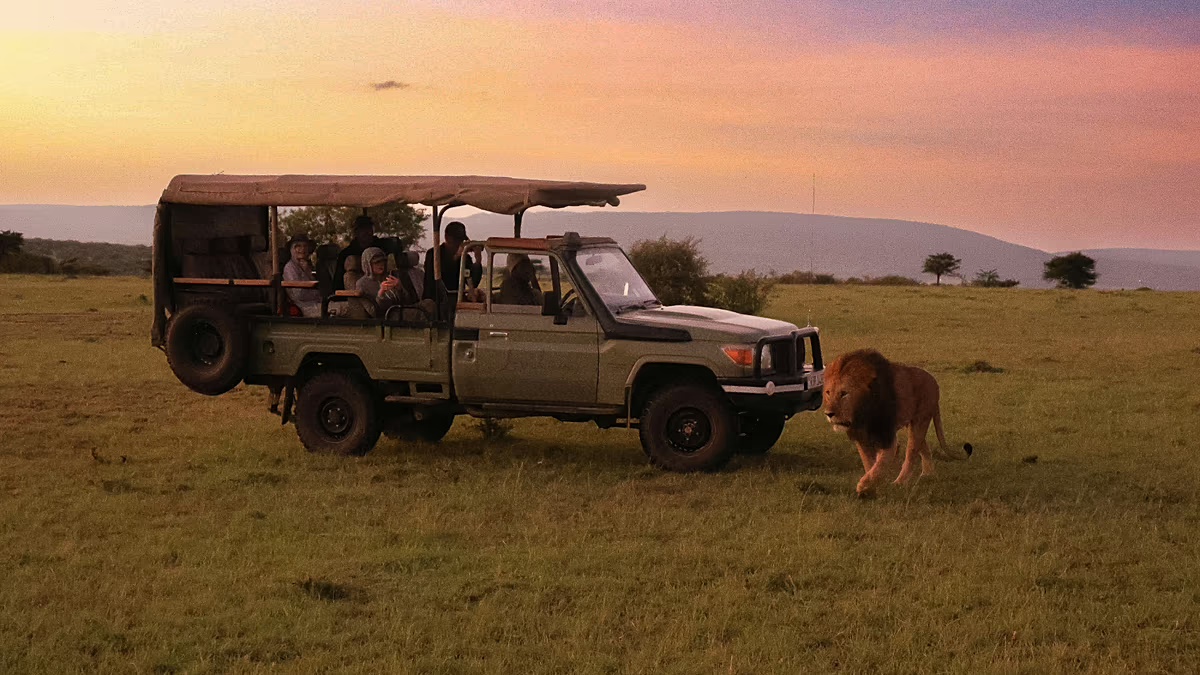
In contrast, “lore chasing” embraces the unscripted and the extraordinary. Inspired by the social media mantra of doing things “for the plot,” this trend is about seeking serendipity and once-in-a-lifetime experiences. It might mean arriving in a country with no rigid plans, simply trusting the day to unfold. For 82% of younger travelers, the compelling motive is doing something out of the ordinary if it makes for a great story. Another 86% treasure the lasting impression of chance encounters with locals. This trend isn’t about a prescribed itinerary; it’s about cultivating a personal mythology. It’s the pursuit of the stories that will define you as the friend with unbelievable tales or the relative with legendary adventures, always with a mindful emphasis on safety.
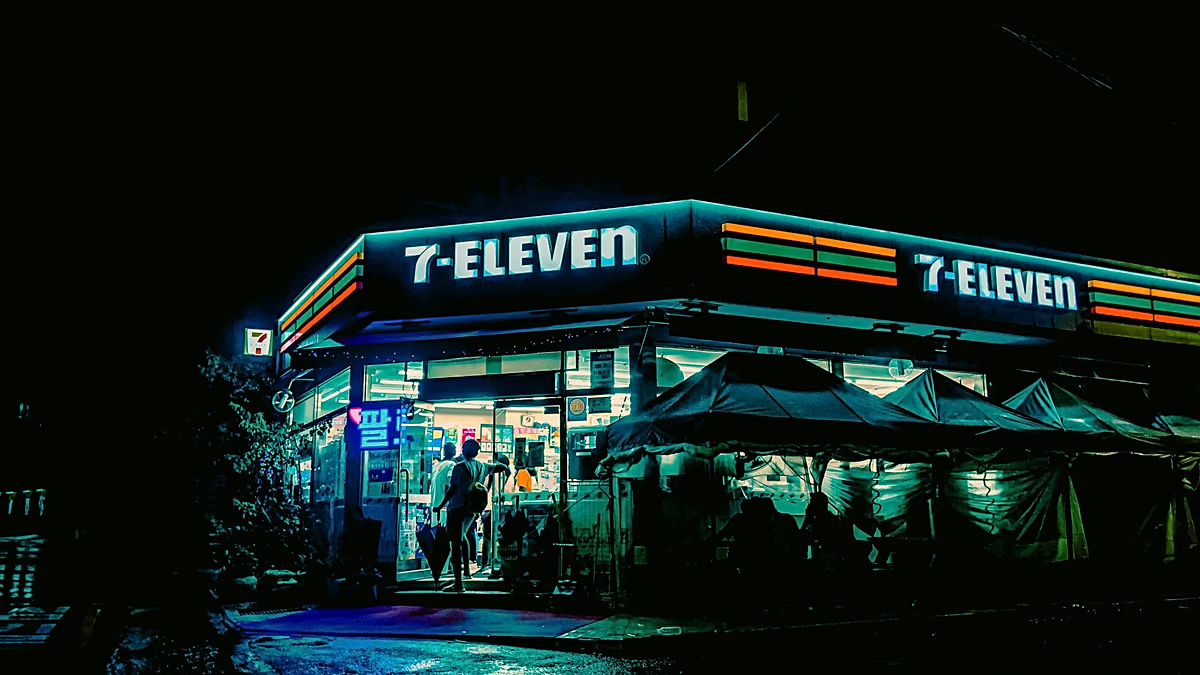
Then there’s “snackpacking,” a trend that turns the everyday act of eating into a cultural deep-dive. It’s the dedicated pursuit of local flavors you cannot find at home, from street food stalls to supermarket aisles. Driven by viral curiosity—think unusual ice cream flavors or regional drink combinations—89% of Millennials and Gen Z deem it essential to enjoy local snacks abroad. While 50% head to grocery stores as culinary discovery zones, 69% prioritize street food spots and 53% seek out bakeries. This trend democratizes cultural immersion; understanding a place can start with savoring its chimney cake in Hungary, its falafel in Egypt, or its hotteok in South Korea. It’s a reminder that a nation’s heart can often be tasted in its simplest, most beloved foods.
Finally, the trend of “miles on milestones” reflects how we are blending our personal celebrations with our wanderlust. As travel has become more accessible, milestones like weddings, birthdays, or anniversary parties are increasingly used as anchors for international trips. Two-thirds of respondents plan to attend such a milestone trip for someone else in the coming year. However, these journeys often come with a shared itinerary and unfamiliar social dynamics. The clever adaptation is to extend the trip: 82% of attendees plan to add extra days, with 72% extending by three to four days. This allows for a personal reclaiming of the destination, encouraging travelers to embrace a place they might not have chosen themselves, often leading to delightful and unexpected discoveries. It’s a balance between communal celebration and individual exploration.
Together, these trends paint a coherent picture of the modern traveler: no longer a spectator, but an eager participant and curious collector of skills, stories, flavors, and layered experiences. Travel has become a primary medium for self-expression and connection, where the journey is measured not in miles, but in meaningful engagement.