

The traditional vacation model, where exercise routines are abandoned in favor of indulgence and rest, is undergoing a profound transformation across Europe. Travellers are no longer treating fitness as something to pause while they are away; instead, they are seeking trips built around movement, training, and holistic recovery. This shift represents a fundamental reimagining of leisure time, where wellbeing and activity are integrated into the travel experience itself. Active holidays are moving decisively into the mainstream, evolving beyond niche athletic retreats to become a significant part of the broader tourism landscape. This trend is seeing traditional beach breaks face growing competition, with forecasted 2026 travel trends highlighting a specific rise in sport-led holidays, particularly around communal racquet sports like padel and pickleball. Within this fitness tourism boom, a spectrum of preferences exists: some travellers seek high-performance hubs with structured coaching, while others desire more relaxed escapes built around swimming, hiking, or a few hours of sport each day. The unifying principle is a desire to return home feeling rejuvenated and stronger, not simply relaxed.
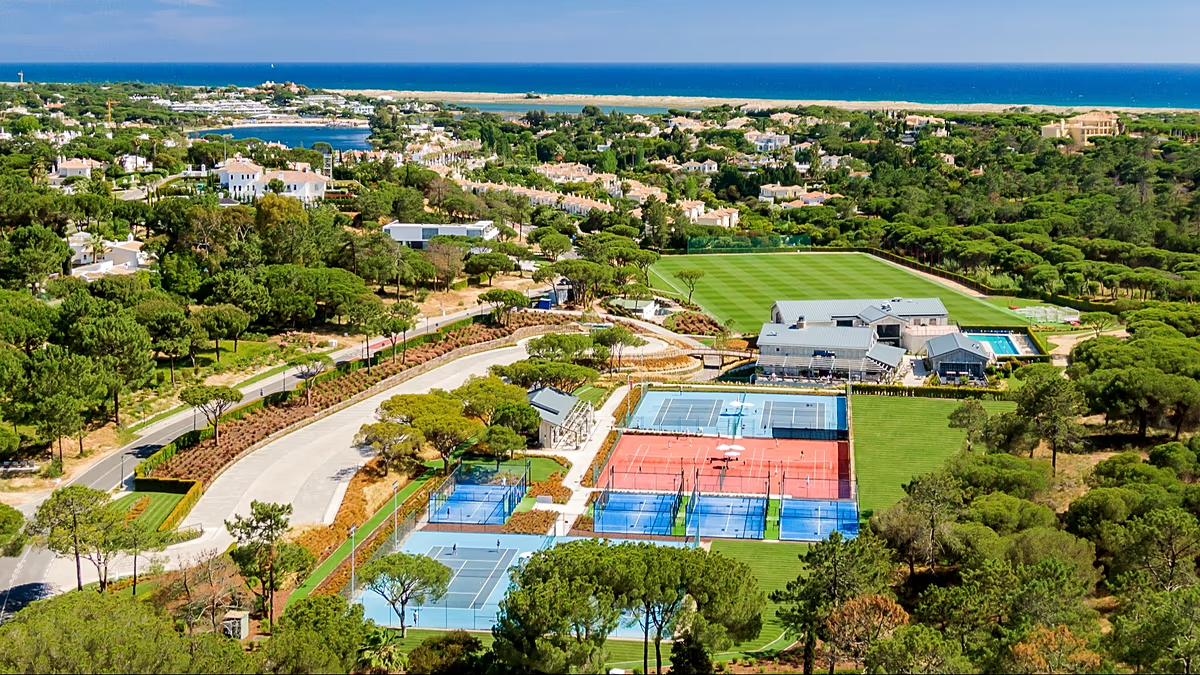
For those pursuing a dedicated, high-octane training environment, several European resorts have long set the standard. Club La Santa in Lanzarote, Spain, is arguably the most recognizable active-holiday resort in Europe, a place where early starts and double training days feel completely normal. With over 80 different sports and 500 weekly classes, it is deeply tied to the island’s reputation as a serious base for cycling and triathlon. It offers travellers access to structured sessions, open roads, consistent warm weather, and a community atmosphere that normalizes intense physical pursuit. Similarly, in Portugal’s Algarve, Quinta do Lago combines elite facilities with a refined lifestyle. Its core is The Campus, a high-performance multi-sports hub focused on training, recovery, and rehabilitation, offering state-of-the-art gyms, yoga, and sports camps. The resort extends its active ethos to family-friendly cycling through the Ria Formosa Natural Park, water sports, and championship golf, catering to both the dedicated athlete and the active family.
The model of a dedicated “sport hotel” is powerfully exemplified by Playitas Resort on Fuerteventura, Spain, especially for those oriented toward triathlon-style training. Its facilities are purpose-built: an eight-lane 50-metre Olympic pool and a cycle centre with over 250 bikes make it an ideal base for fitness camps and repeat training stays. The resort emphasizes the convenience of a consolidated routine—swim, ride, run, and recover all in one place—enhanced by Fuerteventura’s reliably cool, sunny weather. While it suits serious athletes, it also appeals to travellers who simply appreciate waking up somewhere sunny with premium, ready facilities, eliminating the hassle of piecing together a workout from a standard hotel gym. This convenience and quality underscore a key driver of the trend: the elimination of barriers to maintaining fitness while away.
On the luxury end of the spectrum, Forte Village in Sardinia, Italy, offers a premium sports experience wrapped in high-end hospitality. It describes itself as a recognized sports resort, promoting academies across padel, road biking, and mountain biking, alongside a wider programme including tennis, triathlon, pickleball, and fitness. For racquet sports enthusiasts and those who appreciate scenic training environments, it provides a compelling blend. Its commitment is further signaled by hosting premium events like the Challenge Forte Village Sardinia triathlon. This resort illustrates how the active holiday trend is not merely about facilities, but about creating a curated, high-quality experience where sport is an integral part of a luxurious escape.
A newer, innovative approach is emerging, focusing less on a single sport and more on a holistic performance-and-recovery model. SIRO Boka Place in Tivat, Montenegro, opened in 2025 and is built around this broader philosophy. The hotel is designed to help guests train better, recover better, and sleep better, with dedicated fitness and recovery labs at its core. It represents a forward-thinking edge of the trend, attracting travellers who care as much about mobility, recovery, and sustainable performance as they do about logging miles or counting sessions. Recent reports mark it as one of the most interesting active and wellness-led stays in Europe, highlighting the evolution from pure activity to integrated wellbeing.
Finally, for travellers seeking a softer, more mindful version of an active holiday, options abound that blend movement with relaxation and scenic beauty. Marpunta Resort on Alonnisos, Greece, offers such movement-led holidays, promoting hiking, paddleboarding, tennis, scuba diving, yoga, Pilates, and fitness classes. Its planned 2026 retreats, including INEX yoga retreats and a YogAqua week combining paddleboard yoga with guided hikes and massage, exemplify this gentler approach. A new Ocean Rope Flow retreat centred on mobility and functional movement further underscores the diversity within active travel. With its blend of yoga and recreational sports, Marpunta caters to those who want a less intense, yet genuinely engaging and restorative holiday, proving that “active” can mean enriching movement in harmony with nature, not just rigorous training. This spectrum, from high-performance hubs to holistic recovery centres and mindful movement retreats, showcases how Europe’s sports resorts are collectively shaping a dynamic and inclusive future for the fitness break.