

Here is a humanized summary of the content, expanded to meet your requested length:
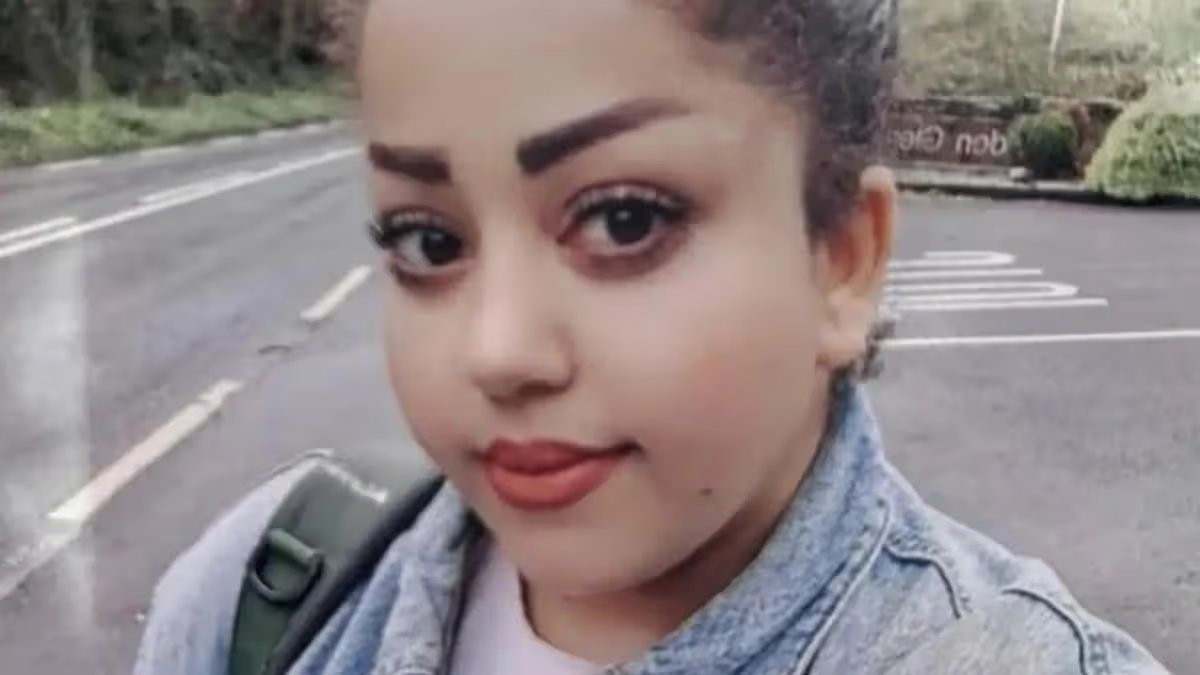
The quiet coastal town of Clifden in County Galway has been shattered by a tragedy that underscores a devastating failure in systems meant to protect the vulnerable. Masuma Sohrabi, a 31-year-old mother of two known affectionately to friends as ‘Athija’, was found dead with severe neck injuries outside an accommodation centre for international protection applicants. Her death was not a random act of violence, but the horrific culmination of a known threat. It has since emerged that this young woman, who had fled the Iranian regime in search of safety and opportunity, had previously reported the man now accused of her murder to the police over alleged violent behavior. This chilling detail transforms her death from a shocking crime into a profound societal question: how does a woman seeking sanctuary become so utterly failed by the very structures designed to offer it?
Masuma’s story was one of resilience and hope. Arriving in Ireland from Tehran in October 2024, she carried with her the dreams shared by countless others: a peaceful life and a brighter future for her children, a five-year-old daughter and a nine-year-old son. Settling in Clifden, she worked diligently at a local hotel and became a cherished part of her new community. PK Joyce, manager of the Waterloo House accommodation where she lived, painted a portrait of a determined and loving mother. She strove not just to survive, but to belong, actively learning English and even a “cúpla focal as Gaeilge” (a few words of Irish). She was, as Joyce poignantly stated, “a lovely lady” who had successfully built a home for her family, making the sudden violence of her death all the more incomprehensible to those who knew her.
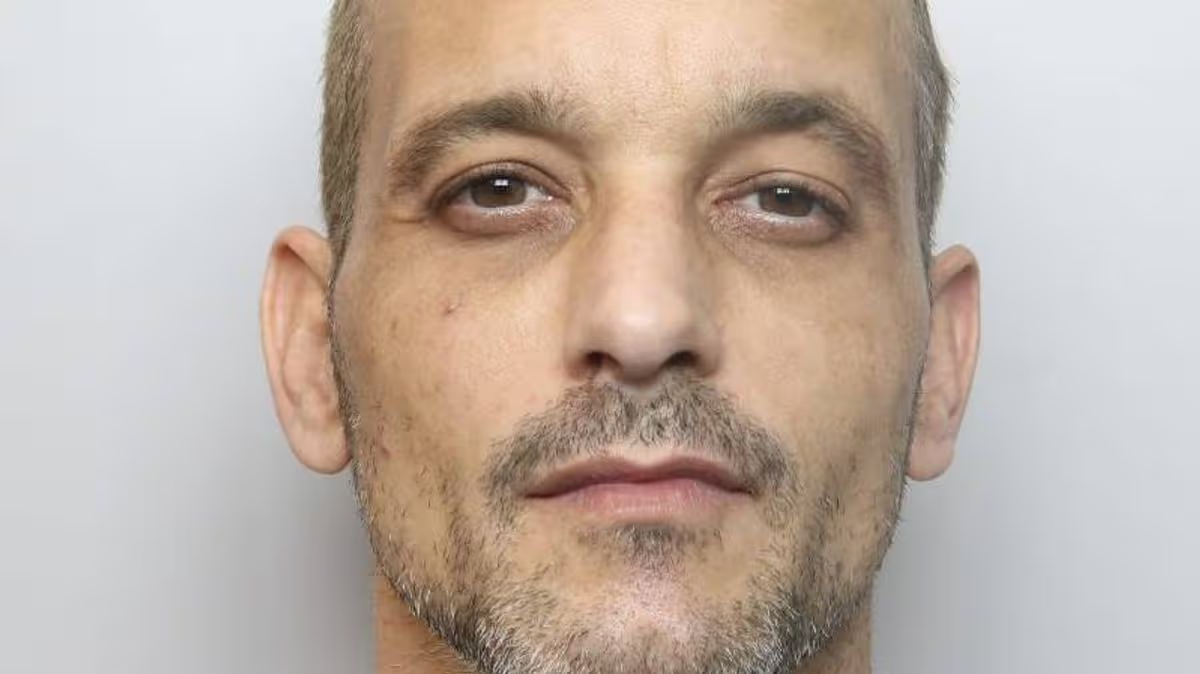
The procedural details of the case are stark. Gardaí were alerted by staff at the accommodation centre after Masuma was reported missing. The scene near Galway Road quickly became a major investigation site, with divers scouring a nearby river for evidence. A man in his 30s, also a foreign national, was arrested and is receiving medical treatment. Authorities have stated they are following a definite line of enquiry and are not seeking anyone else, indicating a clear connection between the victim and the suspect. The official machinery of investigation now turns, awaiting a post-mortem examination to formally determine the course of the inquiry, which is widely expected to become a murder investigation.
Yet, beyond the forensic and procedural facts lies an immense human loss. The phrase “mother of two” used in news reports is not just a descriptor; it is the epicentre of this catastrophe. Two young children in a local Clifden school have now had their world destroyed. Their mother, who worked to give them a better life, has been taken from them in the most brutal manner imaginable. The community that embraced her is left reeling, grappling with grief and anger. Their memories of Athija—her efforts to integrate, her dedication to her family—now stand in heartbreaking contrast to the violent and public nature of her death.
This case forces a painful but necessary examination of Ireland’s response to gender-based violence, particularly within systems of international protection. The fact that Masuma Sohrabi had reportedly raised concerns about her suspected killer with the Gardaí prior to her death suggests a catastrophic breakdown. It raises urgent questions about risk assessment, communication, and the efficacy of protective measures for women in vulnerable situations. Her death echoes a global pattern where women are most at risk from men they know, and where prior reports of violence are too often not met with the intervention needed to prevent escalation to murder.
Masuma Sohrabi’s life, begun in Tehran and ended on a street in Clifden, was a journey searching for light. She sought refuge from one form of oppression only to meet a different, intimate form of terror. As tributes pour in for the “lovely lady” who tried so hard to build a new life, her story becomes a solemn reminder. It is a call to scrutinize not only the specifics of this investigation but the broader protections for women in every community. Her legacy must be more than a headline; it must be a catalyst for ensuring that a plea for help is never again met with such a tragic and final silence. Her children, her friends, and the nation owe her that much.