


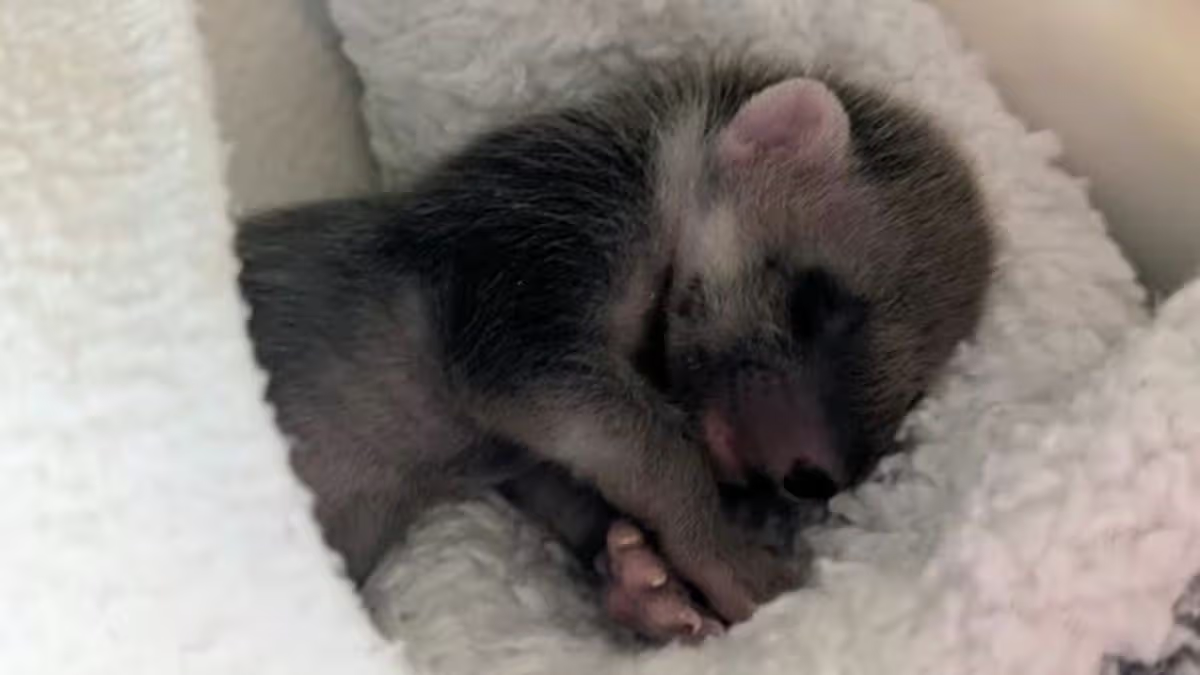
In the heart of the English countryside, the Vale Wildlife Hospital & Rehabilitation Centre in Tewkesbury recently experienced a moment of profound and unexpected wonder. Last week, a hedgehog carer arrived with a tiny, vulnerable creature they believed to be an orphaned fox cub. The animal, a delicate bundle weighing a mere 105 grams—no heavier than a standard chocolate bar—had been discovered in a rubbish bin alongside two siblings who had not survived. With compassionate urgency, the carer brought the infant to the experts, hoping for a chance at life. What unfolded was a delightful surprise that sent a ripple of excitement through the centre, as staff quickly realized this was no ordinary patient. This “absolutely adorable” and “very loud” baby was, in fact, a pine marten kit, marking the first admission of its kind in the hospital’s 42-year history of caring for British wildlife.
The revelation transformed a routine rescue into a significant event. Pine martens are among the United Kingdom’s rarest native mammals, currently holding the precarious position of the third rarest. Natalie Gould, a member of the centre’s team, described the kit as being around two weeks old, a stage of complete dependency. His eyes and ears were still sealed shut, leaving him blind and deaf to the world, reliant solely on instinct and the care he would receive. The centre initially shared enigmatic photos with their social media followers, inviting guesses about the mystery animal’s identity before joyfully revealing the truth. This tiny representative of a vanishing species, with his soft fur and insistent cries, became a living symbol of both the fragility and resilience of Britain’s natural heritage.
The pine marten’s story is deeply intertwined with the history of the British landscape. As a member of the Mustelidae family, which includes otters, badgers, and weasels, the pine marten is an agile and elusive forest dweller, an expert climber who spends much of its life in the canopy. An adult’s lush, chocolate-brown fur and distinctive creamy-yellow bib allow it to melt into the shadows of tree bark, a ghost in its own woodland home. Yet, this once-widespread creature was pushed to the brink of extinction across much of the UK due to extensive habitat loss and historical persecution. Its dramatic decline makes the arrival of this orphaned kit not just rare, but historically poignant, a tangible reminder of a wildness that has been lost from so many of our forests.
Understanding this context makes the care protocol for the kit all the more crucial. He was immediately placed with the centre’s specialist hand-rearing team, who began the round-the-clock task of bottle-feeding him a special milk formula. This intensive care will continue until he is weaned, a process that requires immense dedication to meet his nutritional needs without compromising his future wild instincts. The team’s approach is meticulously planned to ensure he does not become habituated to humans. As he grows, their interactions will become increasingly hands-off, allowing his natural behaviours to flourish. The ultimate goal is not to tame him, but to equip him for a life of complete independence, a careful balancing act of compassion and deliberate detachment.
The road to freedom will be a long one. The centre estimates the young pine marten will remain in their care until at least late August. A significant hope, though unlikely, is that another orphaned kit of a similar age might be found, providing a crucial companion for socialization. Since pine martens are solitary adults, learning from a sibling during development is invaluable. Without a companion, the team will focus on simulating a natural upbringing as best as possible within a rehabilitation setting. Upon reaching maturity, the centre will collaborate with conservation organizations to identify a safe and suitable release site, likely in one of the few areas, such as parts of Scotland, Wales, or northern England, where small populations are tentatively recovering.
This single, small life, discovered amidst loss in a rubbish bin, now carries a weight of hope far exceeding his minuscule frame. His journey at Vale Wildlife Hospital highlights the critical, often unheralded work of rehabilitation centres that bridge the gap between human activity and wildlife survival. Each feed, each careful check, is a step toward bolstering the fragile future of a species. While his story began with tragedy, it is now defined by expert care and a collective commitment to returning him to the wild canopy he belongs in. He is a testament to the enduring promise of conservation—a loud, hungry, and absolutely adorable reminder that even the rarest of creatures can be given a second chance.