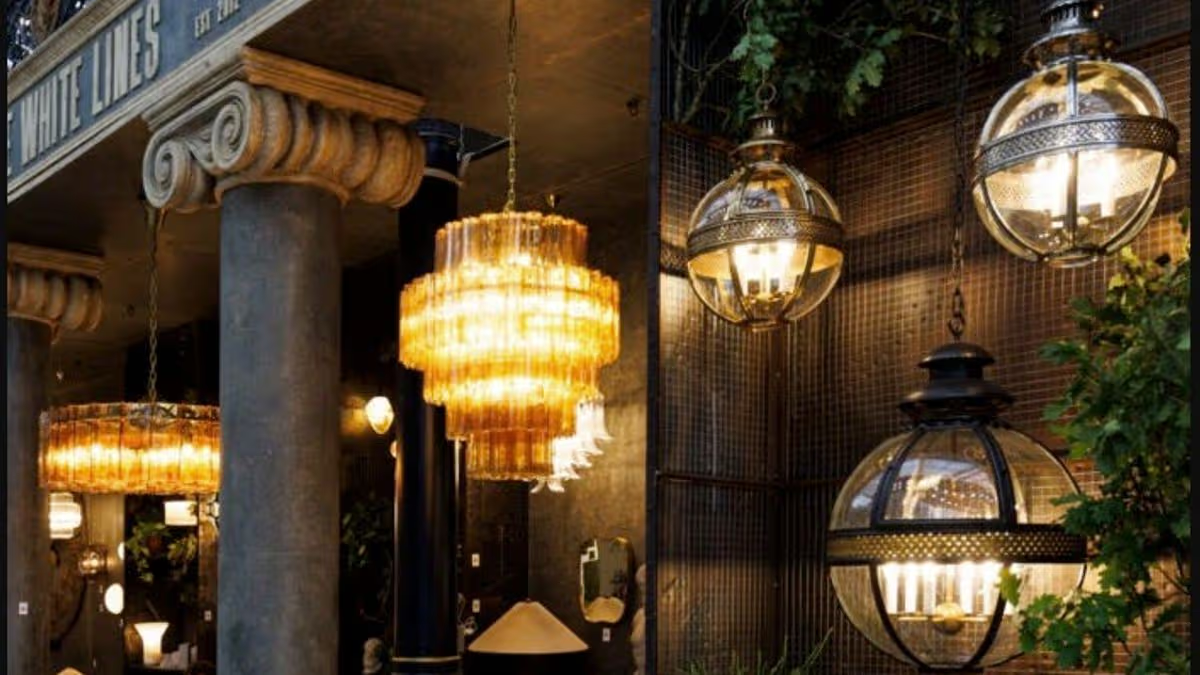



In a stark reminder of the turbulent economic climate facing the retail and design sectors, the award-winning British furniture brand Pure White Lines has collapsed into liquidation, leaving behind debts exceeding £1.4 million. For over a decade, this Sussex-based company had cultivated a reputation as a purveyor of high-end, curated home furnishings, specializing in contemporary furniture, statement lighting, and distinctive home décor. The news of its demise, marked by the appointment of liquidator Michael Royce of M.R. Insolvency on June 1st, signifies more than just a business failure; it represents the extinguishing of a distinctive creative vision that had resonated with a discerning clientele. The company’s journey from its establishment in 2012 to its recent award for ‘Best Stand’ at the prestigious Decorex interior design event in 2022 makes its sudden downfall particularly poignant, illustrating how even celebrated brands with a dedicated following are not immune to the compounding pressures of recent years.
The scale of the financial shortfall is laid bare in the company’s statement of affairs. While the sale of Pure White Lines’ remaining assets—presumably including unsold inventory from its Belgian warehouse and London showcases—is estimated to raise just under £45,000, the mountain of debt owed to unsecured creditors stands at a staggering £1,419,237.99. This debt is owed to a range of entities, including key suppliers who provided materials and unique vintage finds, other associated businesses, and a substantial sum of nearly £200,000 to Horsham District Council. A significant portion is also owed to HMRC, underscoring the severe cash flow challenges that ultimately suffocated the business. The chasm between the asset value and the liabilities highlights a brutal financial reality: the company’s beautiful, high-value pieces, like the £6,500 chandeliers and £4,000 dining tables it was known for, could not insulate it from the underlying economic strains.
To understand this collapse, one must look beyond the balance sheet to the brand’s ambitious operational model. Pure White Lines was not merely a retailer; it was a curator and a transnational operation. Sourcing antique and vintage items from across Europe required deep trade connections and upfront capital, while maintaining a warehouse in Belgium for pan-European distribution added significant logistical complexity and cost. This international footprint, while central to its brand identity and appeal, likely became a severe liability amidst post-Brexit trade complications, soaring shipping costs, and supply chain disruptions. The very essence of what made Pure White Lines unique—its carefully sourced, one-of-a-kind pieces—also made it vulnerable, as such a model is less scalable and more susceptible to inventory bottlenecks than mass-produced furniture lines.
The human impact of this liquidation extends far beyond the company’s registered office in Horsham, West Sussex. The term ‘unsecured creditors’ encompasses a network of artisans, small workshops, shipping firms, and design tradespeople who provided services and goods, now facing significant losses themselves. Furthermore, the loyal customers who invested in what they believed was a stable, premium brand are left in a precarious position. Those awaiting deliveries of commissioned or purchased items now face an uncertain future, likely having to claim as creditors themselves, with little hope of full reimbursement. The collapse erodes trust within the high-end design community and leaves a void for clients who valued the brand’s specific aesthetic—a blend of modern minimalism with curated vintage character.
This story is a microcosm of the broader challenges facing the independent retail and interior design landscape. Pure White Lines operated in a rarefied market, catering to clients willing to spend thousands on a single piece. However, even this affluent segment has not been untouched by the cost-of-living crisis, which may have led to a postponement or cancellation of major discretionary purchases like luxury furniture. Simultaneously, the brand faced relentless pressure from rising operational costs: energy for its showcases and warehouse, materials, international logistics, and employment. The debt to Horsham District Council suggests potential issues with business rates or other local charges. In essence, the economic headwinds proved too strong, even for a brand with a trophy cabinet and a prestigious address.
The silence from Pure White Lines, as noted by The Mirror’s attempts to seek comment, speaks volumes. The liquidation process, a creditors’ voluntary liquidation, indicates the directors acknowledged the insurmountable nature of their situation. As the liquidator begins the sobering task of asset realization, the story of Pure White Lines serves as a cautionary tale about the fragile ecosystem of creative businesses. It underscores that acclaim and awards, while validating, are not a guarantee of commercial viability in a strained economy. The brand’s legacy will remain in the homes it furnished and the trade fairs it graced, but its sudden end is a sobering reminder of the fine line between creative passion and financial sustainability in the modern marketplace.