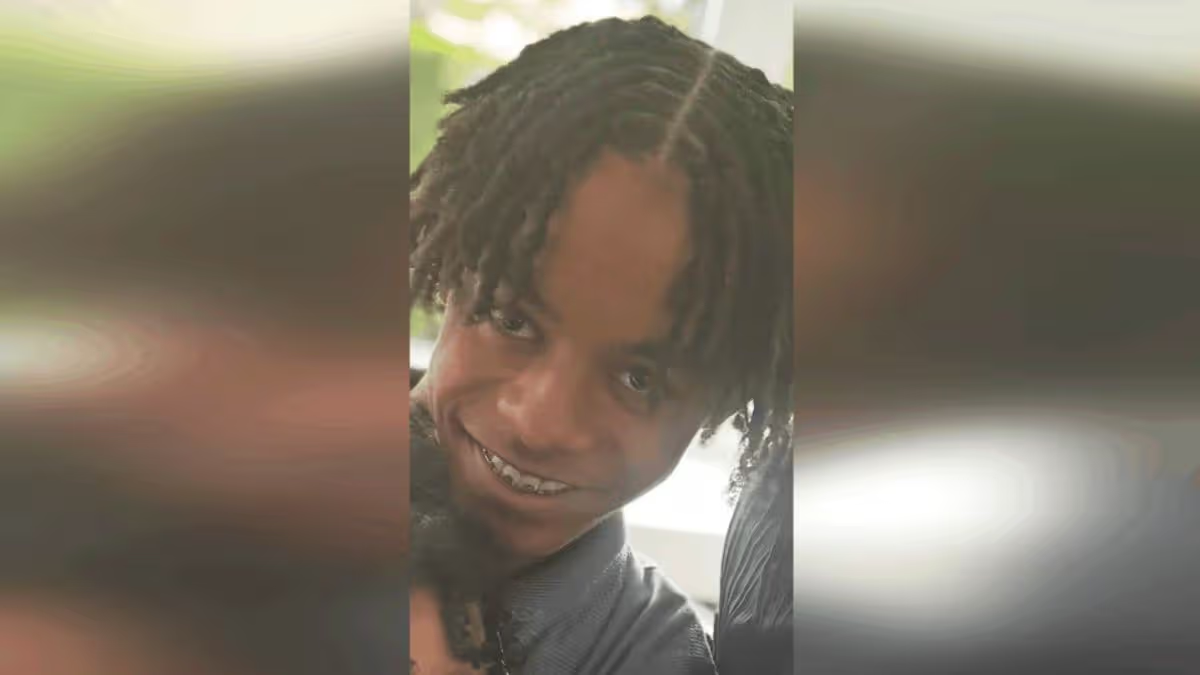



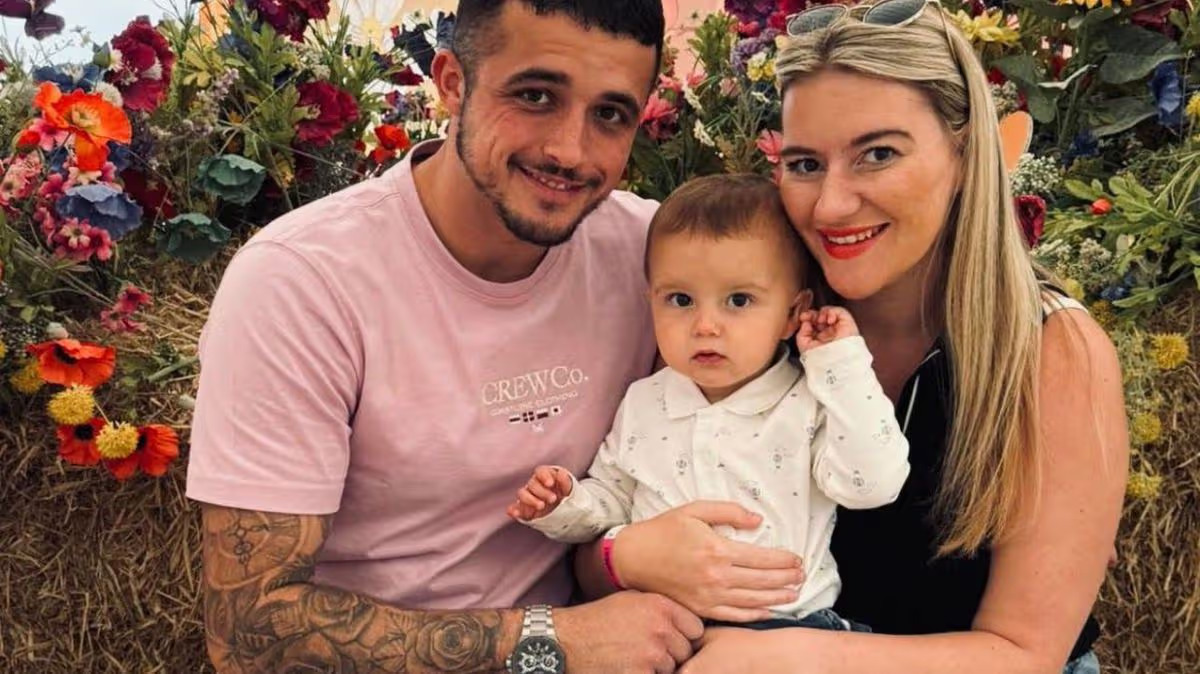
A story that began as a joyful celebration of impending marriage was shattered in a terrifying instant for a young British family, transforming a long-anticipated stag weekend into a life-altering ordeal. Dan Bevis, a 25-year-old dad from Alcester, Warwickshire, had just arrived in Puerto Del Carmen, Lanzarote, with his friends on May 1st, ready to enjoy a few days of sunshine and camaraderie before his July wedding. Mere hours after landing, the group headed to their first bar. In a decision that would prove catastrophic, Dan went to check on a friend who had stepped across a small road to sit on a low wall, a common spot for a cigarette. As Dan went to join him, the seemingly innocuous wall—later described as “really rusty” and insecure—gave way. He fell backwards, plummeting nearly 20 feet onto the pavement below. What should have been a memory-filled trip had, in just two hours and after just three pints, become a nightmare.
The scene that greeted Dan’s friends was one of horror and frantic action. The force of the fall caused a devastating traumatic brain injury. With Dan unconscious and bleeding profusely from his head, one of his friends, in a desperate act of loyalty and love, cradled his skull, physically “holding his head together” in a bid to stem the flow of blood until professional help could arrive. The emergency response was significant, with three ambulances and police attending the scene, underscoring the severity of the situation. Rushed to the hospital, the full extent of Dan’s injuries became clear: a brain bleed, a fracture behind his ear, a broken collarbone, and a broken sternum. His condition was so critical that doctors had no choice but to place him in a medically induced coma to stabilize him and allow his brain to begin the long healing process, leaving his family and fiancée in agonizing suspense thousands of miles away.
For Dan’s fiancée, Kirsty Elvins, 27, the news was delivered in a phone call that evokes every partner’s deepest fear. “I literally screamed when I found out,” she recalls. With their one-year-old son, Grayson, to care for, she faced an impossible situation: the immediate, visceral need to be at Dan’s side warring with the practical reality that he was too unstable to be left alone during the four-and-a-half-hour flight from the UK. The wait for him to be stabilized was torturous, a period of not knowing if he was alive or dead. Once she could travel, Kirsty flew out with their young son, leaving her life behind to maintain a vigil at his hospital bedside. For over two weeks, Dan remained in Lanzarote receiving care, a frightening and disorienting experience for a family caught in a medical crisis far from home, until he was finally well enough to be flown back to the UK on May 19.
Amidst the trauma, one piece of foresight emerged as a crucial lifeline: Dan had both a Global Health Insurance Card (GHIC) and comprehensive travel insurance. Kirsty is emphatic about correcting assumptions that often arise in such stories. “A lot of people presumed just because he was on his stag do, ‘I bet he was really drunk’,” she says. “If the travel insurance thought that, they wouldn’t be trying to help us with the claim. He’d only had a couple of beers, it happened at the first bar they went to.” This distinction and their valid insurance mean his substantial medical expenses are covered, a relief that cannot be overstated. “My advice would be to make sure everyone’s got their GHIC card, travel insurance is such a big thing,” Kirsty urges, speaking from the raw experience of someone who has learned that catastrophe does not discriminate based on how careful or responsible you are.
Now back home, Dan’s recovery is slow and challenging. The vibrant groom-to-be and father is currently unable to work for at least four to six weeks. While he can walk short distances, he is plagued by dizziness and requires a wheelchair for any longer movement. The physical and cognitive recovery from such a severe brain injury is a marathon, not a sprint. This sudden loss of income, coupled with the ancillary costs the family incurred while in Lanzarote, has placed a severe financial strain on them just weeks before their wedding. While the insurance covered the hospital bills, life’s other expenses—mortgage, utilities, daily living, and now the final payments for their wedding—continue unabated. In response, the family has set up a GoFundMe page, a humbling but necessary step to ask for community support to help cover bills and ensure their wedding can still go ahead.
As their July wedding date approaches, what should be a time of final excited preparations is instead a period of profound adjustment and hope. Kirsty remains determined that Dan will be well enough to walk down the aisle, however short that walk may need to be. The couple has already paid for 75% of their dream day, but the funds set aside for the final payments had to be redirected to prioritize Dan’s immediate needs. This freak accident has irrevocably altered their path to the altar, transforming it from a straightforward journey into a testament of resilience. “This is a freak accident that has happened and you just never have any idea that this could happen,” Kirsty reflects, echoing a universal truth. Their story is a stark reminder of life’s fragility, the irreplaceable value of comprehensive travel insurance, and the incredible power of love and community to hold a family together when the unthinkable occurs.