


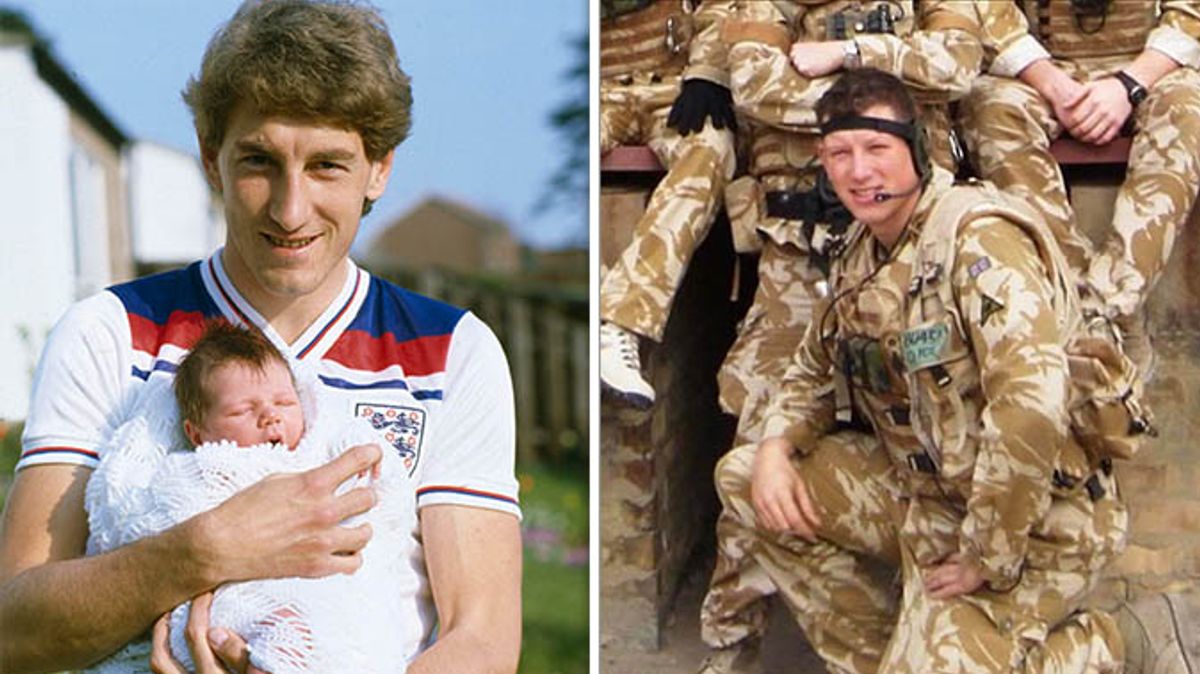
Terry Butcher is widely celebrated as one of English football’s most iconic captains, a defensive titan whose blood-stained bandage at the 1989 World Cup qualifier became a permanent symbol of national resilience. Yet, in a poignant documentary titled Butcher: Invisible Wounds, the former Ipswich Town and Rangers legend confronts a profoundly different and personal battle, one far removed from the roar of stadiums. The film shifts the focus from his public heroics to a private tragedy: the devastating loss of his 35-year-old son, Chris, a captain in the Royal Artillery. For Butcher, the true heroism lies not in his own storied career, but in his son’s service and in the subsequent, grueling journey of grief that reshaped his family’s world.
The catastrophic pivot point arrived on a seemingly ordinary morning in October 2017. Butcher’s daily ritual of taking a cup of tea to his son’s bedroom ended in nightmare when he discovered Chris on the floor, lifeless. Despite desperate attempts at CPR, his son was gone. An inquest later revealed Chris had died from an abnormal enlargement of the heart, compounded by the effects of medication taken to manage the severe Post-Traumatic Stress Disorder (PTSD) he carried home from tours in Afghanistan and Iraq. As Butcher bravely testified, his son’s life had “spiralled downwards as the demons took control of his mind,” making him, in his father’s wrenching words, “a victim of war.” The battlefield, it turned out, had followed him home.
In the documentary and in conversation, Butcher revisits these raw memories with a hard-won openness. He speaks of triggers—visiting Chris’s old army barracks, wearing his clothing, hearing certain music—that can bring both comfort and sudden, overwhelming sorrow. He has learned, contrary to his traditional “old school” upbringing where feelings were suppressed, that grief must be confronted. “Sometimes you cry,” Butcher reflects. “I think it’s good, if you do cry, because it helps… You’re getting rid of something.” He acknowledges the permanence of loss, describing grief as “a horrible thing” you never fully escape, but emphasizes the necessity of processing it, of allowing the emotion to surface rather than letting it fester unseen.
The film delves into the specific horrors that haunted Chris: the phantom screams of a young Iraqi girl and the echoing bark of military commands that tormented his psyche. These invisible wounds, inflicted by war, ultimately claimed his life within the supposed safety of his family home. This tragedy has driven Butcher to connect with and support a community he now intimately belongs to—military families navigating similar trauma. He has become a regular presence at ‘Combat2Coffee’, a café initiative dedicated to supporting veterans and their relatives, finding solace in shared understanding and purpose amid his own pain.
Nearly a decade on, the memory of that day remains visceral. “It was a horrible experience, the worst of my life,” Butcher admits, recalling the moment Chris’s body was taken away as the most searingly difficult. The documentary captures this enduring heartache, but also charts a path toward healing through vulnerability. Butcher and his wife, Rita, alongside their son Ed, now openly share their experience, breaking the silence that once surrounded their grief. Their story is no longer just one of private mourning, but a public testament to the long-term casualties of conflict that occur far from the front lines.
Butcher: Invisible Wounds thus redefines the legacy of a footballing hardman. It is a story not of triumphs on the pitch, but of courage in the face of unimaginable personal loss, and of a father’s dedication to honouring his son. By speaking out, Terry Butcher sheds light on the silent struggles of veterans and their families, advocating for greater awareness of PTSD. In doing so, he channels his own grief into a force for connection and support, ensuring that Chris’s memory, and the struggles of countless others like him, are made visible and met with compassion.