

Paragraph 1: The Crux of Verification
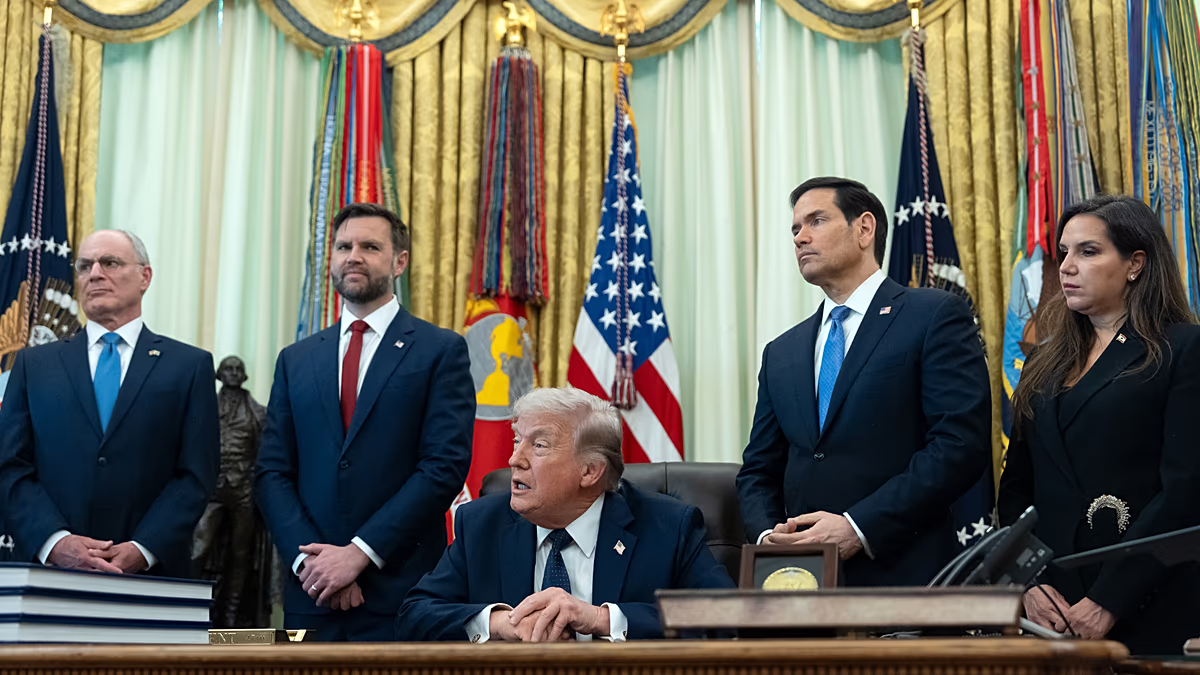
In a crucial statement this week, Rafael Grossi, head of the International Atomic Energy Agency (IAEA), delivered a clear and firm message to world powers: any future peace agreement aimed at ending conflict in the Middle East must contain ironclad, “very detailed” measures for verifying Iran’s nuclear activities. Speaking with the authority of the world’s nuclear watchdog, Grossi emphasized that without a rigorous and intrusive inspection regime conducted by his agency, any deal would be fundamentally hollow. “Otherwise you will not have an agreement, you will have an illusion of an agreement,” he warned. His comments underscore a central, non-negotiable pillar for lasting security: trust must be backed by transparent, on-the-ground verification. This stance comes as US President Donald Trump indicated a potential second round of peace talks could be imminent, placing the issue of nuclear oversight squarely on the diplomatic table.
Paragraph 2: A Shadow Over Past Conflict and Current Stocks
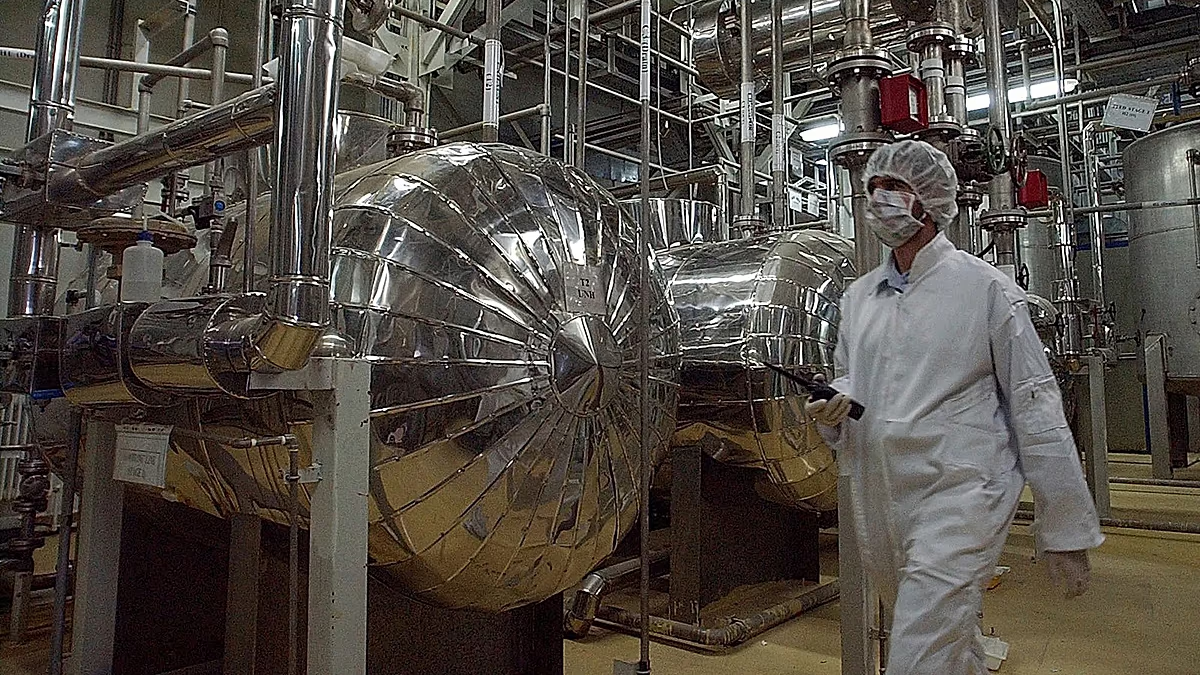
The urgency of Grossi’s call is magnified by a significant gap in the IAEA’s current knowledge, stemming directly from recent hostilities. A confidential agency report from February revealed that Tehran has blocked inspectors from accessing nuclear facilities damaged during a 12-day conflict involving Israel and the United States last June. Consequently, the IAEA explicitly stated it “cannot verify” whether Iran has halted enrichment work at these sites or accurately measure the uranium stockpile there. This lack of access creates a dangerous blind spot. Compounding this concern are the IAEA’s latest figures, which show Iran possesses a stockpile of 440.9 kilograms of uranium enriched to 60% purity—a level just a short technical step from the 90% considered weapons-grade. This material, which experts believe could theoretically be used to build as many as ten nuclear bombs if weaponized, demands monthly verification under standard IAEA safeguards, a schedule currently impossible to confirm fully.
Paragraph 3: A Fundamental Dispute at the Heart of Diplomacy
This tension over verification feeds into the core, unresolved dispute between Iran and its adversaries, particularly the United States. The Trump administration maintains that preventing Iran from obtaining a nuclear weapon is a primary war objective. However, Iran has consistently and vehemently denied seeking such weapons, insisting its nuclear program is entirely for peaceful civilian purposes and rejecting external limits. This fundamental clash of narratives has already stymied diplomacy; an initial round of talks held last weekend in Pakistan concluded without agreement. The White House attributed the failure to Iran’s “refusal to give up its nuclear ambitions,” a claim an unnamed Iranian diplomatic official later denied, arguing the negotiations did not falter on that point. This “he said, she said” dynamic highlights the profound mistrust that only robust, third-party verification can hope to overcome.
Paragraph 4: The Lingering Ghost of Past Activities
Adding a layer of historical suspicion to the current standoff is the assessment of the IAEA and Western nations regarding Iran’s past actions. While Tehran claims a peaceful intent, these agencies assert that Iran had an organized nuclear weapons program that continued until 2003. This historical context, whether accepted or rejected by Iran, shapes the international community’s insistence on the most stringent possible safeguards today. The past creates a precedent for vigilance, making Grossi’s demand for an “indispensable safeguard verification component” not merely a technical request but a political necessity to build confidence among nations that fear a repeat of clandestine activities.
Paragraph 5: A Wider Panorama of Nuclear Anxiety
Director General Grossi’s briefing was not limited to Iran, subtly painting a broader picture of global nuclear proliferation concerns. He reported that the IAEA has confirmed “a rapid increase” in activities at nuclear facilities in North Korea. This observation aligns with analyses by foreign observers who note Pyongyang has been expanding its main Yongbyon nuclear complex and potentially building new uranium-enrichment sites since its diplomacy with the U.S. collapsed in 2019. South Korean officials have previously stated that North Korea is operating multiple enrichment facilities daily. By linking the challenges posed by Iran and North Korea in a single press conference, Grossi framed nuclear verification not as an isolated regional issue but as a persistent and growing global security challenge that demands constant, expert attention and unwavering diplomatic commitment.
Paragraph 6: The Path Forward: Transparency or Deadlock
Ultimately, the path forward hinges on a simple yet profoundly difficult choice between transparency and continued deadlock. The technical capacity for rapid nuclear advancement clearly exists in Iran, as evidenced by its large stockpile of highly enriched uranium. The historical suspicions, backed by agency reports, linger. The diplomatic attempts have so far faltered. In this environment, Grossi’s message is the voice of practical realism: agreements on paper are meaningless without the means to enforce them on the ground. The “indispensable” work of IAEA inspectors serves as the essential bridge between opposing declarations of peaceful intent and dire warnings of weaponization. As tentative diplomacy continues, the world watches to see if the parties will commit to building that bridge of verification or remain trapped on opposite sides of a divide filled with suspicion and enriched uranium.