


The Unwavering Spirit: Christian Eriksen’s Ongoing Journey of Resilience
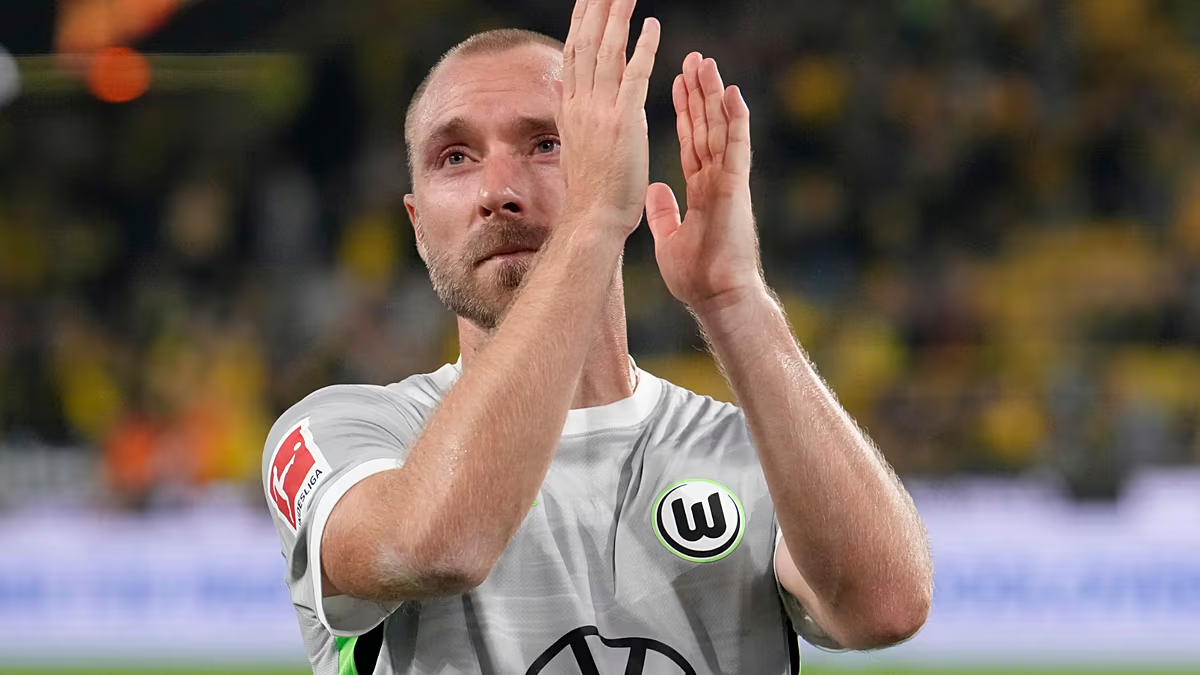
The world of football, a global stage of immense passion and drama, was once again struck by a moment of profound human vulnerability when Christian Eriksen, the 34-year-old Danish midfielder, collapsed on the pitch during an international friendly. Playing for Denmark against Ukraine in Odense on Sunday, the athlete suddenly fell, clutching his chest with both hands, a sight that sent an immediate and chilling wave of concern across the sporting community and beyond. The match was promptly abandoned, a necessary decision that underscored the priority of a player’s life over the game itself. In the immediate, tense aftermath, a crucial detail emerged: Eriksen remained conscious. This fact became the first glimmer of hope, a small but significant sign that differentiated this terrifying episode from the traumatic cardiac arrest he suffered during the European Championships in 2021.
This latest incident inevitably cast minds back to that harrowing day in Copenhagen three years prior, an event that had already etched Eriksen’s name into a narrative of survival and medical marvel. After that life-threatening collapse, he was fitted with an Implantable Cardioverter Defibrillator (ICD), a pacemaker-like device designed to monitor and regulate heart rhythm. The device allowed him to perform a miraculous return to elite football, a testament to his determination and modern medicine. Now, facing a similar, heart-stopping scene, the immediate question was whether this was a recurrence of that grave condition. From his home, where he is now recuperating, Eriksen himself moved swiftly to address these fears head-on.
Taking to Instagram, Eriksen provided the most reassuring update possible, directly from the source. In a move that showcased his characteristic consideration for the millions who hold him in their hearts, he clarified the nature of the event. He wanted to reassure everyone that “this was a different situation from what happened in 2021” and emphasized that he was “already feeling good.” This personal communication was powerful, cutting through speculation with calm, factual clarity. It shifted the public narrative from one of panic to one of measured relief and ongoing support. His words, “doing well” and “in good spirits,” reported by his representatives, painted a picture not of a victim, but of a resilient man calmly navigating another unexpected hurdle on his remarkable journey.
The medical perspective provided further crucial context and comfort. Denmark’s team physician, Morten Boesen, offered a professional assessment that aligned with Eriksen’s own positive outlook. Dr. Boesen stated, “As I see it, the pacemaker responded as it should.” This simple sentence carried enormous weight. It confirmed that the very device implanted to protect him had performed its duty flawlessly, intervening as designed to manage the cardiac episode. It transformed the narrative from a story of failure to one of a safety net functioning perfectly. Boesen also noted that the football federation was “taking good care of the players and staff,” highlighting the structured support system surrounding Eriksen during this time.
Support for Eriksen extended far beyond the medical team and the confines of the football pitch, flowing in from the highest levels of his nation and across the globe. Danish Prime Minister Mette Frederiksen encapsulated this national sentiment in a heartfelt post on social media, sending her “warmest thoughts to Christian Eriksen and to all those around him who are affected.” This gesture underscored that Eriksen is more than an athlete; he is a national figure whose well-being resonates deeply with the Danish public. His story—from the tragedy of 2021 to his inspiring comeback with Brentford and Manchester United, and now his resilience in this latest challenge—has made him a global symbol of courage and perseverance in the face of adversity.
As Christian Eriksen recovers at home, the broader conversation continues, inevitably touching on the physical demands placed on elite athletes and the invisible battles they may face. Yet, the dominant theme emerging from this incident is one of profound resilience, advanced medical safeguarding, and the unifying power of human concern. Eriksen’s calm reassurance, the effective response of his implanted device, and the outpouring of support demonstrate a collective strength. His journey continues to be a powerful reminder that the true measure of a champion is not only found in moments of victory on the field, but perhaps even more so in the grace, strength, and transparency displayed when confronting personal challenges off it. The football world now waits, not with anxiety, but with hopeful patience, for the next chapter in the career of a man who has already defied the odds with unwavering spirit.